MIRELICE COLLECTION
Tote bags
Explore Tote bags — Handbags. See individual product details, prices and delivery availability.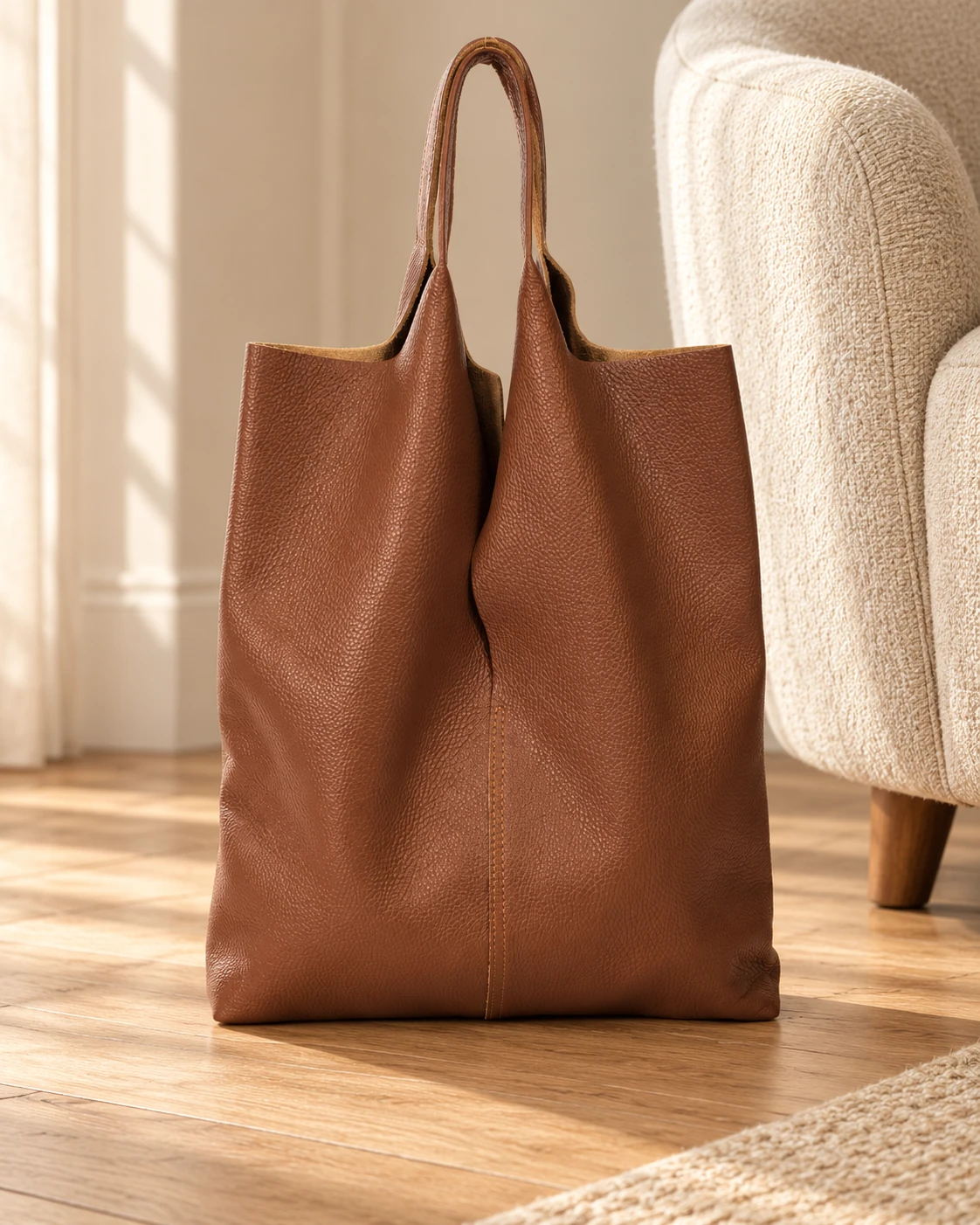
Tote bags
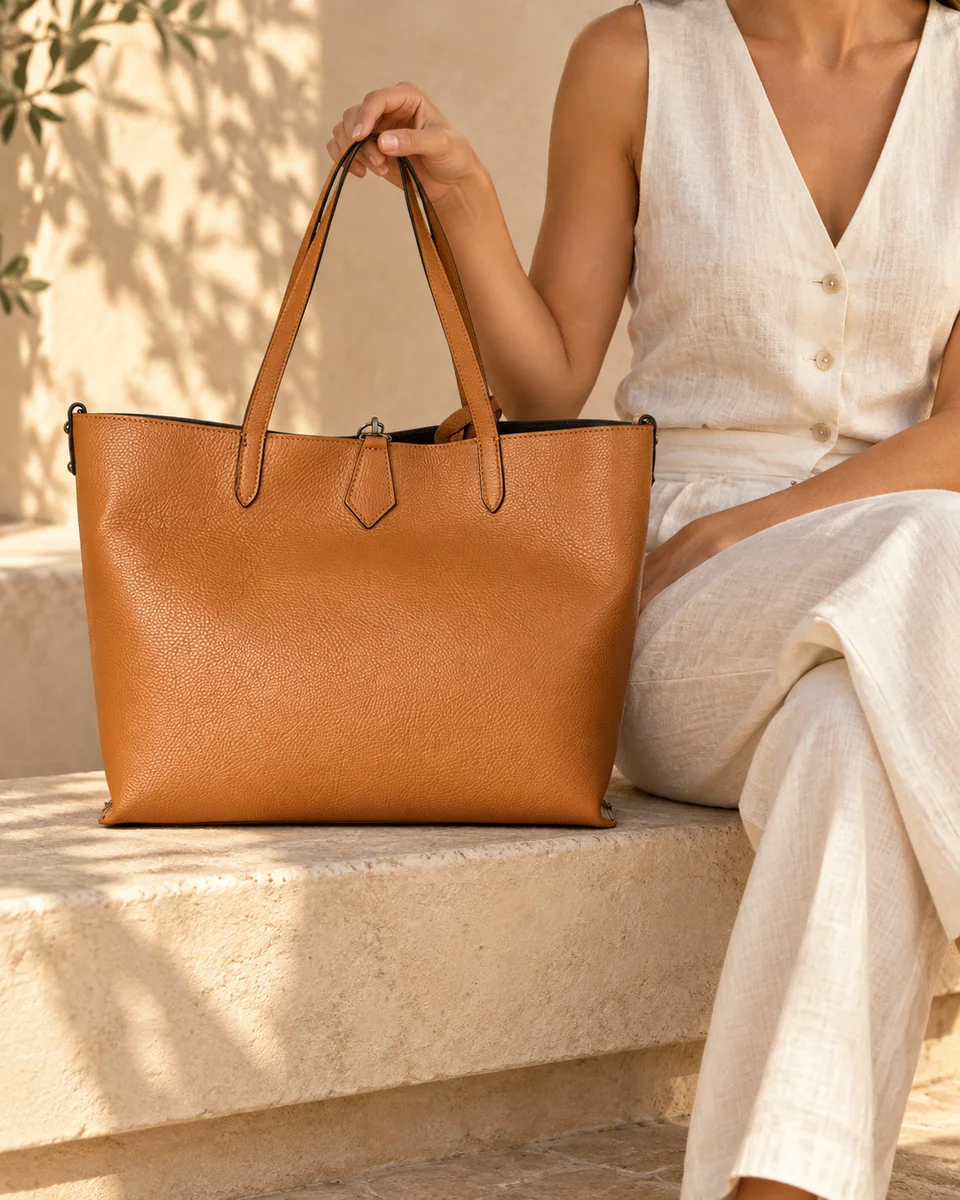
NIOBE Cognac Leather Tote
EUR 116.88 · per item · Preliminary price
Check delivery availability
Find the tote shape that works with your day
A tote is more than a wide outline. Compare its opening, depth and handle space with the things you carry and the clothes you wear.
Close the guide
A tote gives everyday objects a visible place in an outfit. Its broad surface may show grain, suede texture or a simple arrangement of handles, while its proportions can stretch upwards or outwards. That makes the category more varied than the familiar idea of one large open bag. A slim vertical tote and a wide, deeper design can look equally understated yet ask you to organize your belongings differently.
The MIRELICE tote selection brings those differences together without treating every model as an interchangeable carryall. Start by deciding what must travel with you, what you reach for often and where you prefer the bag to sit. Then read the individual measurements, material and interior description. A useful choice connects those practical facts with a silhouette you enjoy, rather than expecting the word tote to guarantee a particular capacity, closure or device fit.
Decide whether you need height or width
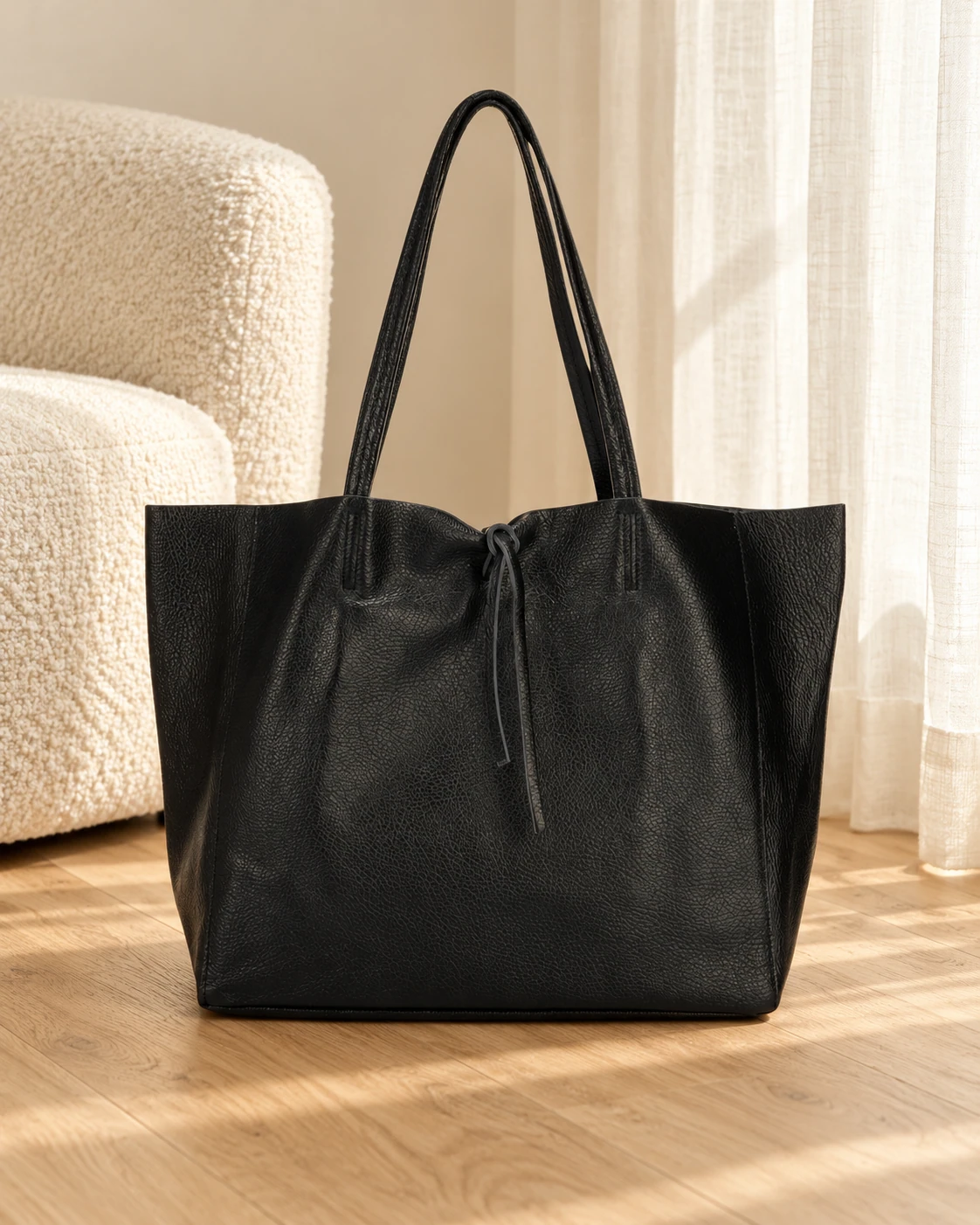
ARINA is listed at 37 × 3 × 40 cm, creating a tall and comparatively slim starting point. NIOBE is listed at 46 × 12 × 30 cm, with a broader horizontal profile. These supplier-declared exterior measurements show why comparing only the largest number is unhelpful. The dimension that accommodates a long object may not be the dimension that gives room around a bulky one.
Think about the shape of your contents as a group. A slim notebook, a long wallet and a glasses case do not arrange themselves like a stack of soft clothing. If you need a rigid folder to remain upright, height matters; if you prefer several small items side by side, the footprint becomes important. Confirm the actual internal space and opening before relying on either exterior measurement for an essential fit.
Give depth its own place in the decision
Depth is easy to overlook in a front photograph, where the width of the panel dominates. A tote with a narrow side profile can read as generous from the front while offering a different arrangement from a deeper base. ARINA's declared 3 cm depth and ODETTE's declared 16 cm depth illustrate very different proportions. They should not be interpreted as identical spaces simply because both bags are described as totes.
A soft side may change its appearance when the bag is filled, but softness is not a measured expansion system. Avoid planning a load around the assumption that the body will stretch to accommodate it. Instead, compare the confirmed dimensions with the objects you actually need. A useful fit leaves room to reach things and use the closure as intended, rather than only allowing everything to be pressed into place.
Use a familiar bag as a footprint reference
Set your current bag beside the space occupied by your daily essentials. Consider where its depth helps and where it is unnecessary. If it repeatedly tips small objects into a pile, a different footprint or a separate organizer may be more relevant than extra width. This comparison gives a specific purpose to a change of shape, rather than making size itself the goal.
Read the opening and closure for each model
Totes do not all share the same opening. A magnetic fastening, tie detail, zip section or removable inner arrangement changes the sequence of finding and replacing an object. ARIA is supplier-described with a magnetic closure and three inner compartments. NIOBE's recorded specification includes an internal zipped section. These details belong to those models and should not become a general promise for the category.
Consider how you would reach your phone or keys while the bag is beside a seat. A broad opening may be convenient to view, but its exact fastening and internal arrangement still matter. When a feature is not confirmed, do not assign it to a seam visible in a photograph. The individual description is the place to distinguish the main closure from a separate internal zip or a decorative front tab.
Plan a realistic workday load
A work tote can mean very different things to different people. One routine may involve a compact notebook and wallet; another depends on a particular computer, charger and case. Write down the non-negotiable objects first. Their measured size, including protective covers, is more useful than a generic assumption that a large-looking tote is a laptop bag.
Compare rigid items with the opening as well as the outer body. A device that appears shorter than the stated width may still be difficult to pass through a narrower entrance or around a curved side. The selection does not make a universal promise of padding, impact protection or device compatibility. If those features are essential, ask for the exact confirmed construction rather than treating an attractive broad silhouette as evidence.
Separate the device from the rest of the packing plan
After checking a necessary device, add the smaller objects around it in a realistic arrangement. A bulky charger or water bottle can change the usable space more than a slim document. Think about which item needs to be removed without disturbing the others. A protective case is part of the object's footprint and weight, not an optional detail to leave out of the comparison.
Organize a taller tote from the opening down
In a vertical form, the order of packing can affect how easily you find smaller pieces. Put frequently used objects where your own arrangement keeps them reachable, instead of assuming that every tote supplies a dedicated pocket. A small pouch for loose essentials may help you keep track of them while preserving the simple appearance of the bag itself.
Consider how you prefer to see the contents. Some people like a few separate groups; others prefer one main area that is easy to review. The practical question is whether your arrangement stays understandable after several stops. If you repeatedly remove everything to find one item, additional height alone will not solve the problem. Look again at the confirmed interior layout, opening and the number of objects you carry.
Make the handles part of your clothing comparison
Long handles are visually central to many totes, but their presence does not establish the same shoulder clearance on every wearer. Compare the available handle information with a bag you already carry comfortably. Include the thickness of the sleeves and outerwear you use most often. The same model may sit differently beside a light shirt and beside a substantial coat.
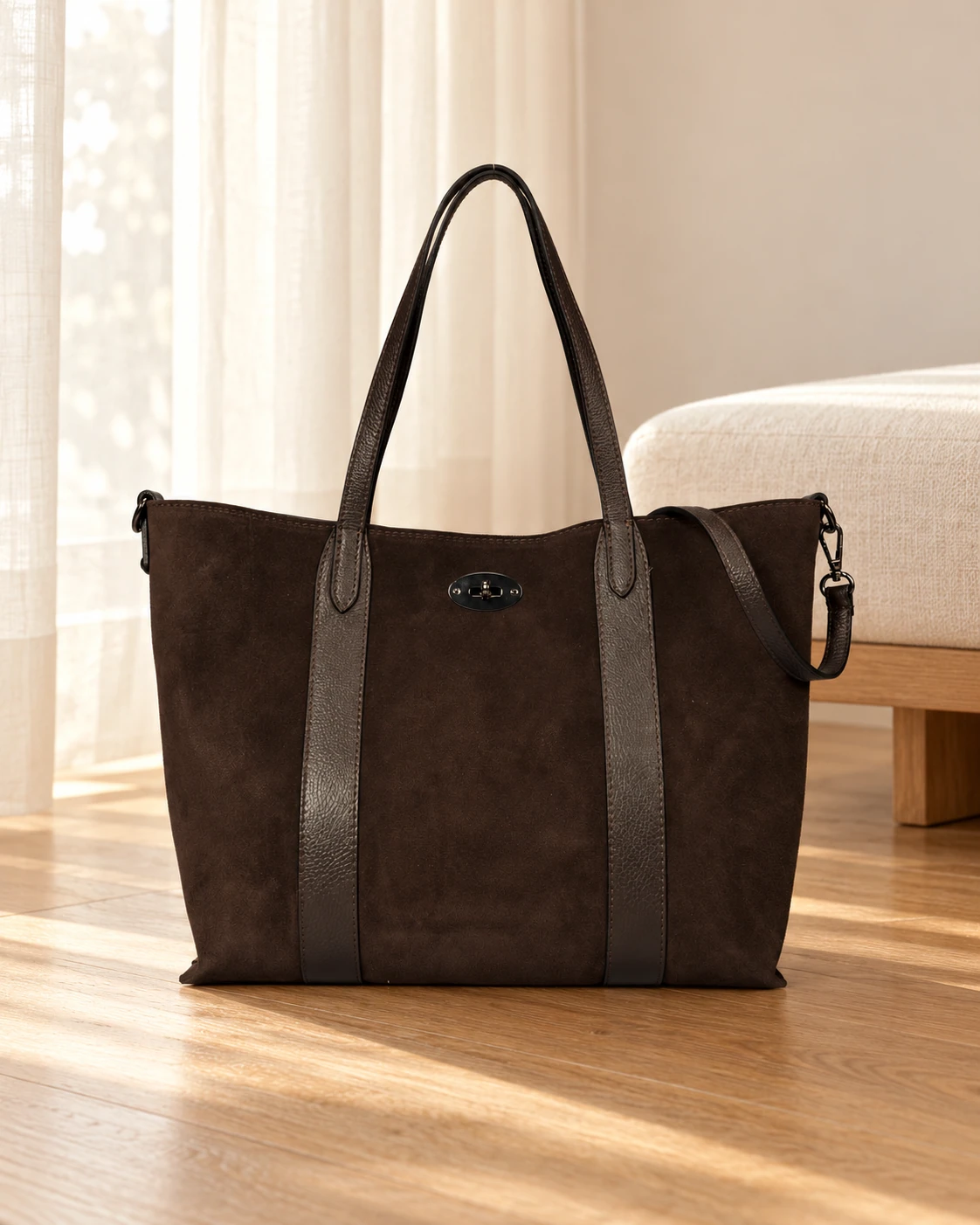
Look at where the handles meet the body as well as the space above it. Integrated-looking handles on ARINA create a different line from contrasting handles on a suede design. That is a styling distinction and a cue to review the actual construction. It is not proof of a particular load rating. Choose the arrangement for the way you plan to carry rather than assigning technical performance to its appearance.
Distinguish grained surfaces from suede
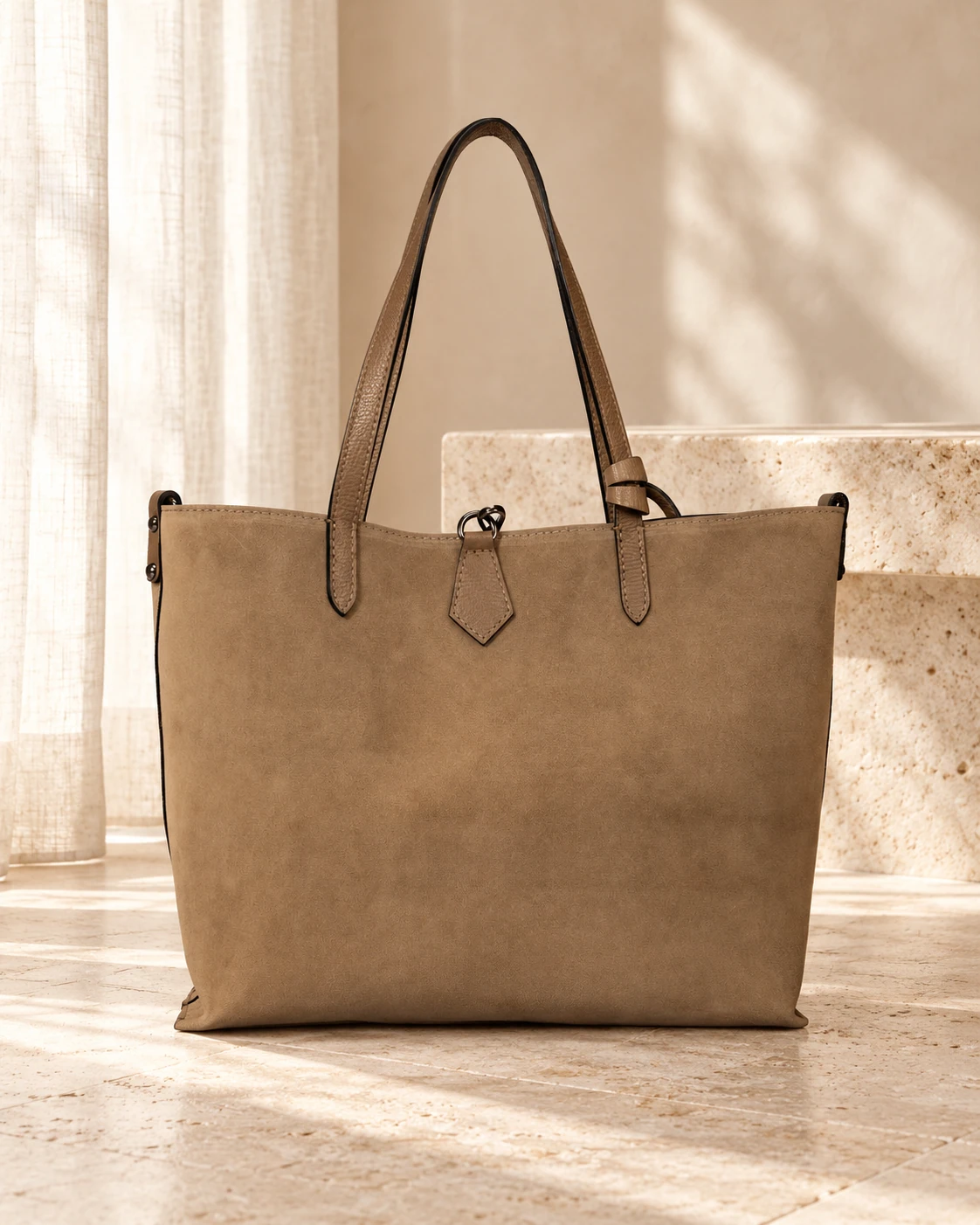
NIOBE and ARINA are recorded with grained calfskin descriptions, while ODETTE and SOLENE carry suede descriptions. ARIA is described as embossed suede. These are meaningful differences in appearance: a textured grain, a softer-looking nap and an embossed surface respond differently to light and to the clothing placed beside them. A broad tote panel makes those differences especially visible.
The material filter identifies the wider material family; the product specification provides the finish detail. Do not use a general leather label to assume identical cleaning or conditioning. The exact finish and product instructions should guide care. Photographs are useful for seeing texture and contrast, but they do not independently certify tanning methods, resistance to rain or a particular grade of leather.
Choose the kind of contrast you want to wear
A black tote can give a definite edge to a light shirt or pale coat. A cognac tone can connect cream, navy and grey through warmth. Taupe suede may create a quieter transition beside stone-coloured or muted clothing. The useful starting point is the wardrobe you repeat, not a hypothetical outfit that only exists to match a new bag.
Try separating colour contrast from surface contrast. A suede tote and a smooth coat can be interesting even when their colours are close. A grained cognac bag beside a plain dark jacket may stand out mainly through tone and scale. You do not need to repeat the exact colour in every shoe or belt. One related element can connect the outfit while allowing the tote's large surface to remain the main point.
Consider the total load rather than empty weight alone
The recorded empty weights vary: ARINA is listed at 400 g, NIOBE at 800 g and SOLENE at 900 g. Those values describe different starting points, alongside differences in size, materials and construction. They are supplier declarations, not an independent weighing of each item or a statement of how much weight the bag is designed to carry.
List the things that make your usual load heavier. A full bottle, a large wallet and a device in a protective case can matter more than a modest difference between two empty bags. Decide which of those objects you genuinely need for the day. Reducing an unnecessary item may be more useful than choosing a different silhouette solely because its empty weight is lower.
Build a packing routine that can change during the day
A tote's contents often change between leaving home and returning. You may add a small purchase, remove a layer or carry papers for part of a journey. Leave room for the changes you can realistically predict, while keeping the bag within the individual model's intended use. An apparently empty corner should not be treated as a reason to add everything available.
Keep objects with different needs separate in your own arrangement. A drink container, damp umbrella or loose cosmetic item should not be assumed safe beside documents simply because the bag has a lining. Read the product information for any confirmed protective features; do not infer waterproofing from a material name. Separate cases or pouches can support organization without pretending that the tote includes a feature that has not been specified.
Think about placing, opening and picking up the tote
The daily experience of a larger bag includes what happens when it is not on your shoulder. Picture setting it beside a chair, reaching into it while seated and picking it up with a coat in the other hand. A tall soft form and a broad deeper body can occupy space differently. A front photograph alone does not tell you whether either will stand by itself when empty.
Compare the body with the places where you use a bag most often. You may prefer a simple shape that stays close to your side while walking, or a wider arrangement that lets you review several groups of objects. Keep the question specific to your routine. There is no need to label one proportion universally more elegant or useful when the real difference is how it fits the next part of your day.
Let a tote balance the lines of an outfit
A broad horizontal tote can provide a counterpoint to a long narrow coat. A vertical model may continue the direction of straight trousers or a simple dress. These are possible compositions, not rules based on body shape. Start with the combined outline in a mirror or a photograph of your own outfit, keeping the bag at the position where you would actually carry it.
Details then become easier to judge. The contrasting handles of a suede tote may repeat a darker shoe tone; a plain grained panel can sit beside patterned clothing without introducing another print. CLOTILDE's tie detail creates a different focal point from NIOBE's central pointed tab. Give one or two details room to be read rather than expecting every item in the outfit to have the same level of decoration.
Use photographs and measurements for different purposes
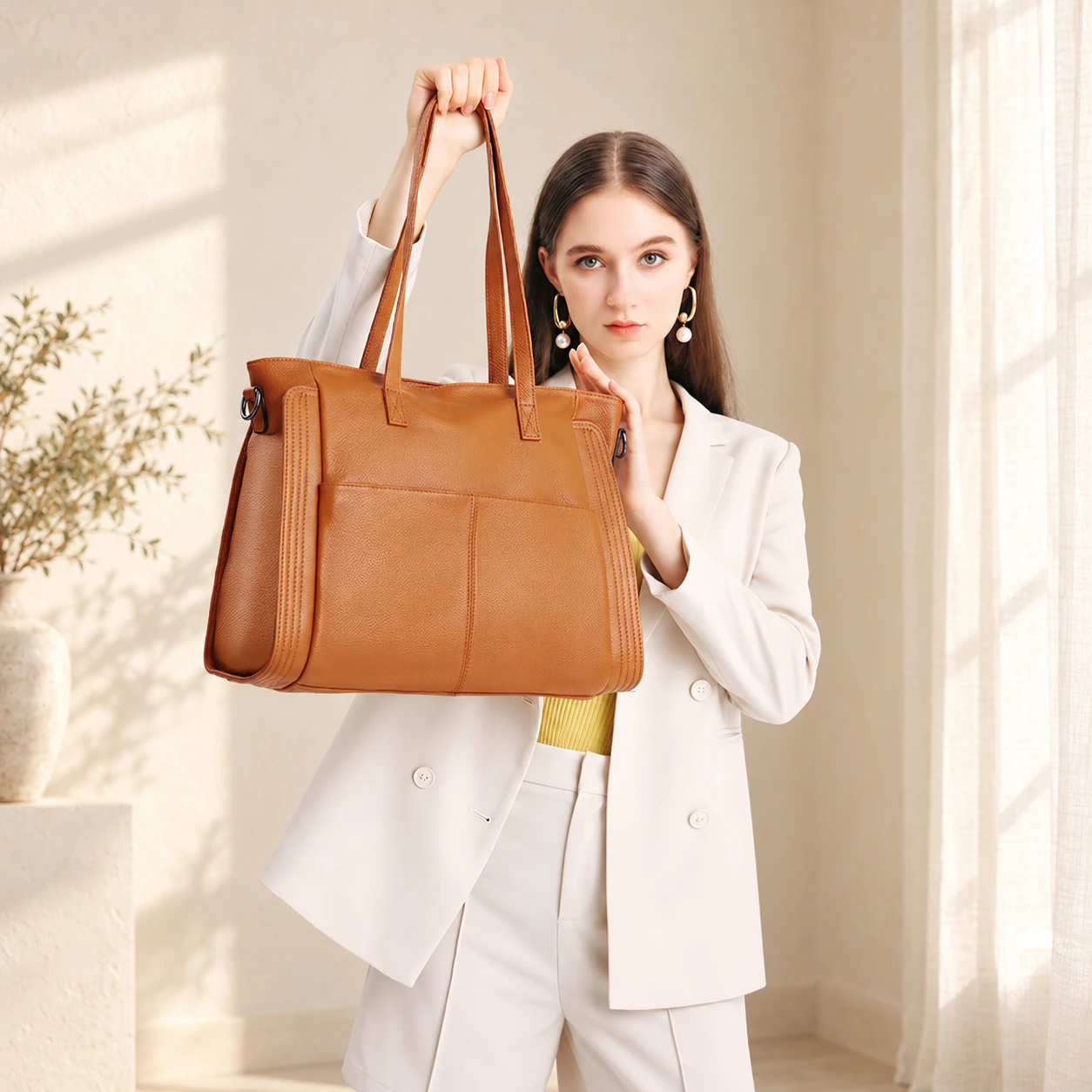
A lifestyle image helps you understand an arrangement of clothing, light and colour. It should not be used as a precise scale drawing. Camera position, distance and the model's proportions affect how large a tote appears. A detail photograph is better for reading texture, handle attachments and visible seams, while confirmed product measurements are the reference for planning fit.
Keep parcel measurements separate from product measurements. For the Textured Cowhide Tote, the recorded 410 × 330 × 60 mm describes packaging, not verified bag dimensions. It must not become a promise of interior space. If a rigid item needs to fit that model, obtain the actual finished-bag and opening measurements. This distinction matters more than the apparent size in a photograph of someone holding it.
Choose a travel companion for a defined purpose
For a short trip, decide whether the tote carries your everyday essentials, a change of clothing or a specific set of documents. Those are different jobs and create different arrangements. If it will accompany another bag, think about the hand or shoulder occupied by each piece and what you need to access between stops. A large tote does not automatically replace every other travel format.
The category does not establish airline cabin eligibility, protective luggage construction or a universal size allowance. Those questions require the exact dimensions and the relevant travel context. A more useful starting point is the actual group of belongings you want within reach. Plan that group clearly, then compare a confirmed tote specification with it instead of relying on the broad idea that a carryall should handle every journey.
Care for broad surfaces and long handles thoughtfully
A tote exposes a large area of its material, so storage and handling can affect its presentation. Follow the model's own care guidance and choose products for the actual finish. Do not apply a cream intended for a smooth leather surface to suede simply because both fall within a leather category. When instructions are incomplete, a restrained approach is preferable to experimenting on the most visible panel.
Avoid pressing handles and metal fittings firmly into the body during storage. Leave a shaped or integrated handle in a natural position, and do not assume that a soft tote is designed to be tightly folded. Keep heavy objects from resting on the front. These are ways to respect the form you selected without adding a claim that all the materials age, respond to cleaners or resist moisture in the same way.
Finish with a shortlist built around one clear need
A useful comparison might place ARINA's tall slim outline beside NIOBE's wider grained body, with ARIA as a separate option when its described internal compartments matter to you. That is a comparison of shape and recorded details, not a ranking that makes one model suitable for every person. Write down what each option would do for your own contents and clothing.
Before choosing, return to the selected item's measurements, material, handles and closure. Check the current price and destination-specific delivery information when available for that item. Keep the useful uncertainty visible: an unconfirmed internal size is not solved by a strong photograph. A tote that makes sense for your day is one whose confirmed details and visual character work together, with no need to invent extra capacity or features.