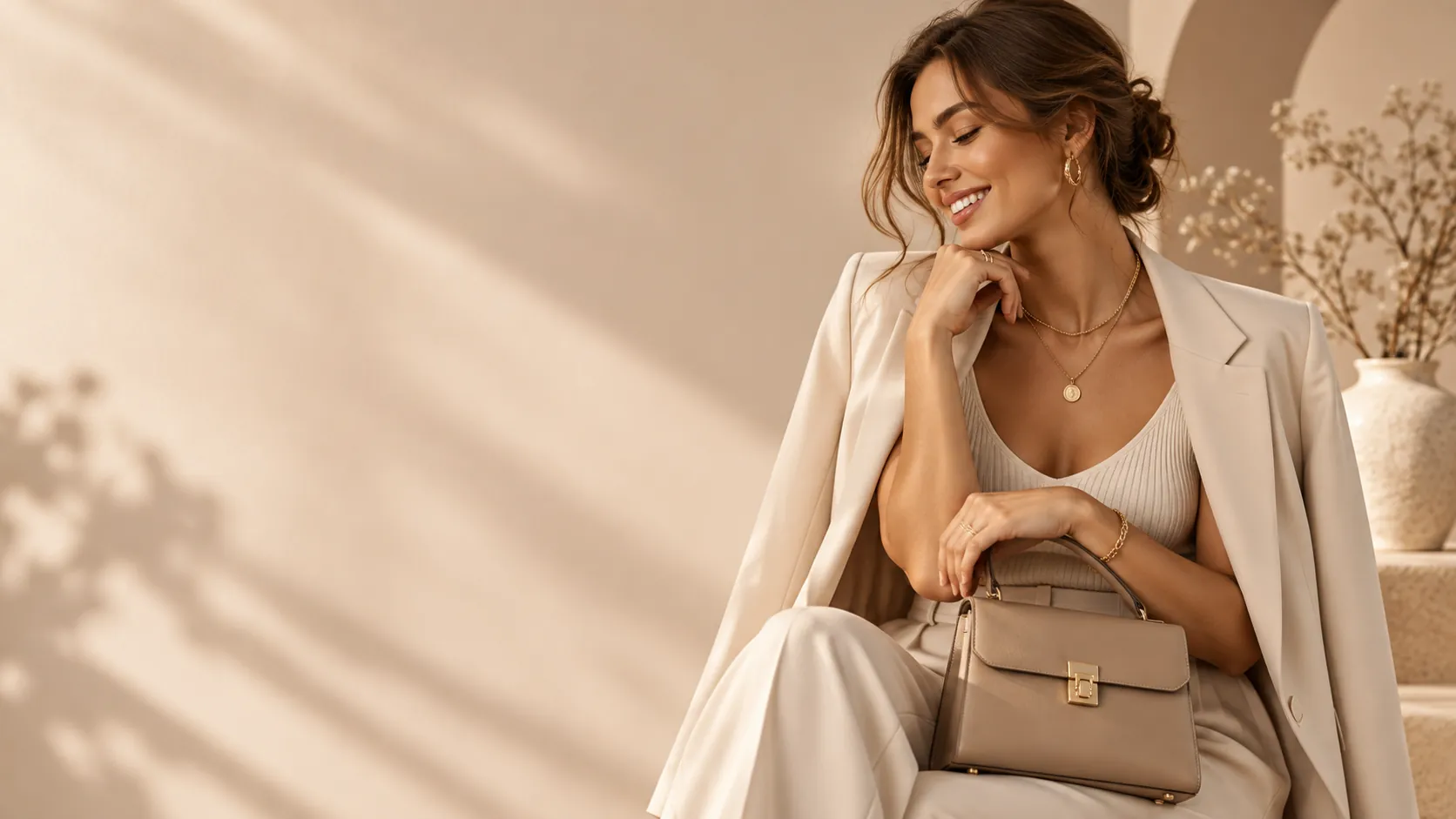
Discover the approach behind the MIRELICE edit: clear shapes, warm combinations and product details that help you choose for your own wardrobe.
Close the guide
MIRELICE approaches everyday style through the details you choose to keep close: a bag with the right outline, a piece of jewelry that changes the balance of a simple outfit, or a small accessory that suits your routine. The edit invites you to look at shape, color and texture together, then give the practical details equal attention. A considered combination does not require every piece to match or every outing to begin with something new. It starts with understanding what you enjoy wearing and what you actually need an accessory to do.
Begin with the balance of the outfit
A softly curved bag, an elongated necklace and a simple belt contribute different lines. Consider which one should lead and which should support it. Cream and warm brown can create a quiet combination; black can give the same clothing a more defined contrast. These are starting points to explore, not instructions to replace your personal style.
Work with pieces already in your wardrobe. A change of carrying method or a different relationship between smooth and textured surfaces can alter a familiar combination. The aim is a choice you understand rather than an exact copy of a styled photograph.
Give each type of accessory a clear role
Handbags are worth comparing through their form, opening and carrying arrangement. Jewelry asks for attention to proportion, the stated material and the detail nearest the face or neckline. Wallets, belts, scarves and hair accessories bring other practical and visual decisions. Start with the role you want the piece to play before comparing all the possible alternatives.
A smaller format is not automatically a simpler choice, and more compartments are not automatically more useful. Let your own belongings and habits provide the reference. The product types help narrow the search; the individual description explains the selected model.
Look closely at the written details
Use the model and selected color when comparing materials, measurements, closures and included components. Exterior dimensions describe overall proportions rather than a guaranteed interior fit. A material declaration and a visible finish also answer different questions. The guides help you read those distinctions without treating appearance as a complete specification.
Where a characteristic is attributed to a supplier, that is its stated basis. If an important measurement or component is missing, ask about the actual item. A precise question about a lining, opening or strap is more useful than transferring a feature from a similar-looking product.
Use the imagery as a source of combinations
Styled images show possible relationships between accessories, clothing and surroundings. They can help you notice a warm tone, a particular curve or the contrast between materials. Read the selected item's description for what is included rather than assuming every object in the composition belongs to the purchase.
Keep scale and color in perspective. Lighting and screen settings influence a shade, while a photograph alone cannot establish the measurements of an interior. Bring the written information into the same comparison as the image.
Browse with a purpose, then make the choice your own
Use a category when you know the kind of piece you want, and refine the selection by the relevant product details. New arrivals follow recorded additions of distinct models to the store. Editorial combinations offer another way to explore, but your preferred proportion and routine remain the useful final reference.
Take time with the material, measurement and care guides when a detail affects your decision. They are there to support the product page rather than replace it. If a question remains, contact MIRELICE with the model and the specific point you need clarified.
Materials and compositionSize and measurementsProduct careContact MIRELICE