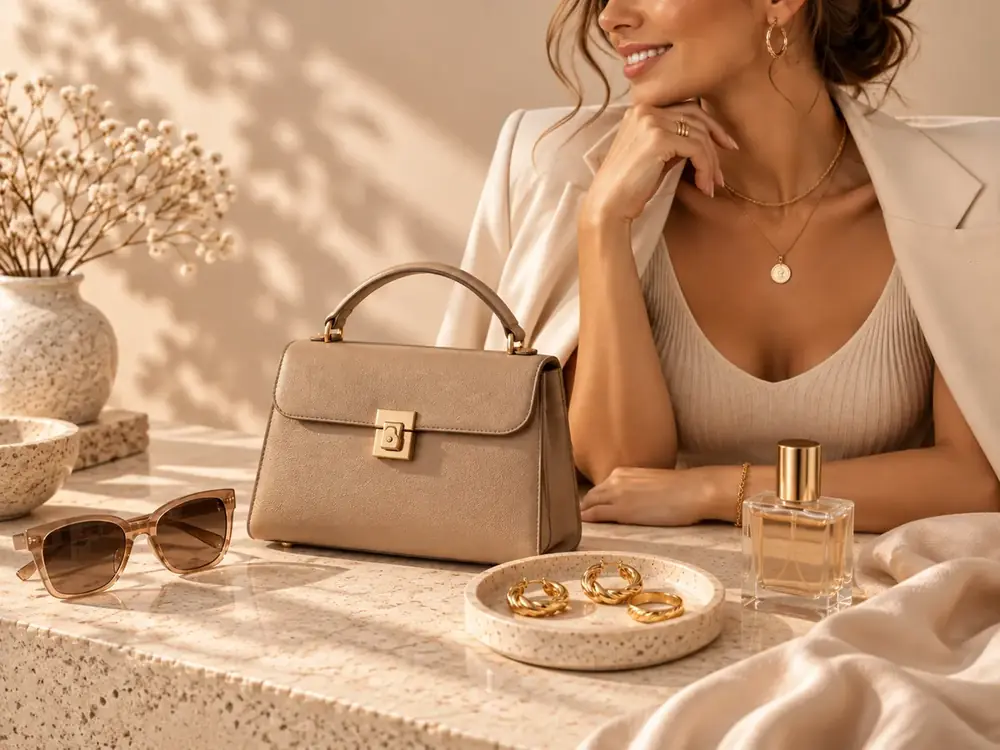
Follow the instructions for your individual item first. Do not wash, soak, polish or apply a treatment solely because another similar-looking product allows it. If the material or finish is unclear, ask before treating it.
Open the guidance for jewelry, leather accessories, scarves and hair details, including storage, moisture, cleaners and the information to provide when asking for care advice.
Close the guide
Useful care starts with knowing what you are handling. A metal finish, a leather surface and a printed textile do not need the same treatment, even when they share a color or appear together in a styled photograph. This guide explains a cautious approach to everyday handling, storage and choosing the next step when a material is unclear. It supports the instructions for the individual item rather than replacing them. Keep the model name and any care information that accompanies it so a later question can be answered for the right piece.
Check the whole item, not only its main material
Read the material description and any item-specific instructions before choosing a cleaning method. A product can combine a base material, a surface finish, fittings, a lining and decorative elements. A treatment suitable for one part may not suit the others. A photograph can show texture and shape, but it cannot identify every component or confirm that a cleaner is compatible.
If you already own a product with similar coloring, do not assume its care routine transfers to the new one. Start with the actual specification. Where the maker recommends a discreet test, use that process before treating a prominent area. Do not interpret an unconfirmed detail as permission to use a stronger method.
Jewelry: separate the finish from the base metal
A jewelry description may distinguish a base metal from plating or another finish. Care decisions should account for the complete piece, including stone settings and fastenings. Do not choose an abrasive polish simply because the surface looks silver or gold. Color alone does not identify a metal, and a product intended for one jewelry finish is not automatically appropriate for another.
Keep pieces from rubbing directly against one another in storage. Separate small earrings, chains and rings so that you can retrieve them without pulling at neighboring items. When handling a clasp or an adjustable part, use the component intended for that movement rather than pulling on a stone or decorative element. These habits reduce avoidable contact and strain without promising a particular resistance to wear.
Stone and pearl details
Treat decorative details as part of the care decision, not as an exception to it. A metal-cleaning method may be unsuitable for the complete setting or attached element. Follow the item's instructions before soaking, brushing or applying a chemical treatment. A stone name does not establish the construction of its setting or the compatibility of a cleaning product.
Leather bags, wallets and belts
Choose care for the stated material and surface finish. Smooth-looking leather, a grained surface and suede should not be treated as the same finish. In particular, do not assume a cream intended for smooth leather suits suede or a contrasting panel. Follow the instructions for the actual item before applying a cleaner, conditioner or protective treatment. Avoid household solvents and vigorous rubbing as a substitute for material-specific guidance.
For routine handling, keep loose dirt and hard objects from being pressed into the surface. Empty a wallet or bag before inspecting a mark. Wipe metal details gently without transferring an unsuitable product onto neighboring material. If an item becomes damp, avoid direct heat to speed drying and consult the relevant instructions. Moisture guidance is not a claim that the item is waterproof or that a treatment can make it so.
Scarves and other textile accessories
Use the fiber and care information for the selected scarf. A sheen, print or soft appearance cannot tell you a permitted washing temperature or method. Check the item's label or supplied instructions before washing, ironing, steaming or using a stain treatment. If that guidance is absent, ask for it instead of borrowing a routine from a different fabric.
Unfasten a knot gently and avoid dragging the fabric against a buckle, clip or other detail that may catch it. Store the textile without trapping it under hardware. A loose arrangement can be more appropriate than compressing it tightly among heavy objects, but the supplied instructions should guide any particular folding or storage method.
Hair accessories and mixed-material details
A hair accessory may combine decorative surfaces and a working mechanism. Do not assume they all tolerate the same liquid, cleaner or pressure. Remove loose surface dust cautiously using a method appropriate to the item's finish, and ask if that finish is unknown. Avoid soaking the complete accessory on the strength of its appearance alone.
Handle the intended fastening without pulling a decorative section to force it open. Do not close a clip around more hair than it can accommodate without pressure. When storing it, leave the mechanism free from unnecessary weight and separate it from textiles it might catch. These are handling suggestions, not a guarantee of grip or suitability for every hair type.
Storage between uses
Put items away without pressing them beneath heavier belongings. Let the shape of a bag, the curve of a belt and the surface of a small leather good guide a loose arrangement rather than forcing them into a narrow space. Keep liquids and cosmetics closed separately so an accidental leak does not reach the item directly.
Avoid leaving accessories against direct heat or in prolonged strong sunlight while deciding how to store or dry them. Keep product-specific care notes available. Storage is part of everyday handling, not a promise that an object will remain unchanged indefinitely; the right approach still depends on its actual materials and finish.
Ask a useful care question
If a mark or care instruction is unclear, contact MIRELICE with the model name, selected color and the area concerned. Describe what happened and mention any treatment already used. A clear photograph of the relevant area can help explain the question without needing to share unrelated personal information.
Do not send a password, payment-card details or session information with a care enquiry. If an order reference is relevant, use the contact route shown by the store. A product question and any request about an order or return are different matters, so describe the assistance you need rather than assuming one care step determines the outcome of a separate request.