MIRELICE COLLECTION
Backpacks
Explore Backpacks — Handbags. See individual product details, prices and delivery availability.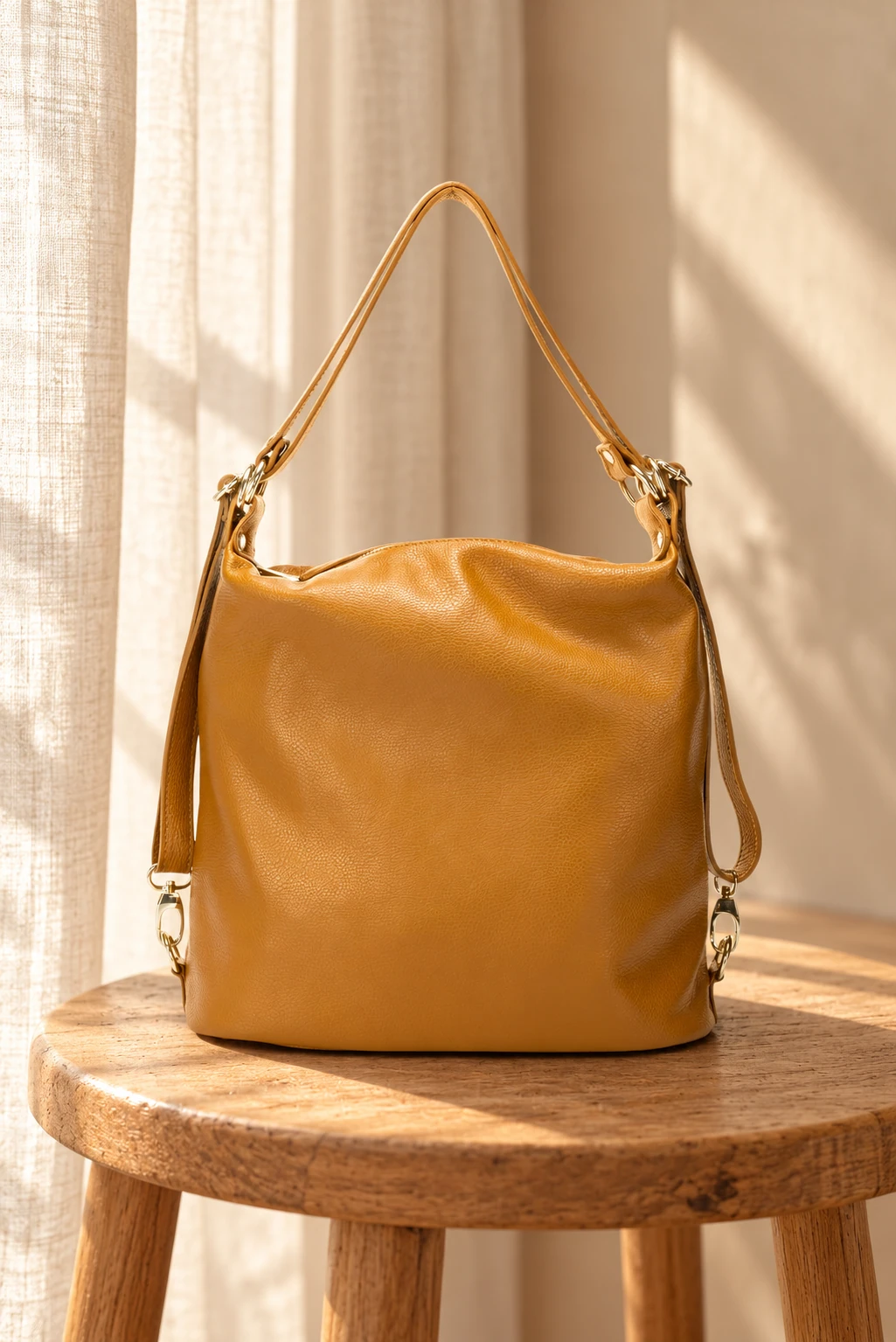
How to choose a leather backpack for your everyday wardrobe
Find a backpack that suits your daily essentials and the clothes you already wear. Compare shapes, grain, colour and distinctive details before choosing.
Close the guide
A leather backpack can bring a familiar wardrobe into focus: a practical everyday shape with enough character to feel considered. This guide helps you compare MIRELICE backpacks by silhouette, listed dimensions, texture and design details, then build a useful routine for styling, packing and care. Start with your actual belongings and most-worn clothes, and use each product’s specific information to narrow the choice.
Start with the shape of your day
A backpack earns its place in a wardrobe when its proportions, opening and visual character suit what you actually carry. Before comparing colours or hardware, lay out the items that leave home with you on an ordinary day. Separate essentials from occasional extras. A phone, keys, wallet and small personal-care pouch create a different brief from a rigid notebook, packed lunch and spare layer. This simple exercise makes it easier to recognise whether you need a compact everyday accessory or a larger silhouette, without treating the biggest dimensions as an automatic advantage.
Think about transitions as well as destinations. A day might move from a coat and trainers to a knit and loafers, or from public transport to a café table. Consider where you put the bag down, how often you open it and whether you regularly carry another bag alongside it. These habits help define a useful size. A backpack that looks attractive in isolation can feel visually excessive beside a slim outfit, while a very small model may invite you to squeeze in objects that distort its outline.
Choose a main purpose, then identify the secondary situations that matter. For a light everyday edit, prioritise a silhouette that works with your most-worn outerwear. For a fuller schedule, compare the shapes of your actual belongings with the product dimensions and opening information. If carrying a particular device is essential, establish that fit separately. A category name or an exterior measurement alone does not confirm room for a laptop, tablet or protective sleeve.
Read dimensions as a shape, not a capacity promise
The three listed measurements describe an exterior envelope, not a measured usable volume. Rounded corners, a curved base, an opening that narrows and the way a closure gathers the top can all change how objects sit inside. Multiplying the numbers would produce the volume of an imaginary rectangular box, not a reliable capacity for the backpack. Instead, compare height with your tallest everyday object, width with your broadest rigid item and depth with the objects that need to sit beside one another.
CORA and MAEVE are both listed at 30 × 13 × 32 cm, whereas CORDELIA is listed at 39 × 16 × 30 cm. PAOLA has the more compact listed dimensions of 23 × 11 × 26 cm. These differences are useful for comparing the silhouettes, but the shared measurements of CORA and MAEVE do not make their designs interchangeable. Likewise, CORDELIA’s wider listed envelope does not establish an exact number of items it will hold. Start with the outline, then check the individual product information for the details important to you.
For a practical scale reference, measure a bag you already use and compare its exterior with the published dimensions. You can also draw the height and width on paper or mark them on a flat surface. This is a visual aid, not a fit test: it helps you imagine how much space a bag occupies beside a jacket or chair. Keep a little room in your decision for objects to move naturally. A tightly packed bag is harder to organise and can pull an otherwise attractive silhouette out of shape.
Include the empty weight in the comparison
CORA and MAEVE each have a listed weight of 600 g. CORDELIA and PAOLA each have a listed weight of 500 g. Consider those figures alongside the weight of what you carry, rather than equating a lighter empty bag with comfort for every person. Shape, load distribution, clothing and personal preference also affect the experience. When deciding what belongs in your daily bag, removing an unnecessary object can be more useful than focusing on a modest difference between the listed empty weights.
Four designs, four different visual starting points
The most useful comparison is often between design features you can identify clearly. Colour, grain, outline and the treatment of the top of the bag affect how a backpack relates to clothing. Look for a detail you genuinely enjoy rather than choosing a model only because its measurements resemble another one. The following distinctions describe the individual designs; they are not a ranking of quality or a claim that one construction suits every routine.
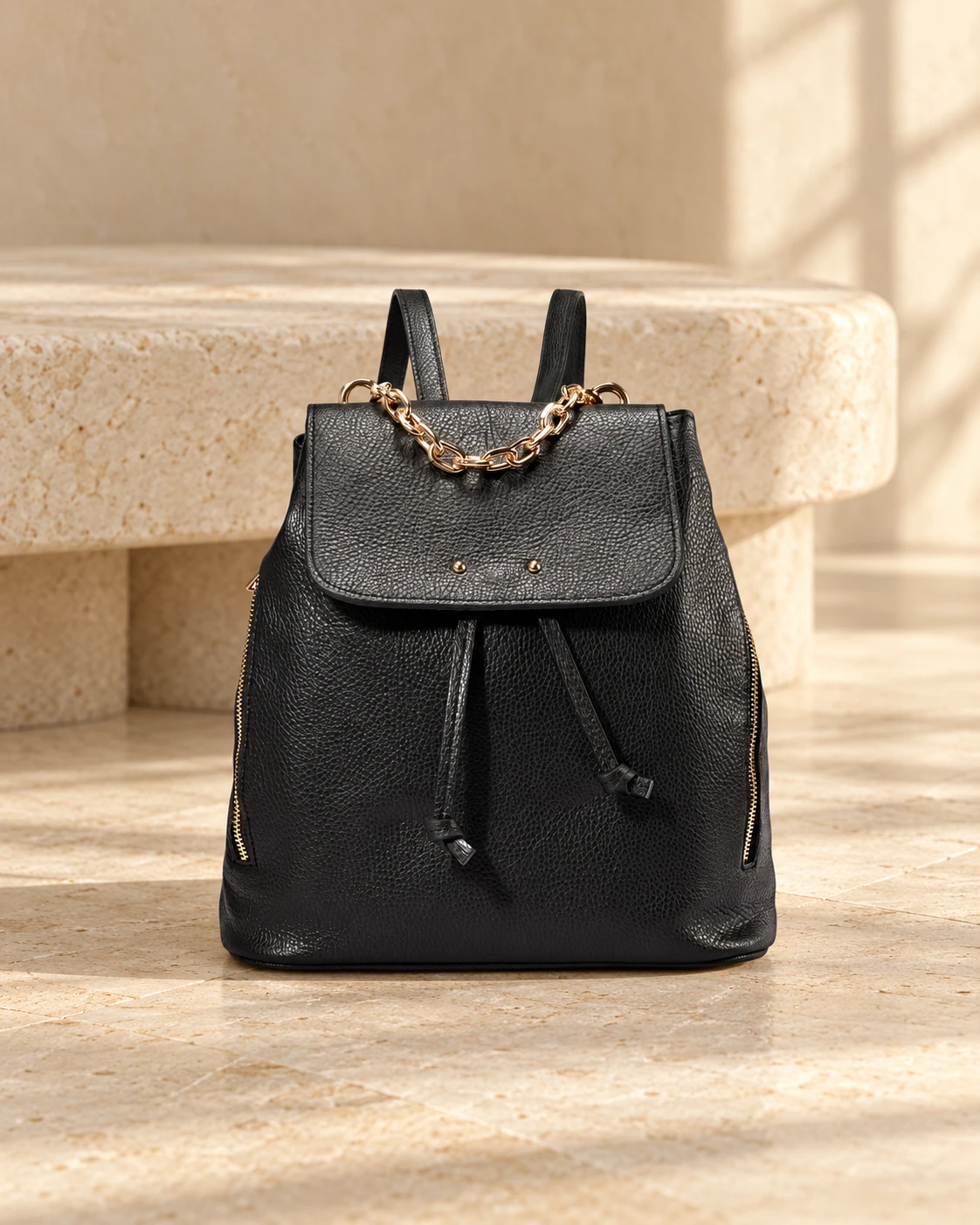
CORA: black grain with a decorative chain
CORA, reference MR-02013, is described in black grained calfskin with a flap and drawstring closure. Its listed dimensions are 30 × 13 × 32 cm and its listed weight is 600 g. The decorative heavy chain at the top gives the design a more noticeable jewellery-like accent. Treat that chain as a visual feature, not as evidence of a different carrying configuration or an additional function.
To give CORA space in an outfit, keep the area around the bag relatively uncluttered. A plain knit, a simple coat or a smooth shirt can let the grain and chain become the main points of interest. If you enjoy layering jewellery, compare the combined visual effect rather than trying to match every metal exactly. The aim is a deliberate balance between the bag’s decorative top and the rest of your accessories.
CORDELIA: cognac colour and a softer rounded body
CORDELIA, reference MR-02014, is described in cognac grained calfskin with a soft, rounded body. It measures 39 × 16 × 30 cm and has a listed weight of 500 g. A long top handle and side hardware are part of its visible design. These features give it a different outline from the other models, but a transformer-like appearance is not confirmation of specific conversion modes. Choose it for the documented design rather than assuming it changes into a particular type of bag.
Cognac introduces warmth beside navy, cream, olive and denim. It can be the one warm leather accent in an otherwise cool-toned outfit, or sit alongside other brown tones without requiring an exact colour match. Its rounded form suggests a relaxed visual direction: contrast it with a straight-cut coat or repeat that softness with knitwear. Consider the wider listed dimensions when judging the overall scale beside your usual clothes.
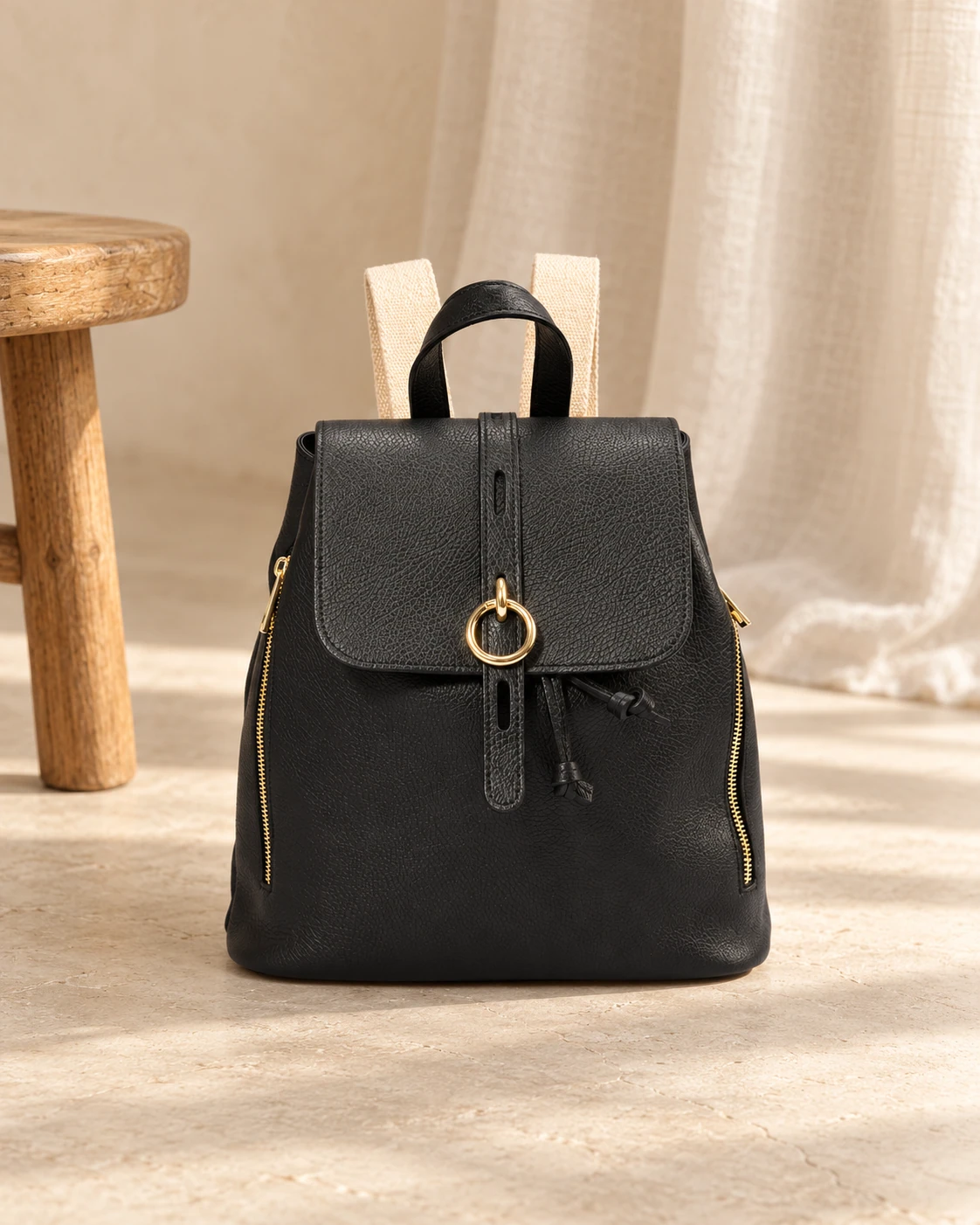
MAEVE: a ring fastening and a simpler top line
MAEVE, reference MR-02029, is a black grained calfskin design listed at 30 × 13 × 32 cm and 600 g. It combines a flap and drawstring with a ring fastening and a simple loop handle. Although its measurements match CORA’s, the ring fastening and simpler handle treatment give you a separate styling choice. Keep the two models distinct when comparing photographs, specifications and the effect you want in an outfit.
MAEVE is worth considering when you like a defined fastening detail without CORA’s decorative heavy chain at the top. Its black colour can connect with dark footwear or form a quiet counterpoint to a patterned garment. The ring remains a focal point, so it helps to view the bag together with belt buckles, jewellery and other visible hardware rather than assessing each accessory separately.
PAOLA: a compact silhouette with V-shaped stitching
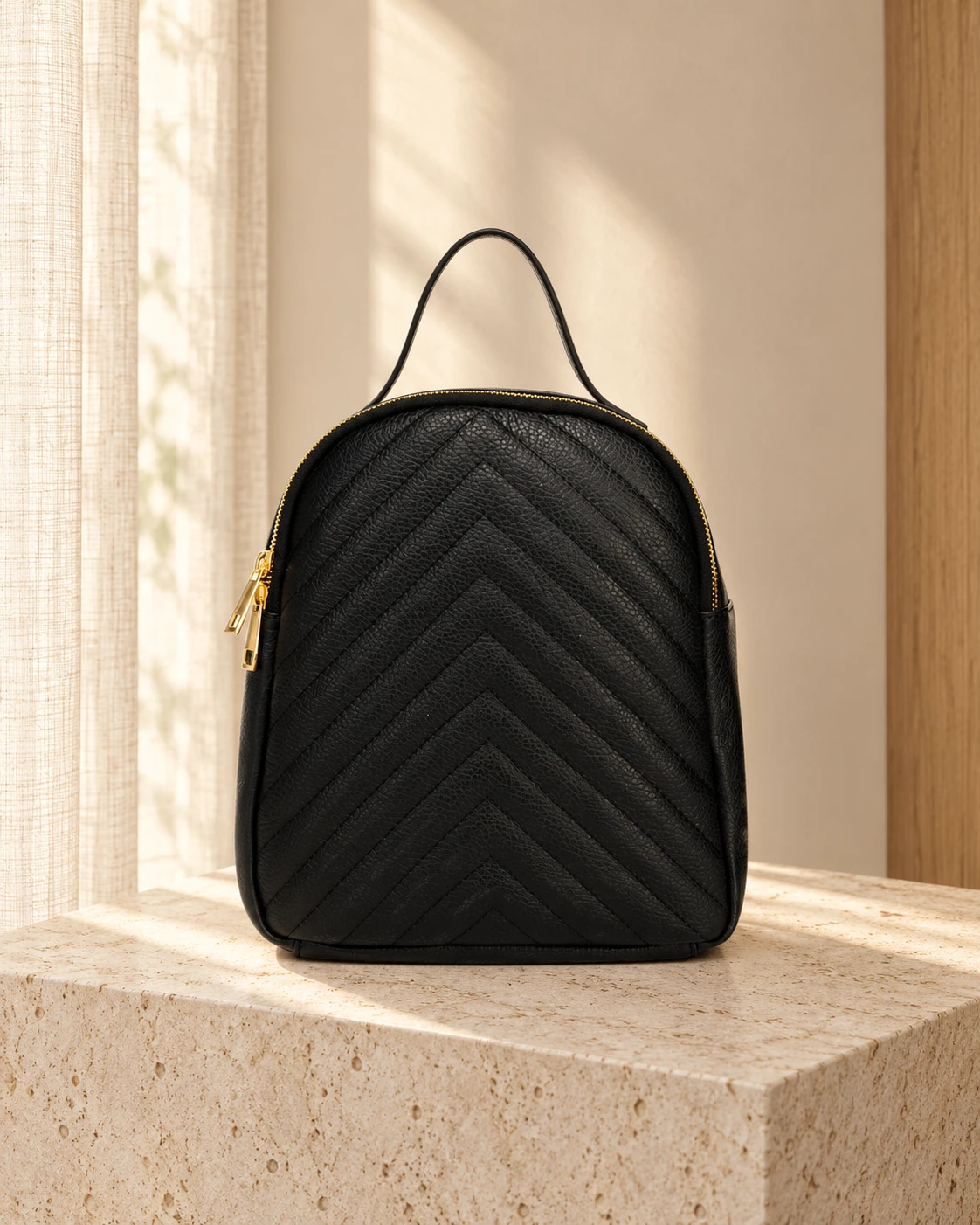
PAOLA, reference MR-02036, is described in black grained calfskin with a compact rounded shape and distinctive V-shaped stitching. Its listed measurements are 23 × 11 × 26 cm and its listed weight is 500 g. The stitching creates a recognisable graphic element without relying on the same top details as CORA or MAEVE. Its smaller exterior dimensions make it a useful comparison point if you prefer a lighter visual presence, but they do not establish which specific objects fit.
Try thinking of PAOLA as part of a deliberately edited outfit and daily carry. Its compact outline can keep a look focused when you already have volume in a coat or trousers. The V-shaped detail works particularly clearly against plain clothing. If you carry several rigid items, check their measurements rather than choosing a compact design on appearance alone and expecting the contents to determine its final shape.
Organise the contents before adding more
Organisation starts with a small number of clear groups, whether or not a particular backpack has internal compartments. Put together the items you reach for most frequently, the items you use occasionally and anything that needs separate protection. Small removable pouches can help you move between bags without losing track of essentials. This is a packing approach, not a statement about supplied accessories or built-in pockets. Check the individual product listing before relying on any internal feature.
Avoid allowing sharp-edged or uncapped objects to move freely against the interior. Use appropriate cases for pens and other items that could mark a lining or leather surface. Keep liquids in securely closed containers and consider a separate protective pouch. A crowded bag makes these precautions less effective because objects press against one another. Begin with the essentials, then add an occasional extra only if the bag retains its natural shape and the closure can be used without force.
A repeatable packing order also reduces searching. Decide where your everyday groups belong and return them to the same place after use. If you often change bags, maintain a small transfer checklist rather than carrying duplicate sets of everything. At the end of the week, remove receipts and items you no longer need. The point is not to create a perfect system but to keep the backpack aligned with your real routine instead of gradually becoming storage for forgotten belongings.
- Group frequently used essentials so they are easy to identify when you open the bag.
- Protect items that could leak, scratch or mark other belongings.
- Leave enough flexibility for the closure and silhouette to sit naturally.
- Review the contents when changing your schedule, season or main bag.
Build outfits around colour, texture and proportion
Black and cognac serve different purposes in a wardrobe. Black can echo a pair of shoes, a belt or the darker part of a print. It also creates a clear contrast against pale clothing. Cognac adds a warmer note and often gives a simple combination of denim and knitwear a more considered finish. Neither colour needs to match every accessory exactly. Repeating one colour once, then allowing the remaining pieces to stay neutral, is usually easier than assembling a set of identical shades.
Grained calfskin contributes visible texture. Pairing it with a smooth coat or a plain cotton shirt allows that texture to read clearly; placing it alongside a cable knit or patterned fabric produces a richer combination. Decide which element should draw the eye. If the clothing already has large motifs, several decorative details around the bag may feel busy. If the outfit is very simple, a chain, ring fastening or graphic stitching can provide the focal point without adding another print.
Proportion is about the whole outfit rather than body-type rules. Compare the bag with the volume of your coat, the width of your trousers and the length of your top. A compact outline can create contrast beside generous outerwear, while a broader shape may echo relaxed tailoring. Try the combinations you actually wear instead of selecting a bag for an imagined wardrobe. The best styling reference is often three existing outfits that make you feel comfortable and like yourself.
Make a backpack work in a small capsule wardrobe
A capsule wardrobe becomes more useful when each accessory has a clear role. Start with three settings you revisit, such as a weekday routine, a relaxed weekend and a slightly more polished outing. For each, choose clothes you already own and picture the same backpack alongside them. Note whether its colour repeats naturally, whether the silhouette feels proportionate and whether a design detail competes with something you wear frequently. This exercise gives a more meaningful result than deciding that one bag must suit every possible occasion.
For a black-led capsule, a black backpack can connect dark shoes with softer shades such as grey, stone or cream. Use different fabric textures to keep the combination from looking flat. For a warm neutral capsule, cognac can link beige outerwear, blue denim and earthy knitwear. You can still introduce black elsewhere; repeating every leather colour is optional. What matters is that the bag appears chosen, not that every item belongs to a rigid matching set.
If you already own another everyday bag, look for a useful contrast. A compact backpack may complement a larger tote, while a broader backpack may serve days when a small shoulder bag is too restrictive. Compare those roles within the full Bags collection rather than expecting a backpack to replace every format. Keeping the purpose clear can prevent buying several pieces that look different but solve exactly the same wardrobe problem.
Care for grained leather with a measured routine
Begin with the care information supplied for the individual product. Leather finishes can respond differently to cleaners and conditioners, so a general leather-care label is not enough to guarantee compatibility. For routine surface dust, use a clean, soft cloth and a light touch. Avoid vigorous rubbing, abrasive materials and household cleaning products. If a treatment is appropriate under the product instructions, test it on a discreet area first and allow time to assess the result before applying it more widely.
If the bag becomes damp, gently remove surface moisture with an absorbent cloth and let it dry naturally away from direct heat. Do not try to accelerate drying with a radiator or hairdryer. Grained leather should not be assumed waterproof, and an attractive surface texture does not establish resistance to rain or stains. Keep the bag away from avoidable contact with liquids, oils, cosmetics and strongly coloured materials that may transfer colour, especially when damp.
For storage, empty the bag, make sure it is dry and give it room rather than compressing it between other items. Light, clean stuffing can help support the shape without stretching it. Keep it away from prolonged direct sunlight and damp storage conditions. Check decorative hardware and closures gently, and avoid forcing a fastening when the bag is overfilled. Regularly removing unnecessary contents is part of care as well as organisation because it reduces pressure on the shape and closure.
Make the final comparison specific
Before choosing, return to the few criteria that mattered at the start: the shape of your daily carry, the scale of the bag, your preferred colour and the design detail you want to see most often. Compare CORA’s decorative chain, CORDELIA’s cognac rounded body, MAEVE’s ring fastening and PAOLA’s V-shaped stitching as distinct choices. Then read the individual product details for any feature essential to your routine. A good decision combines practical fit with a design you enjoy, without asking the category name or a set of dimensions to answer questions they cannot resolve.
If an important detail is absent, keep it as an open question rather than filling the gap with an assumption. Interior organisation, device compatibility, strap adjustment and specialist performance need their own product information. That approach leaves room for personal taste while keeping the comparison grounded. Choose the backpack whose documented character and proportions suit your wardrobe and everyday habits, and let a well-edited set of belongings help it retain the shape that attracted you in the first place.