Crossbody bags
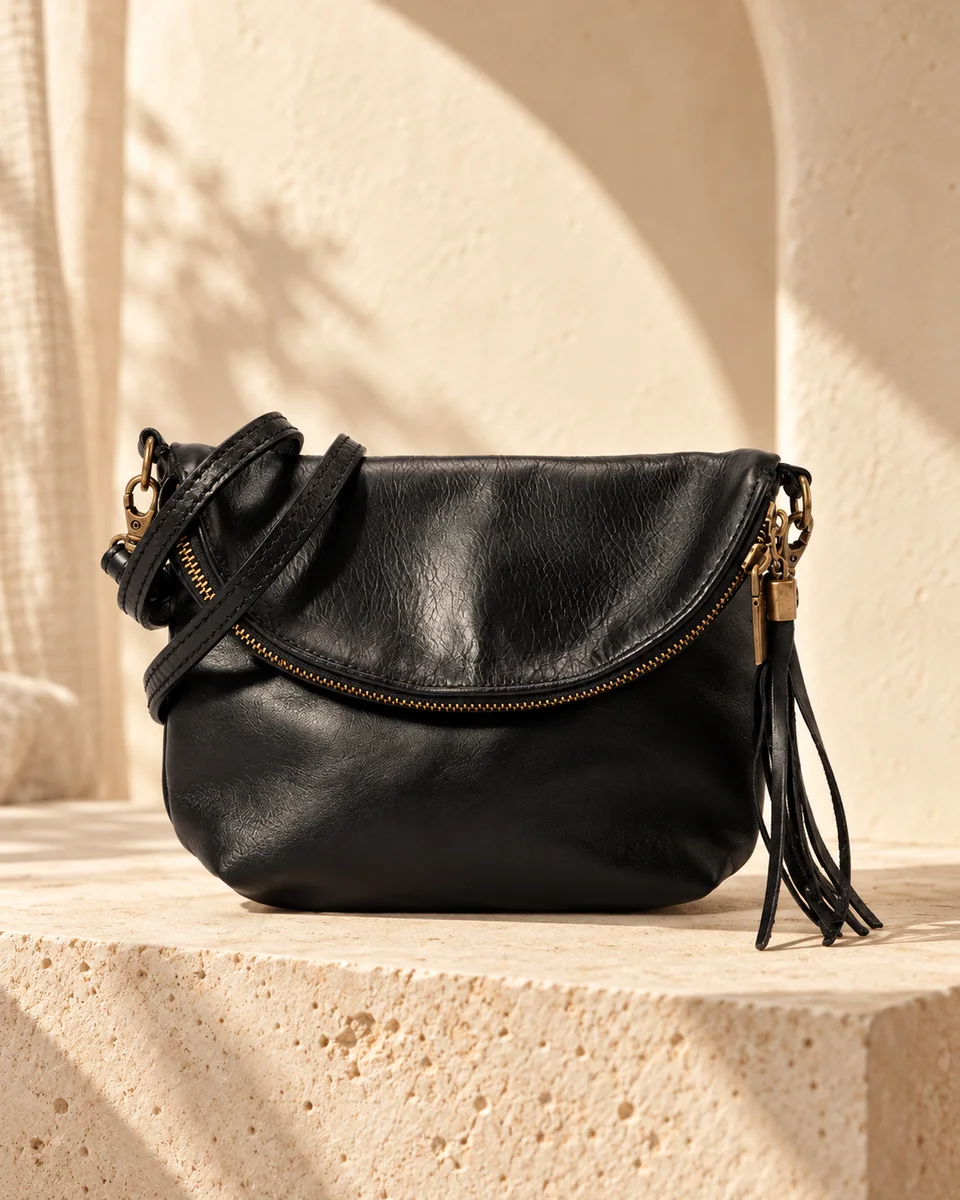
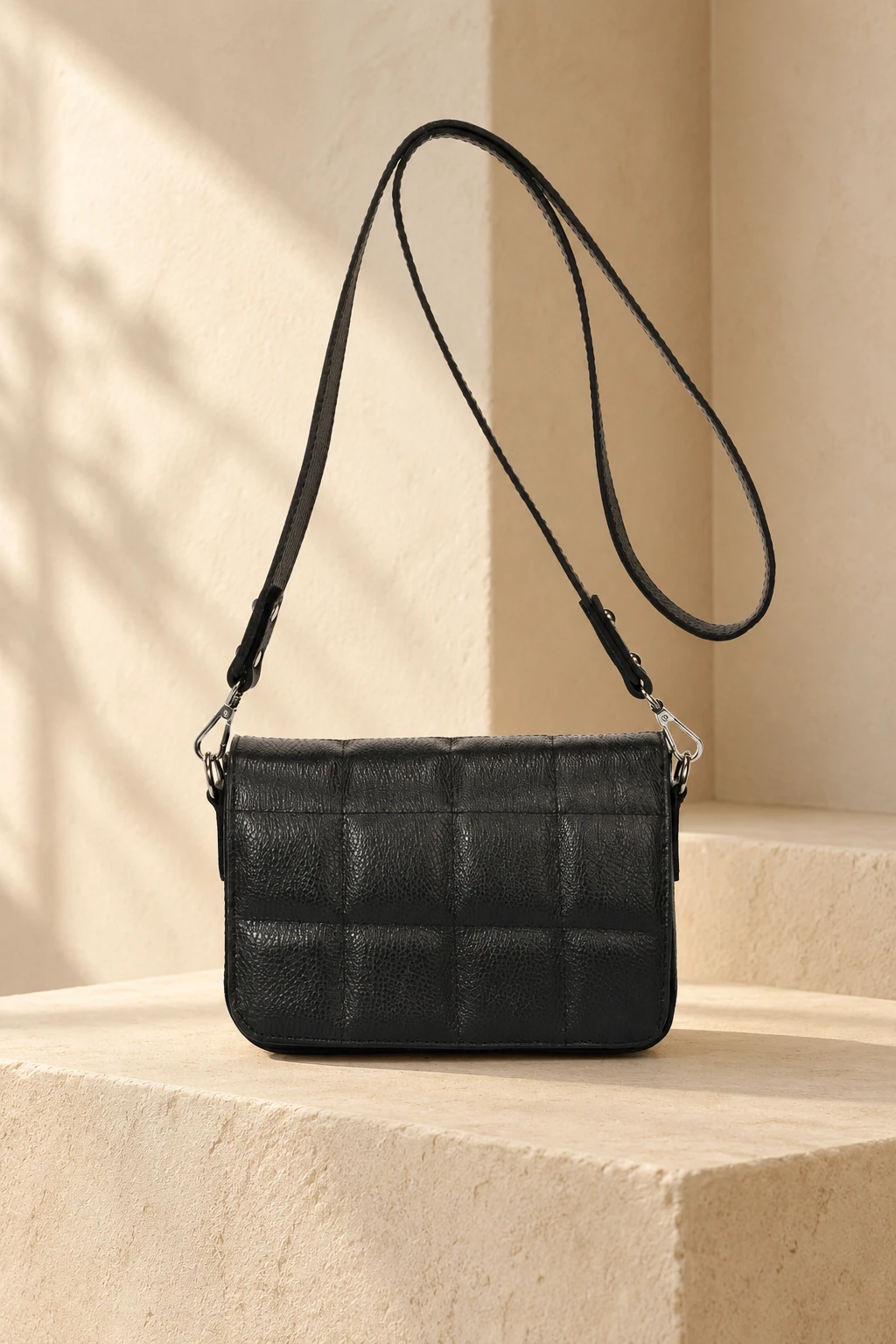
AGATHA Black Leather Crossbody
EUR 61.24 · per item · Preliminary price
Check delivery availability
MIRELICE COLLECTION
Home / Handbags / Crossbody bags
Crossbody bags
Check delivery availability
Crossbody bags
Check delivery availability
Crossbody bags
Check delivery availability
Crossbody bags
Check delivery availability
Crossbody bags
Check delivery availability
Crossbody bags
Check delivery availability
Start with your everyday objects, then compare the body, opening and confirmed strap details. A compact outline can work in several very different ways.
A crossbody puts the relationship between bag, strap and clothing at the centre of the choice. The body can sit close to a plain knit, create a defined shape against a coat or add a small point of texture to a simple outfit. Yet two bags with similar front views may behave differently when you reach inside or change layers. Depth, opening and the actual strap arrangement matter as much as the shape of the flap.
The MIRELICE selection includes curved saddle forms, camera-style bodies, flatter panels and chain details. Begin with the belongings that must accompany you and the place where you prefer the bag to sit. Use the recorded measurements and individual specifications to compare candidates. The category name does not guarantee a particular strap length, phone fit, security feature or interior layout. A good choice connects a silhouette you enjoy with details that have actually been confirmed.
Think about your usual movements before choosing the smallest or largest model. You may want the bag near the front when paying, at your side while walking or slightly lower over a longer coat. These preferences make strap information important. An adjustable-looking buckle in a photograph is not a measured adjustment range, and a model described as crossbody does not establish the same position on every person.
Compare confirmed strap measurements, when available, with a bag you already use. Notice the body position rather than measuring the strap in isolation. The width and height of the bag also influence where its lower edge falls. If exact length or adjustment is essential, ask about the chosen model instead of relying on a generic assumption about all crossbody bags.
Lay out the phone in its normal case, your preferred wallet or cardholder, keys and any other object you cannot leave behind. Keep their actual shapes in view. A tall phone and a thick key case compete for space differently from a slim cardholder and one small pouch. This gives you a useful packing question rather than a vague search for a compact bag that somehow carries everything.
Remove objects that only belong to an occasional larger load. A crossbody can be a deliberate smaller choice within your wardrobe without replacing every other bag. If a necessary object requires a particular internal dimension, check that point explicitly. The fact that it is shorter than an exterior width does not prove it will pass through the opening or sit flat inside.
A phone cover, glasses case or separate pouch forms part of the object’s size. Do not leave those out of the comparison to make a bag appear suitable. Arrange the complete objects as you would carry them and consider what you need to remove first. A little room to reach around an item is different from a tight fit achieved by pressing everything together.
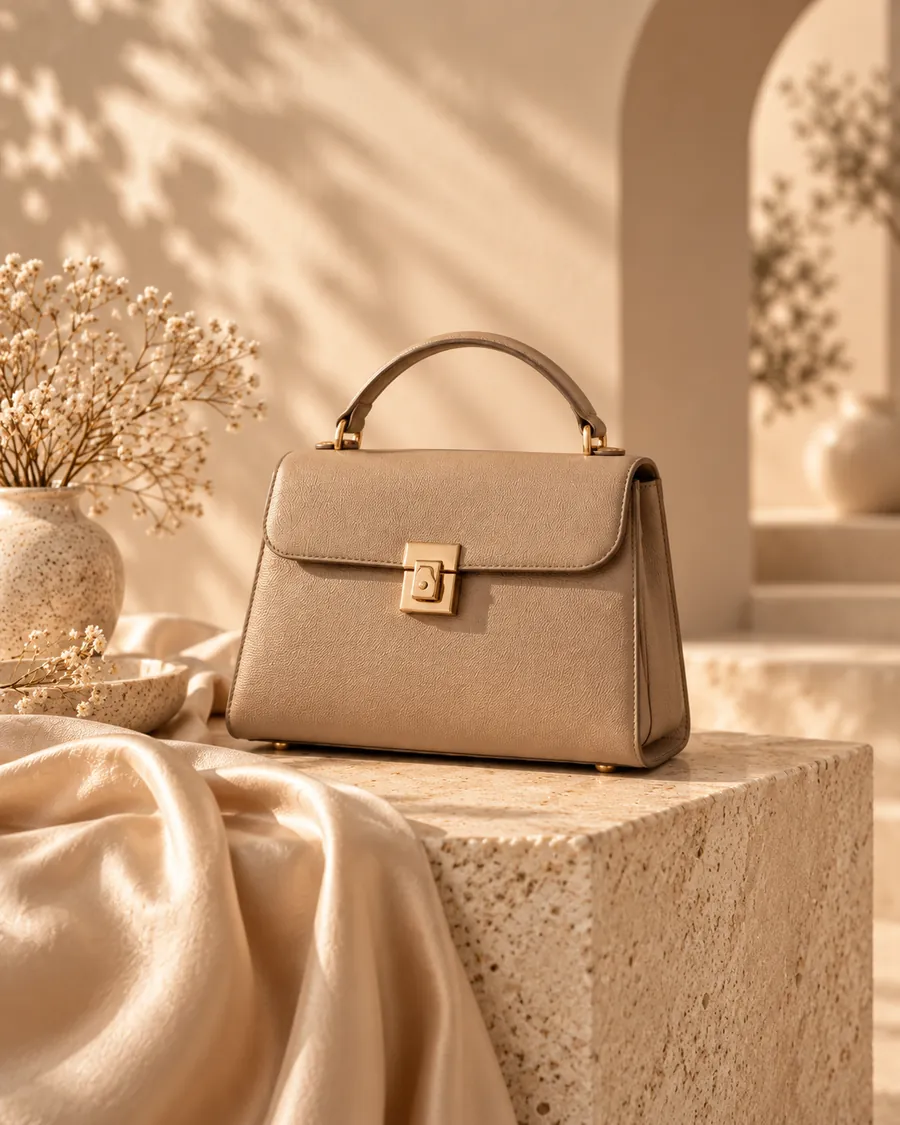
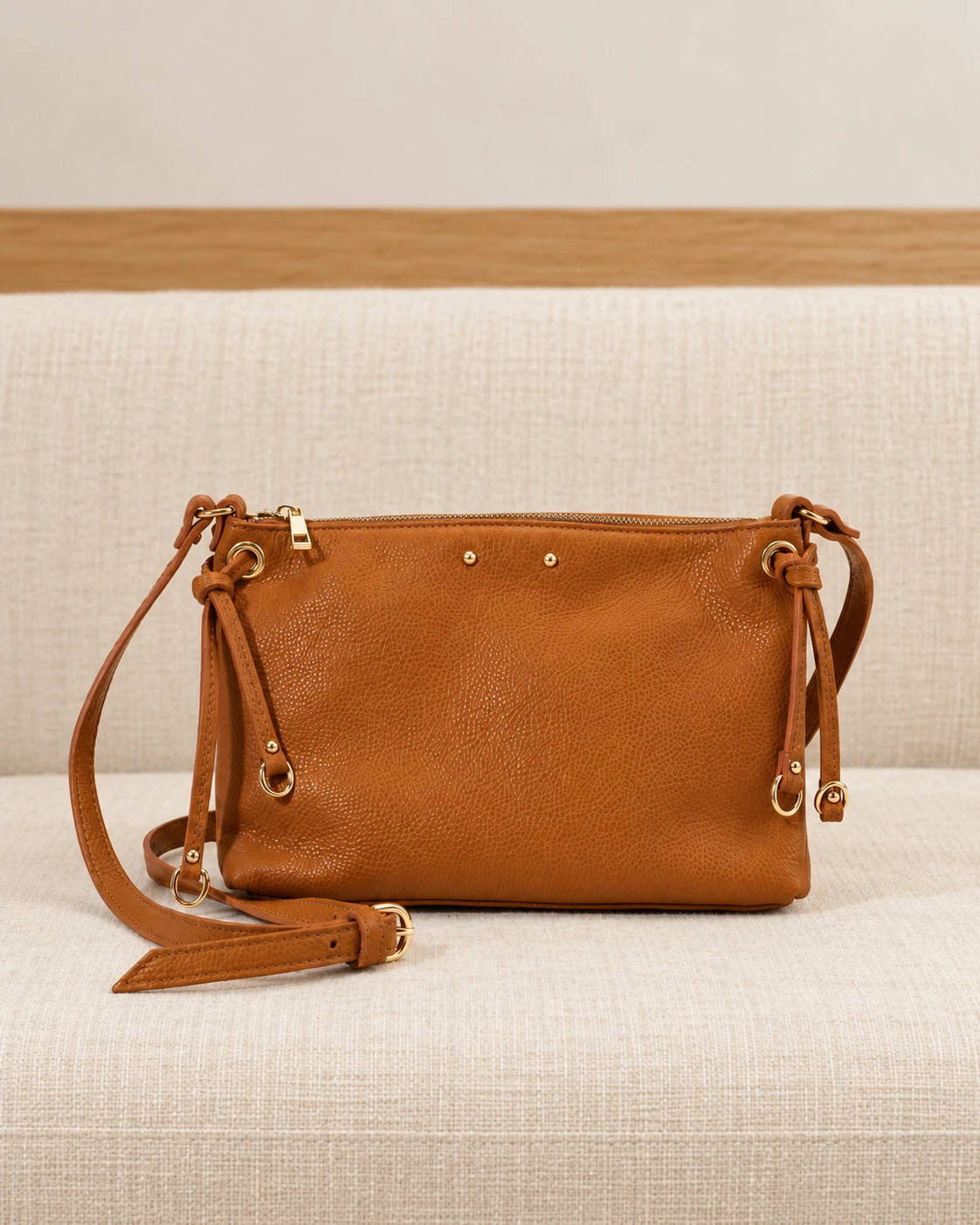
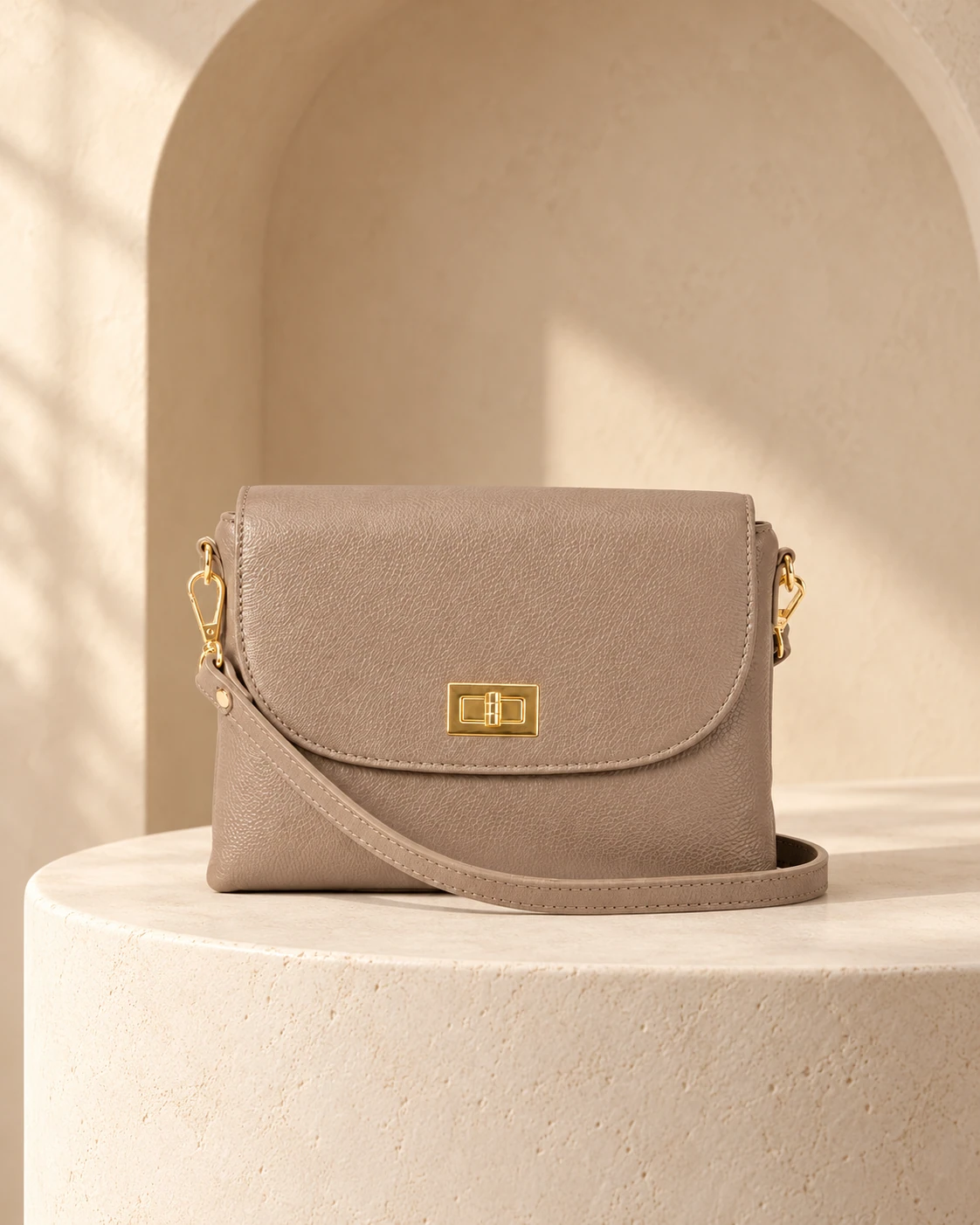
MAISIE is recorded at 25 x 2 x 19 cm and AGATHA at 23 x 4 x 20 cm. Their comparatively slim profiles offer a different starting point from BELA at 20 x 7 x 16 cm or FREYA at 25 x 8 x 19 cm. These supplier-declared exterior measurements describe proportions. They are not internal capacity figures and should not be converted into promised usable volume.
A flat profile may appeal when you want a clear line beside clothing, while a deeper body may allow a different arrangement of small objects. Neither automatically means better organization. Compare the depth of your own belongings and the confirmed opening. Softness in a photograph is not evidence that the bag can expand to a particular width or comfortably accommodate an overfilled load.
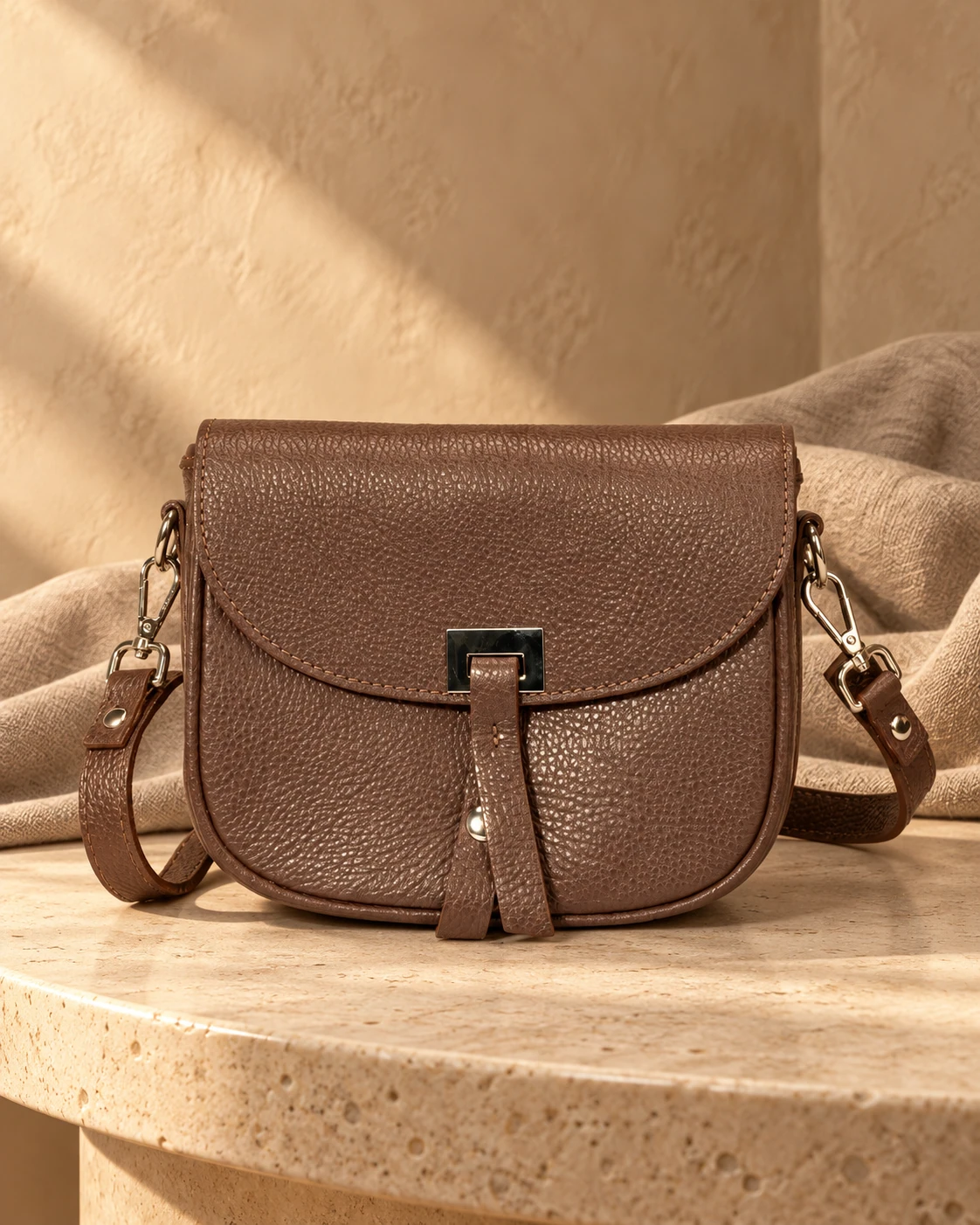
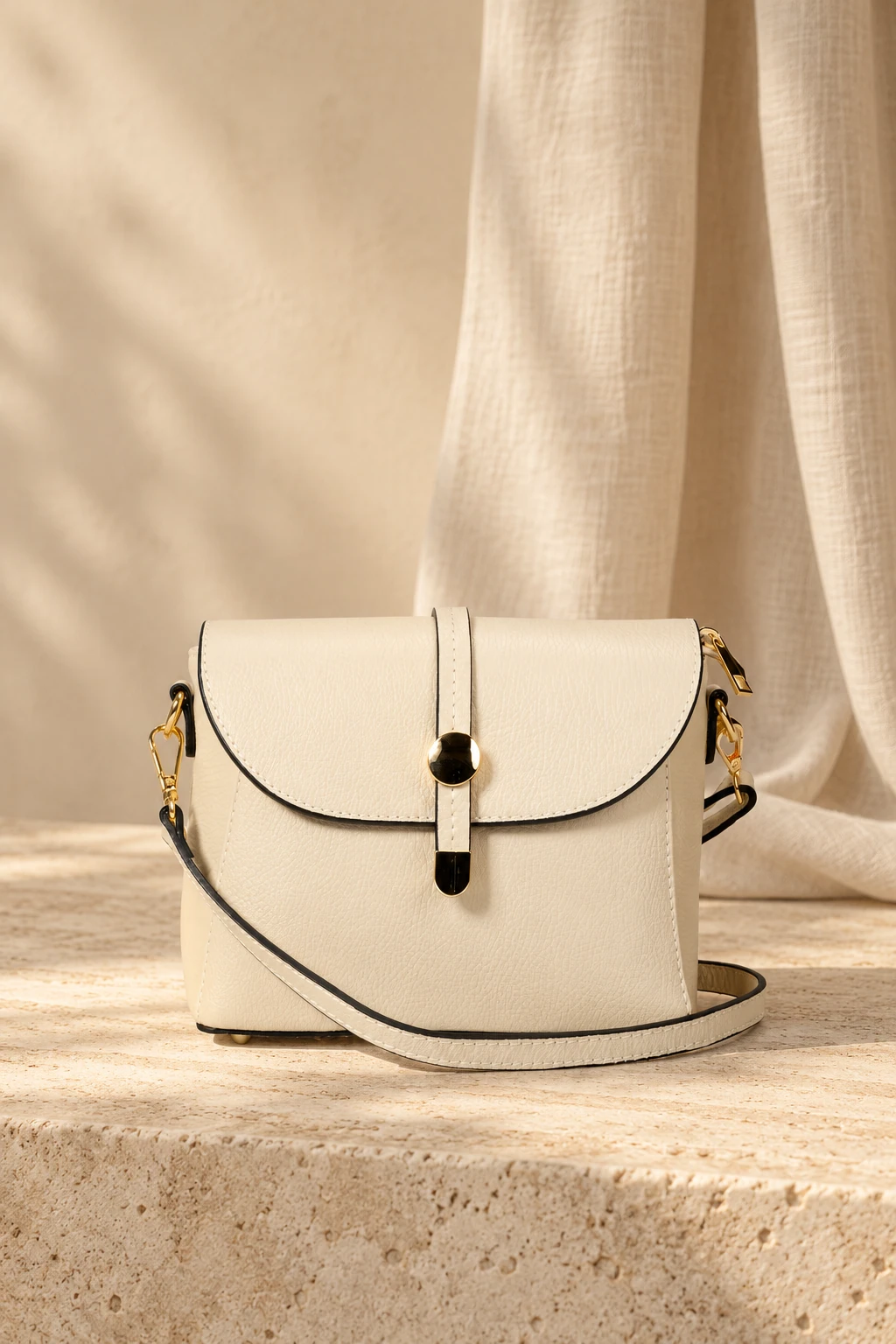
BELA and FREYA both offer a curved saddle-like outline, but they are not interchangeable colour versions. BELA is a brown model recorded at 20 x 7 x 16 cm, with a slim central tab and square silver-tone keeper visible on the flap. FREYA is beige, recorded at 25 x 8 x 19 cm, with a central vertical tab and restrained hardware. The curve is a shared visual idea, not proof of identical construction.
Look at how the lower curve meets the sides and where the flap interrupts the front. A curved body can be attractive beside straight tailoring or a simple long coat. For packing, however, compare the actual opening and internal space rather than imagining a rectangular box defined by the outer measurements. Rounded corners may matter when the object you need is rigid.
EBE is described with a camera-style shape, a compact rounded rectangular body and multiple visible zip tracks. Its recorded dimensions are 23 x 7 x 17 cm, with a declared weight of 400 g. The name describes the silhouette; it does not mean padded protection for a camera or compatibility with photographic equipment. Those functions require their own confirmed specifications.
A zip-led outline may feel visually different from a broad flap. Consider which sequence of opening and replacing objects you prefer. Distinguish a visible zip line from a verified separate compartment, and read the product description for the exact organization. If you need one object isolated from another, ask about that specific division rather than counting lines on the exterior photo.
CASIA is recorded at 40 x 10 x 24 cm, making it a useful contrast to the smaller bodies in the selection. Its tan rectangular shape and visible zip details create a different scale. This is why crossbody should not be treated as a synonym for miniature. The carrying arrangement and the size of the body are separate parts of the description.
Compare the wider outline with the space beside your usual coat or jacket. Think about sitting down, walking through a busy entrance and reaching the closure. These are personal use considerations, not tested performance claims. If you want a small visual accent, a wider model may serve another role; if you prefer more room, verify the internal arrangement rather than assuming the exterior measurements solve every packing need.
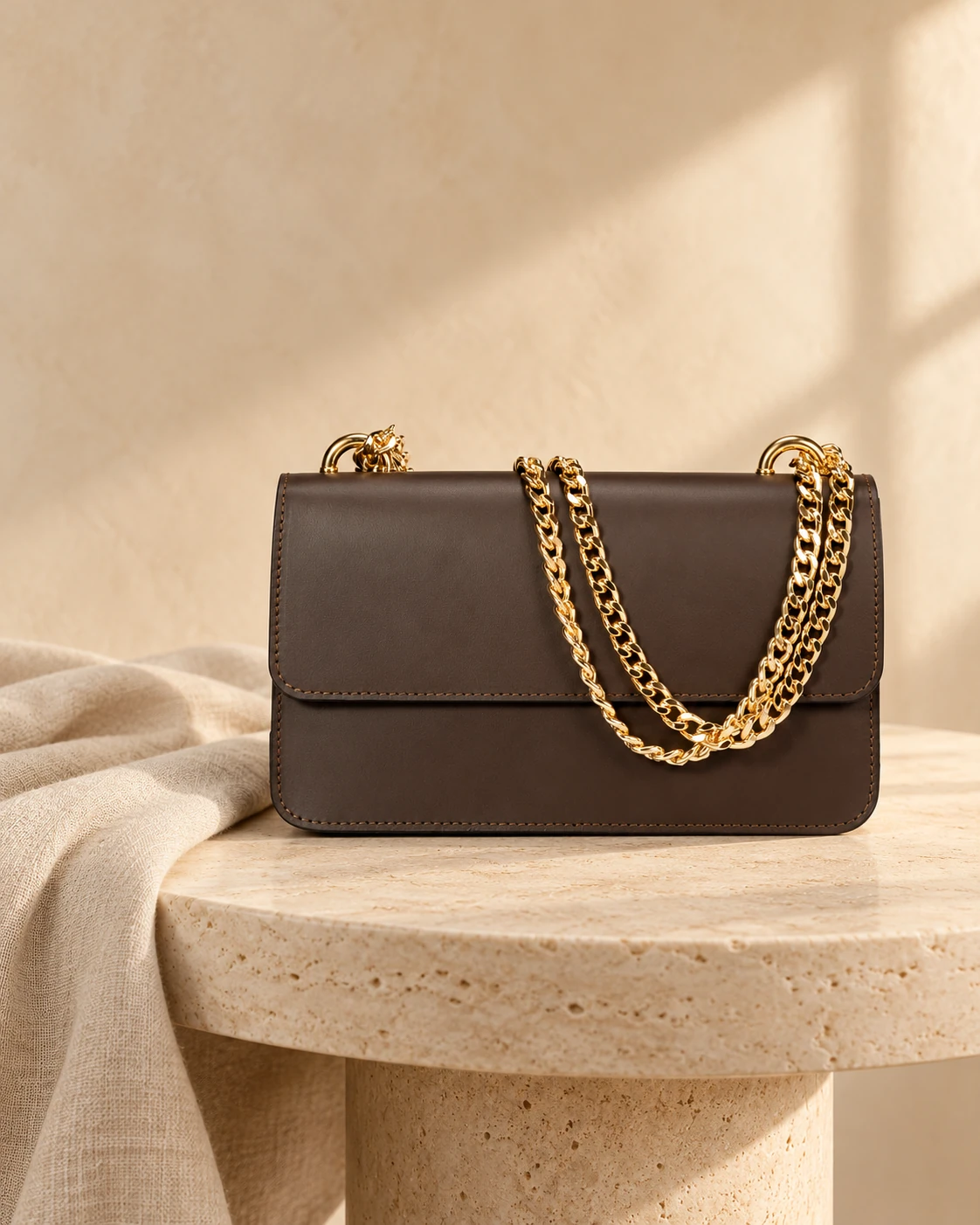
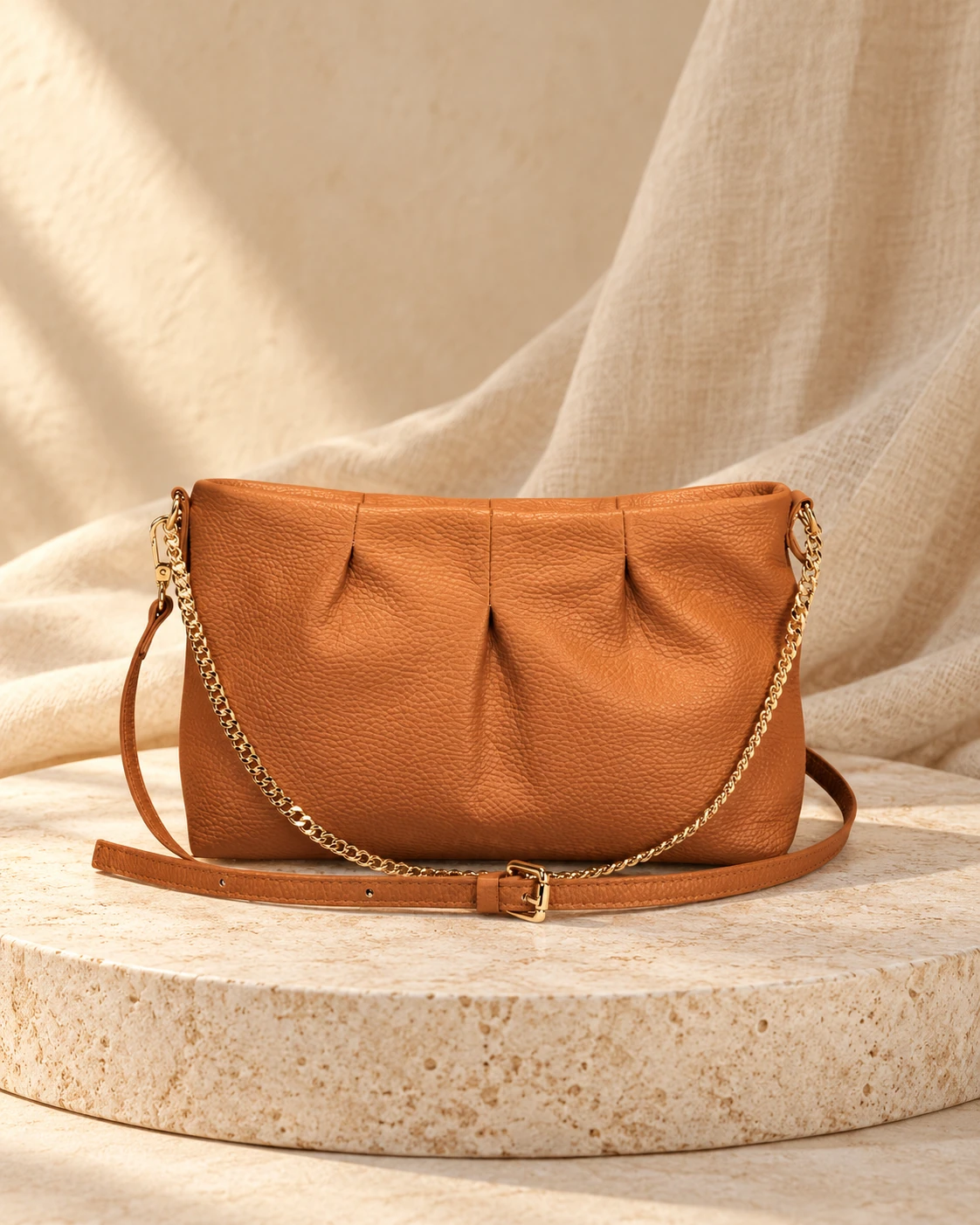
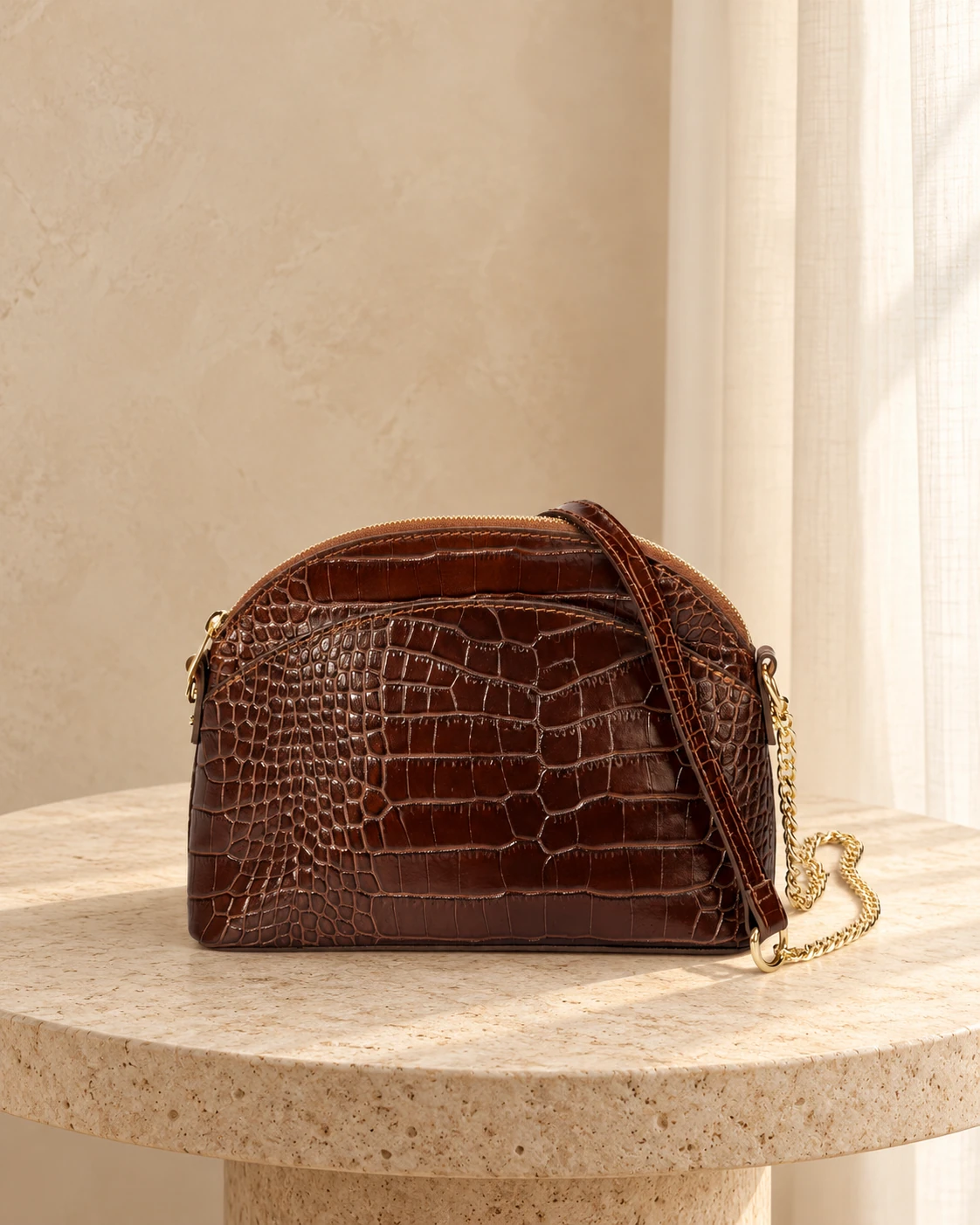
CALLIE combines a dark brown smooth calfskin description with a prominent gold-tone double-chain detail and recorded dimensions of 22 x 6 x 16 cm. CLIO has a tan pleated body, short gold-tone chain detail and dimensions of 28 x 6 x 19 cm. ZENA introduces a finer chain line on a brown croc-embossed form. Their hardware creates different rhythms rather than one universal chain-bag look.
Read which carrying elements belong to the exact model and whether an additional strap is confirmed. A decorative chain is not automatically a long crossbody strap, and a metal tone is not a claim of precious-metal composition. Think about contact with your usual clothing and the amount of visual emphasis you want near the bag. The confirmed construction should guide any essential carrying requirement.
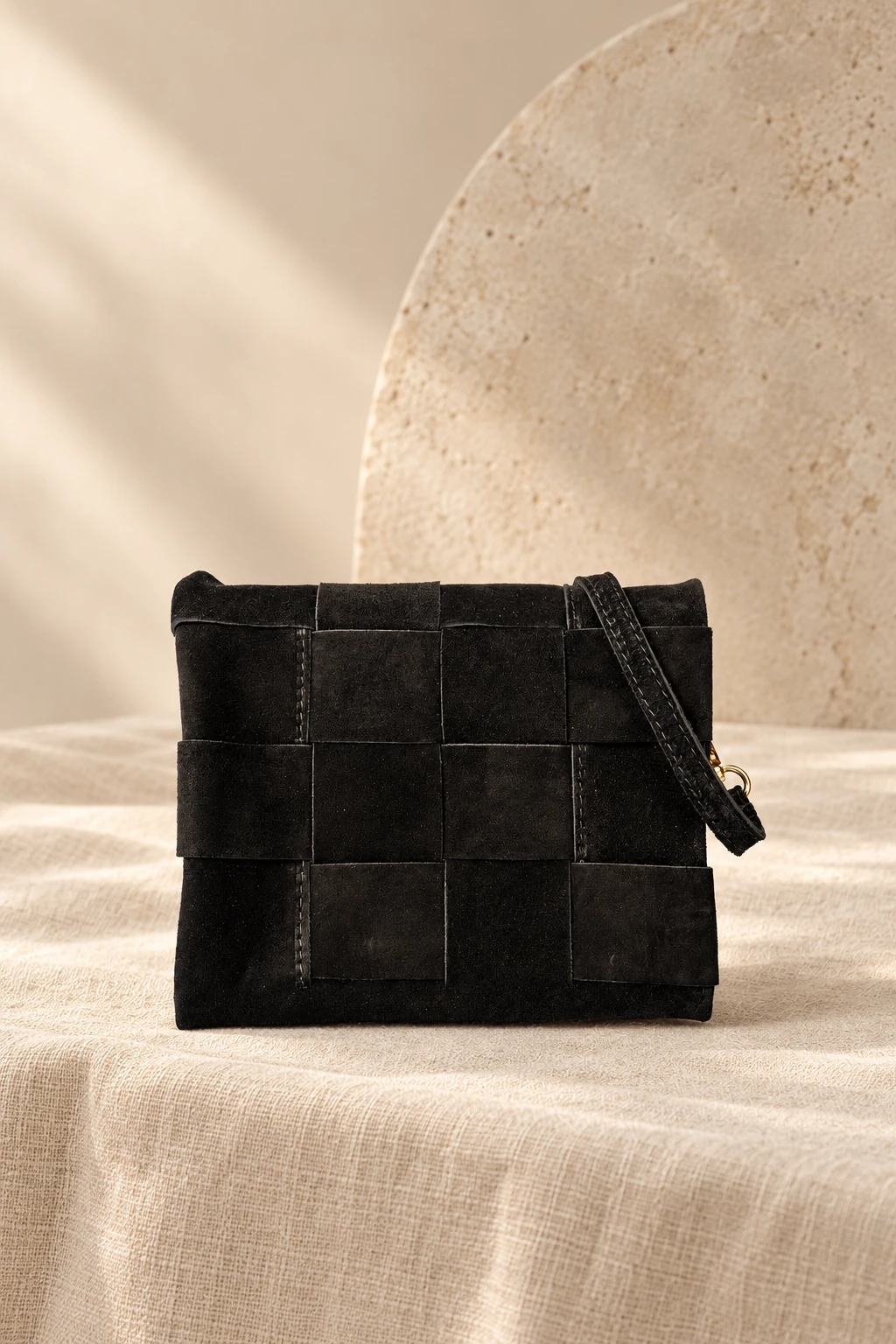
The recorded selection includes grained, smooth and full-grain calfskin descriptions as well as suede and laminated suede. These terms are not interchangeable. EMILIA is described as laminated suede with a bold grid-panel effect, while HAILEY is recorded as suede with a square-panel front. Photographs help show the pattern, but the material statement comes from the supplier’s product information rather than an inference about the image.
Use the broad material filter to narrow the family, then return to the individual finish. A surface that looks smooth under warm light may still have a more specific description. Do not extend one model’s care instructions, grade or texture to another. Supplier declarations are useful product information, but they do not independently establish testing, tanning methods or resistance to weather.
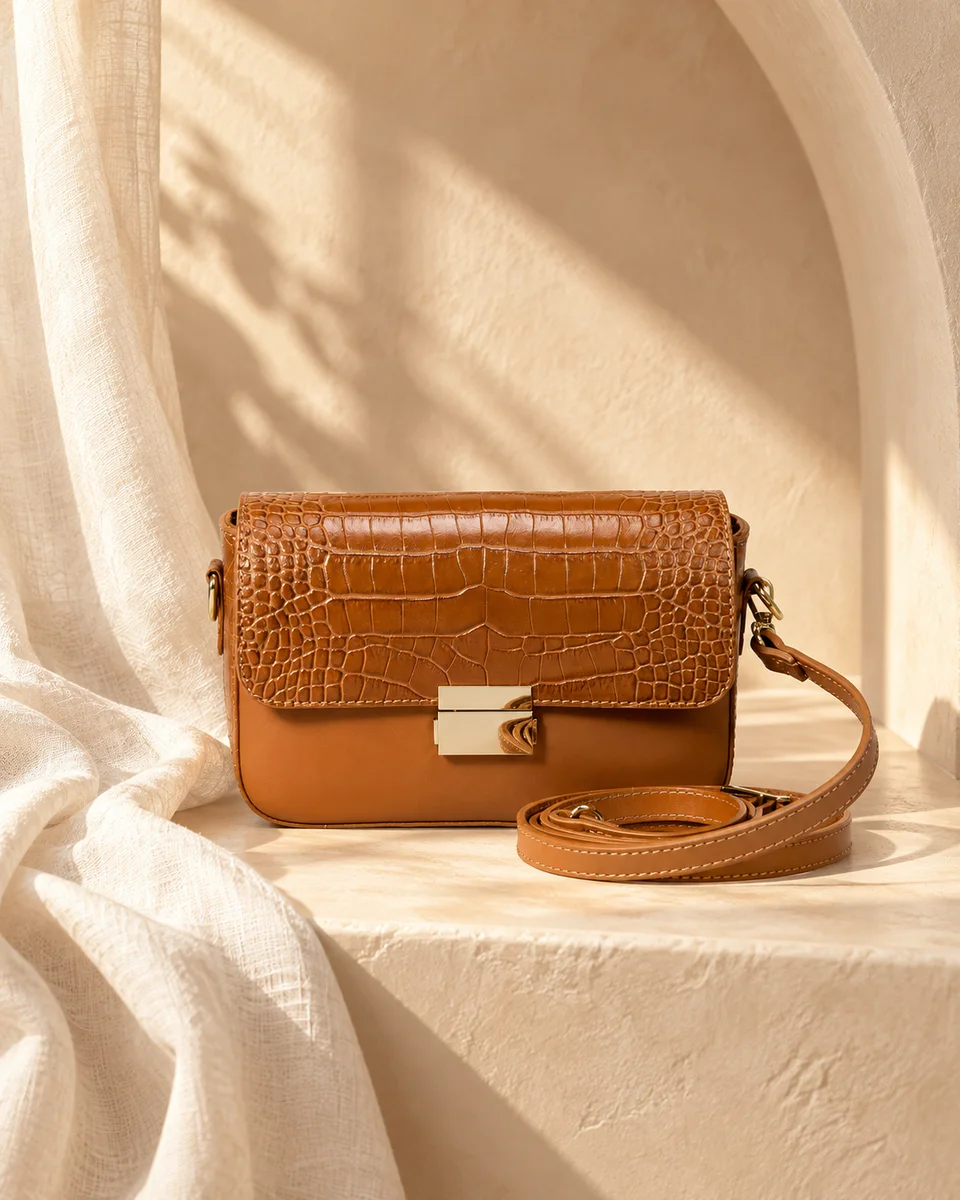
ZENA is recorded with croc-embossed calfskin, dimensions of 23 x 8 x 18 cm and a declared weight of 200 g. The brown half-rounded body and fine chain create a compact textured accent. Croc-embossed describes a surface pattern in the supplier’s calfskin declaration. It should not be read as a claim that the bag is made from crocodile skin.
An embossed texture can make a small bag more visually present without adding another colour to the outfit. Compare it with the plain surfaces you wear most. If the clothes already contain strong pattern, you may prefer the texture as the only repeated motif. The choice is visual; an embossed appearance does not prove greater resistance to scratching or a different load capacity.
JUNO has a cuoio-toned body with contrasting texture at the flap and recorded dimensions of 21 x 5 x 14 cm. The supplier identifies calfskin, but the flap material has not been separately verified. It is appropriate to describe the visible contrast; it is not appropriate to turn that contrast into an unsupported suede, fabric or synthetic-material claim.
When a panel matters to your choice, ask about its exact composition and suitable care. Treat the body and the contrasting area as separate questions until the information is clear. Visually, a textured flap can connect a plain top with a more detailed accessory. You can use that styling observation without pretending the photograph provides a complete material breakdown of every component.
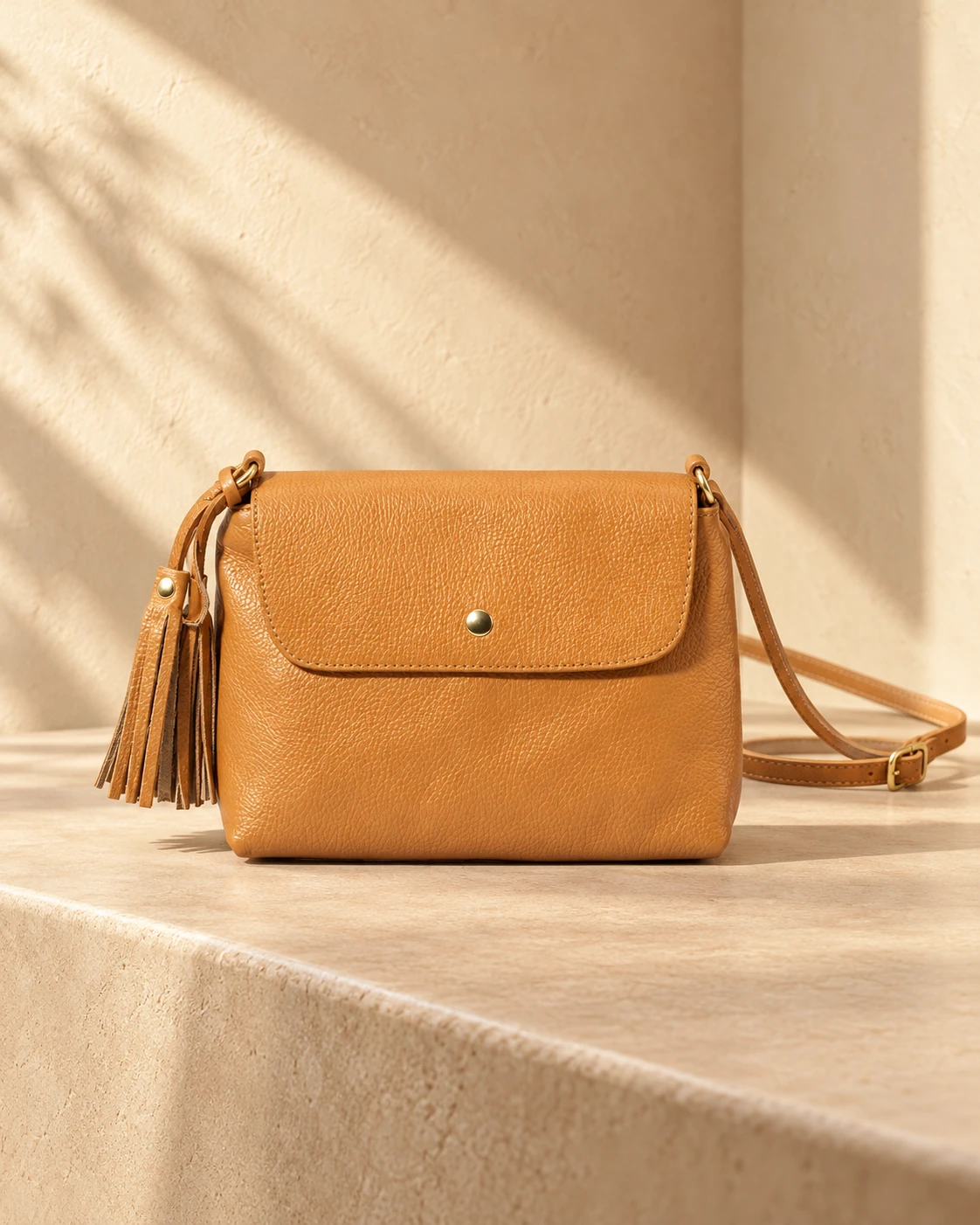
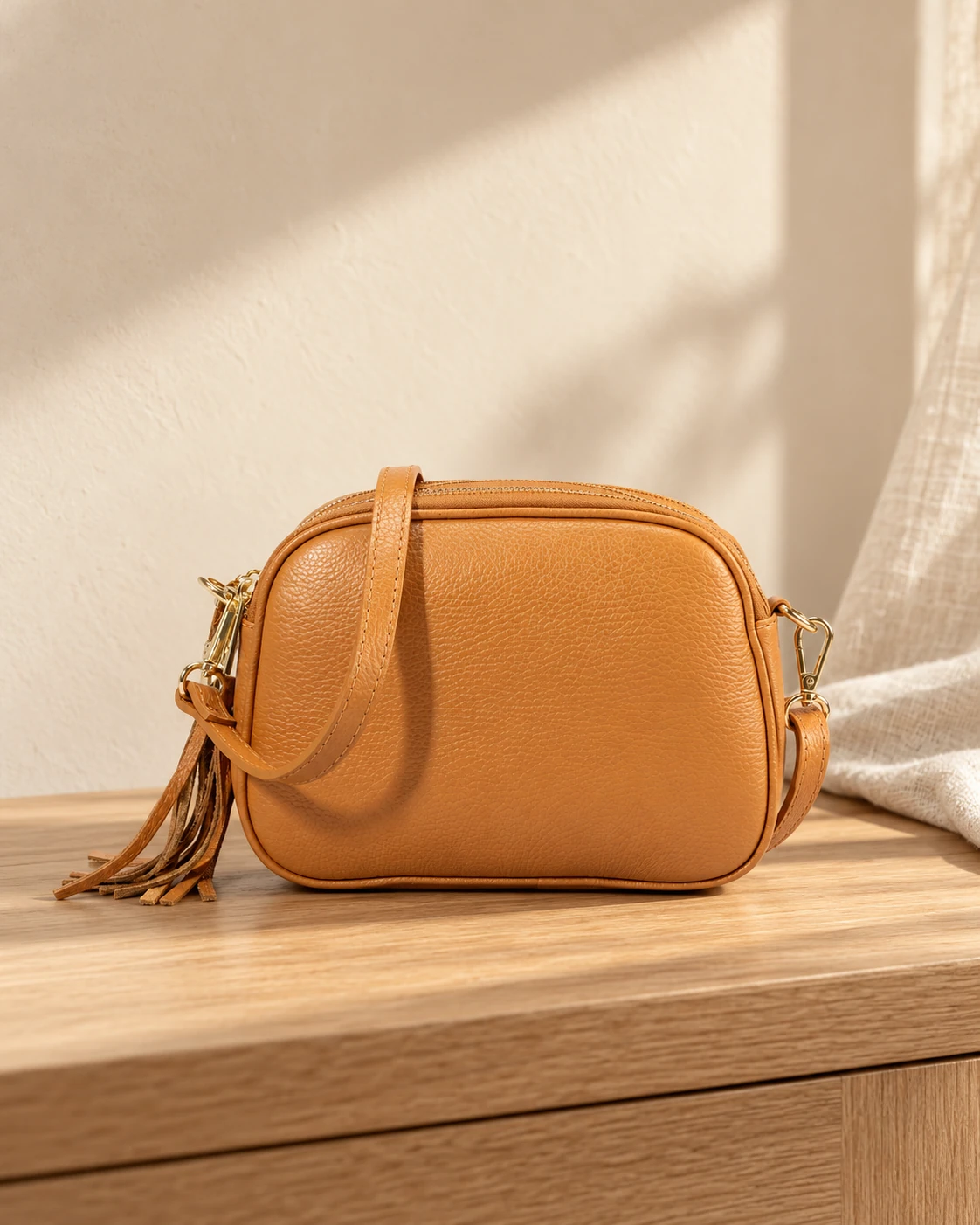
A flap shapes the front and changes the movement needed to enter the bag. ASTER’s rounded tan flap, stud and tassel create a different visual focus from MAISIE’s curved taupe flap and small rectangular gold-tone clasp. AGATHA combines a softer curved line with visible zip details. Look at the relationship between flap and body rather than treating every flap as the same functional arrangement.
Think about where your hands and the opening will be when the bag is worn in your preferred position. Can the required movement be understood from the confirmed description? If the mechanism or internal arrangement is unspecified, leave that point open for clarification. A decorative front tab does not reveal every fastening underneath, and the category does not promise one-handed access.
A bag can have a main flap and a different internal zip, but one does not establish the other. If you need a closed space for a small object, confirm that space and its dimensions. Avoid interpreting a visible pull, seam or hanging tassel as proof of an extra pocket. This distinction keeps the practical comparison grounded in the individual model.
Tan and cuoio tones can bring warmth to cream, navy and grey. A beige saddle form can create a softer transition beside pale layers, while black gives a clearer edge against light clothing. Taupe may sit quietly between warm and cool neutrals. Start with outfits you actually wear, then decide whether the bag should blend into them or mark a deliberate point of contrast.
You do not need every shoe, belt and metal detail to match exactly. A related tone or repeated texture can create enough connection. With a chain detail, you may prefer the rest of the outfit to remain simple. With a plain slim body, a patterned scarf can provide a separate focus. The useful question is how the complete combination feels, not whether every accessory belongs to an identical set.
The space occupied by a padded jacket or a loose sleeve changes how a strap lies across the body. Compare your likely seasonal layers rather than evaluating the bag only over a thin top. Check confirmed adjustment information where available. A strap that suits one outfit may place the same body differently over a bulkier coat, and that difference can matter more than a small change in bag width.
Think also about the placement of fastenings and decorative chains against the clothes you use most. This is a reason to review the construction carefully, not a claim that a specific material will damage or protect a garment. Where measurements are incomplete, ask for them. The look of a strap in one styled photograph cannot establish comfort or fit for every wearer and season.
The supplier lists ASTER at 200 g, FREYA at 300 g, CALLIE at 600 g and other models at their individual recorded weights. These figures describe a starting comparison where the scope is clear. They do not establish a maximum load or predict how a particular person will feel after a long day. The objects you add remain part of the total weight.
Consider whether the smaller bag encourages a simpler everyday selection. A heavy key ring, duplicate cosmetics or a wallet full of unused cards may change the load more than you expect. Do not invent a weight for a model where it has not been confirmed, including AGATHA and JUNO in the available record. A missing figure is something to clarify, not a reason to estimate from the photo.
A crossbody can accompany a walk, a casual lunch or part of a workday, but its usefulness depends on the contents and carrying arrangement you need. Think through one ordinary sequence of stops. If a larger item only appears on some days, another bag may serve that separate role better than forcing a compact model to become a universal carryall.
For an evening outfit, a chain or quilted-looking panel may add visual detail, while a plain saddle form can feel quieter. Those are styling possibilities, not rules that assign a bag to one time of day. Choose a shape you want to wear repeatedly and confirm the practical requirements that cannot change. This keeps the wardrobe decision specific without narrowing it to a single photograph.
Follow instructions for the actual finish and avoid treating all leather descriptions as a single cleaning category. A suede surface needs different consideration from a smooth or embossed one. Keep cosmetics, pens and liquids contained so that everyday organization reduces avoidable spills. Do not apply a strong household cleaner or an unfamiliar treatment to a visible panel in the hope that one product suits every material.
When storing the bag, empty loose objects that press into the body and avoid flattening it under heavier items. Allow a natural shape without pulling the strap tight. If the surface gets wet or a mark persists, use material-specific guidance and avoid direct heat. These are practical habits, not promises of waterproofing, stain resistance or a particular lifespan.
Choose two or three models and compare the same points: exterior proportions, opening, confirmed strap arrangement, material, stated weight and interior information. Add the clothes and essential objects that belong to your routine. This makes it easier to see why a curved BELA, a camera-style EBE or a flatter MAISIE appeals for different reasons, without ranking one as the right answer for everyone.
Return to the exact product page before deciding. Keep any unresolved measurement or feature visible as a question rather than filling it with an assumption. A useful crossbody choice is not the bag with the longest list of imagined functions. It is the one whose confirmed details and visual character fit the way you move, the things you carry and the outfits you genuinely repeat.