Shoulder bags
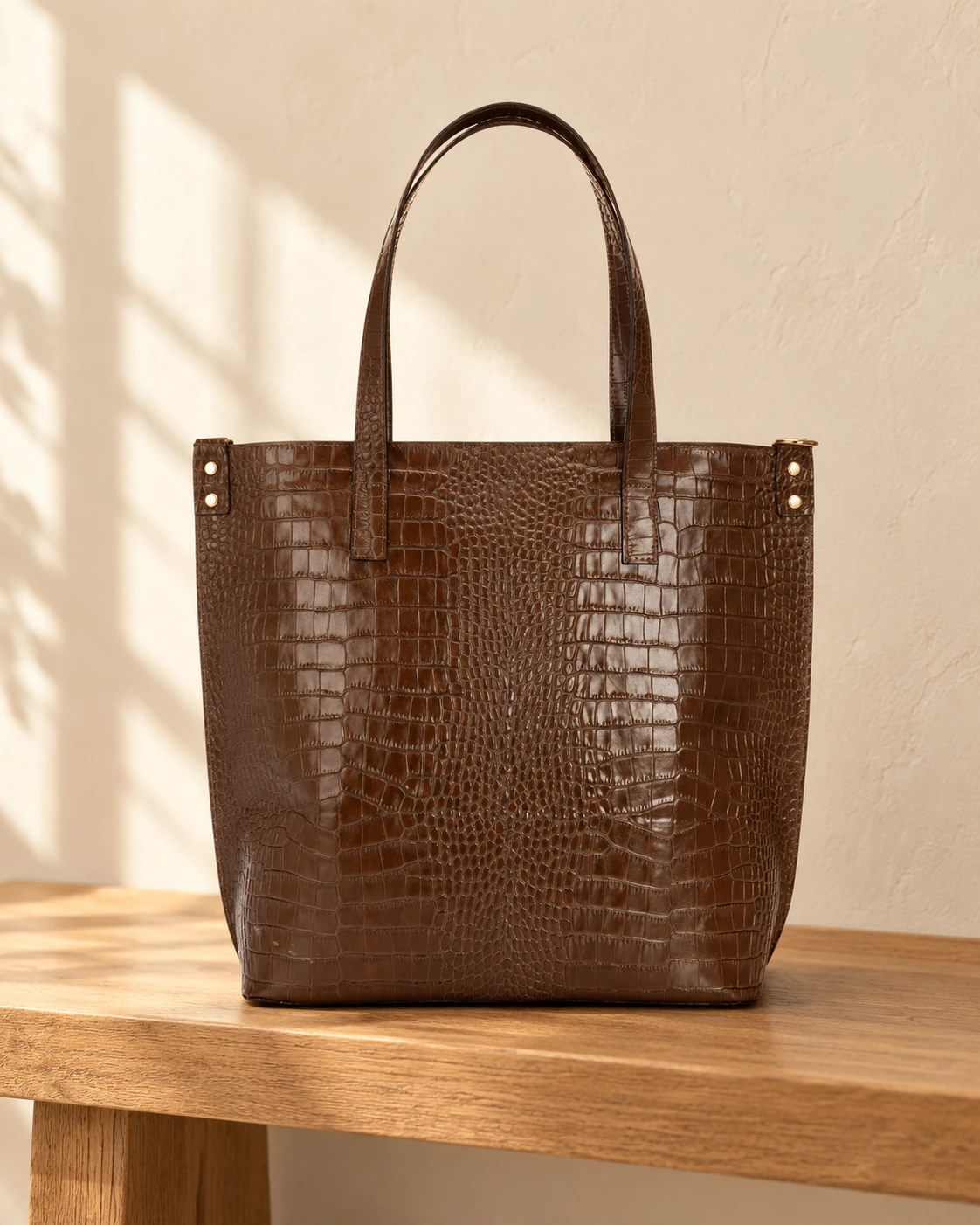
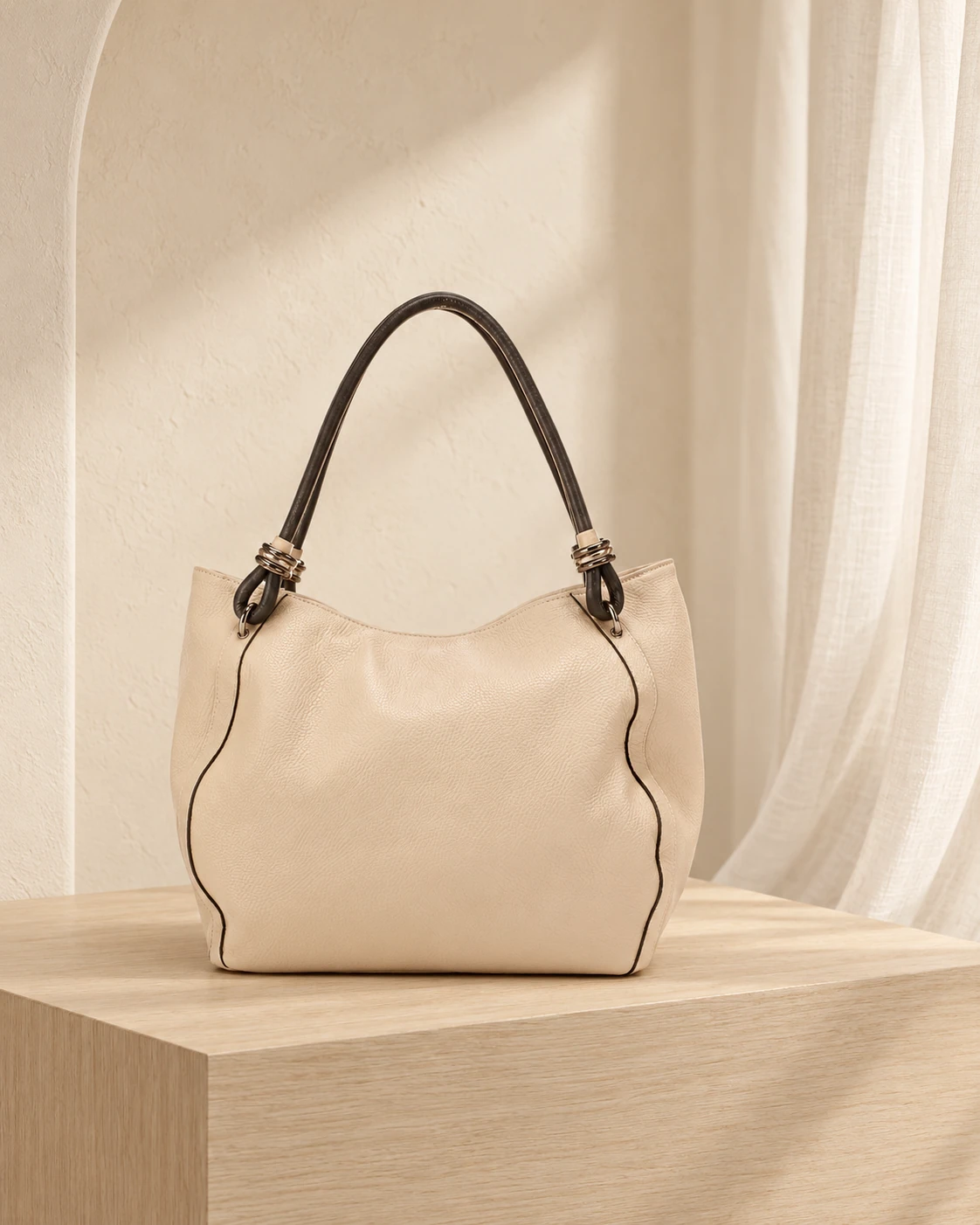
Brenda Brown Croc-Effect Shopper
EUR 119.00 · Unit to confirm
Check delivery availability
MIRELICE COLLECTION
Home / Handbags / Shoulder bags
Shoulder bags
Check delivery availability
Shoulder bags
Check delivery availability
Shoulder bags
Check delivery availability
Shoulder bags
Check delivery availability
Shoulder bags
Check delivery availability
Shoulder bags
Check delivery availability
A useful shoulder bag starts with the right proportions, a comfortable carrying position and room for the things you actually take. Compare silhouettes, textures and small styling details before choosing.
Shoulder bags can look quite different while serving the same everyday purpose. A tall shopper draws the eye vertically, a soft hobo follows the line of an outfit, and a compact flap bag creates a more defined finishing point. Finding the right one means looking beyond a favourite colour and considering how the shape will work with your clothes, your usual belongings and the moments when you need to reach inside. This guide brings those decisions together, from comparing a broad body with a narrow profile to separating suede care from the care of other leather finishes. Material names, dimensions and weights below follow the supplier’s descriptions. Start with the way you want to use the bag, then use the individual product details to narrow your choice.
Begin with the relationship between the bag and the clothes around it. A wide bag introduces a horizontal line, which can be a deliberate contrast to a long coat or a straight dress. A taller bag repeats the vertical movement of a jacket, trousers or an open cardigan. Neither effect belongs to one body type. The useful question is whether you want the bag to blend into the silhouette or become a visible part of it. Compare photographs with that intention in mind rather than following rules about who should wear a particular size.
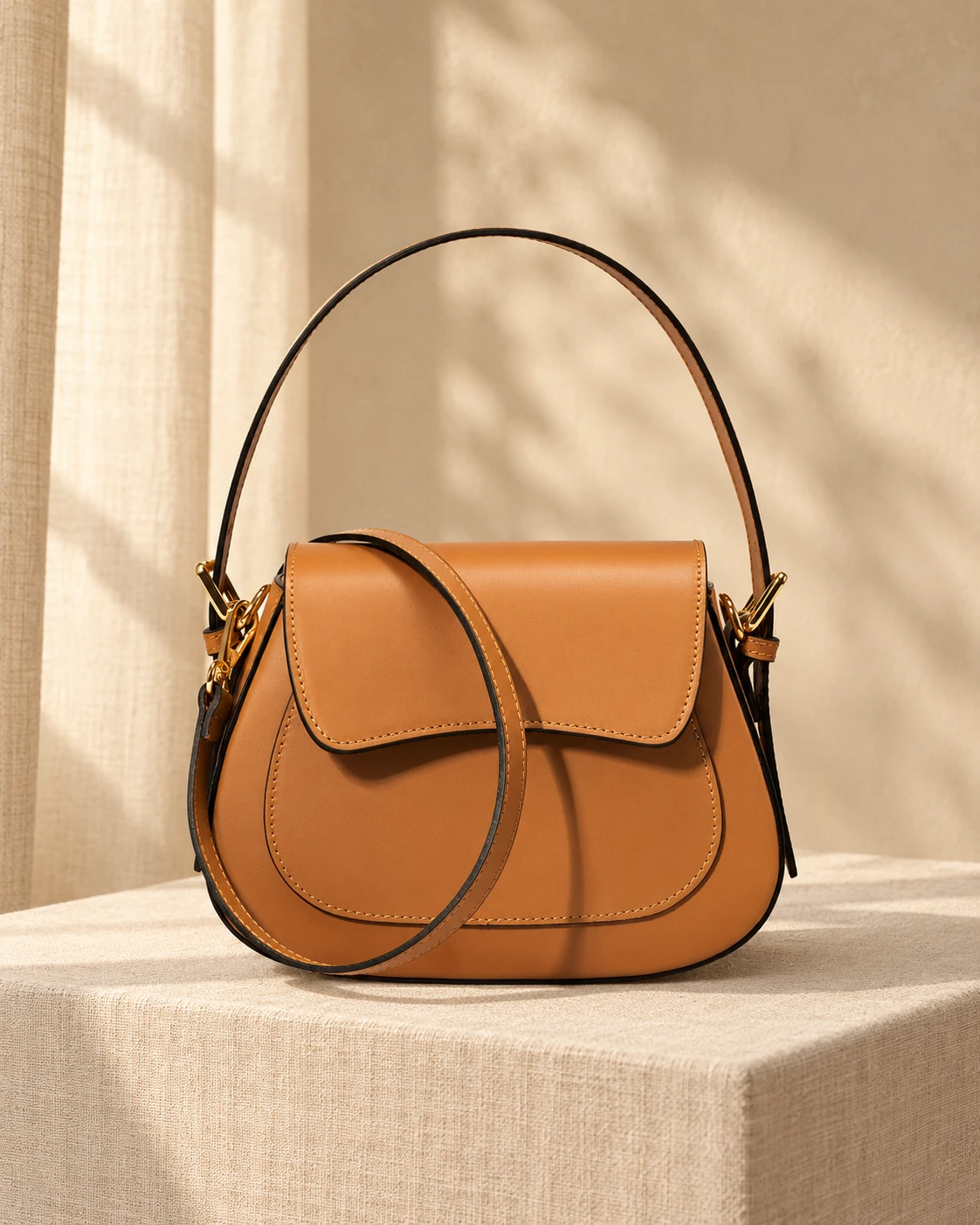
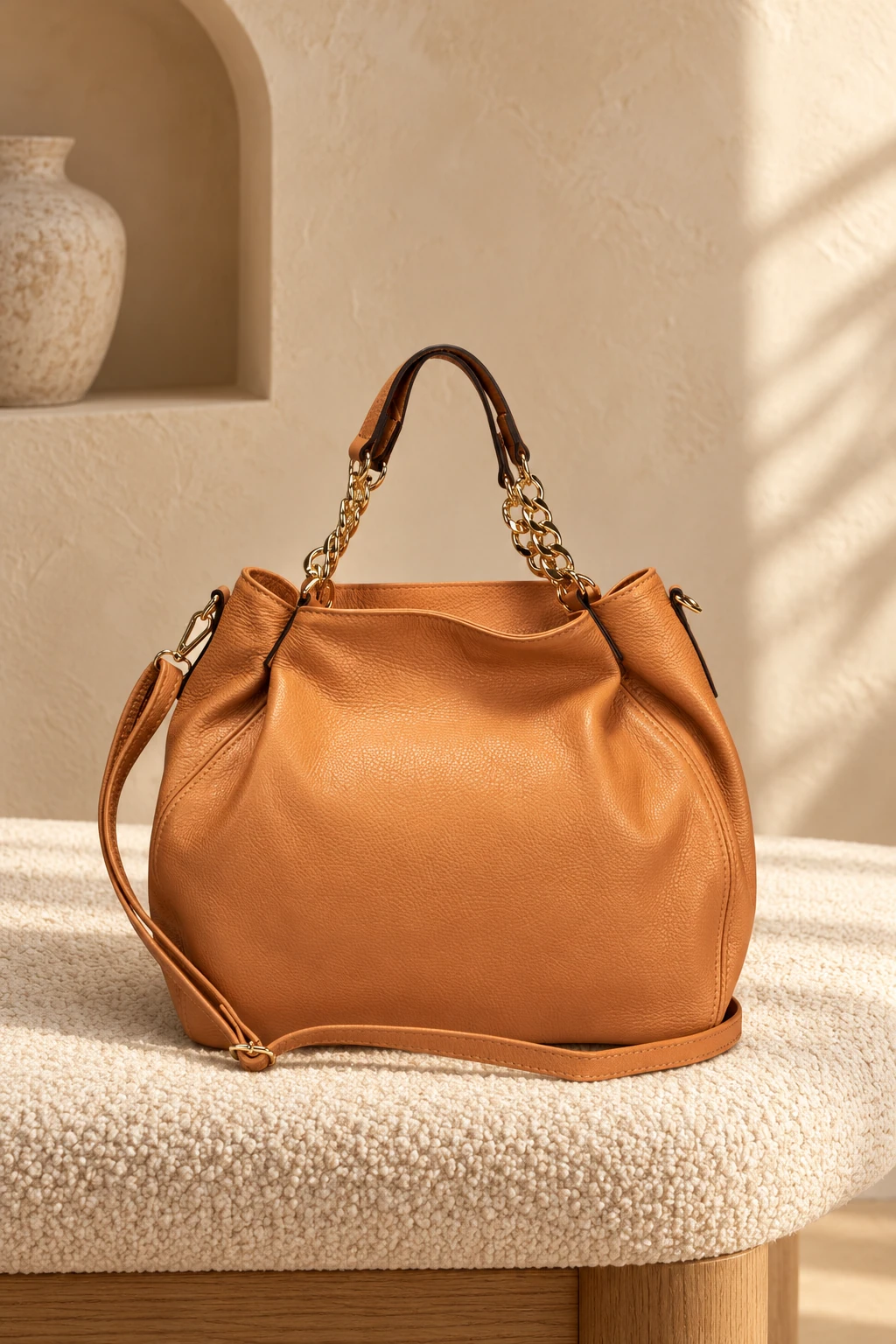
BRENDA is a brown, tall shopper in crocodile-embossed calfskin, listed at 43 × 14 × 36 cm and 700 g. Its two long handles and relatively substantial outline give it a different visual role from EDNA, a compact cognac flap bag at 24 × 9 × 19 cm and 650 g. EDNA has a rounded shape, smooth calfskin and dark piping. These two designs demonstrate why the word shoulder bag does not describe a single look: one offers a generous visual presence, while the other makes a smaller, clearly outlined accent.
Try marking the listed dimensions on paper or comparing them with a bag you already own. This makes scale easier to judge than a close-up photograph alone. Keep the stated dimension order intact unless the product page identifies which measurement is width, depth or height.
External measurements are a starting point, not a packing diagram. Curved sides, a flap, the shape of the base and the opening can all affect how an object sits inside. A soft bag may change shape around its contents, but that does not create unlimited capacity. Avoid treating three measurements as a promise that a rectangular object will fit. If one particular item is essential, measure it including its case and check the opening and internal space where those details are available.
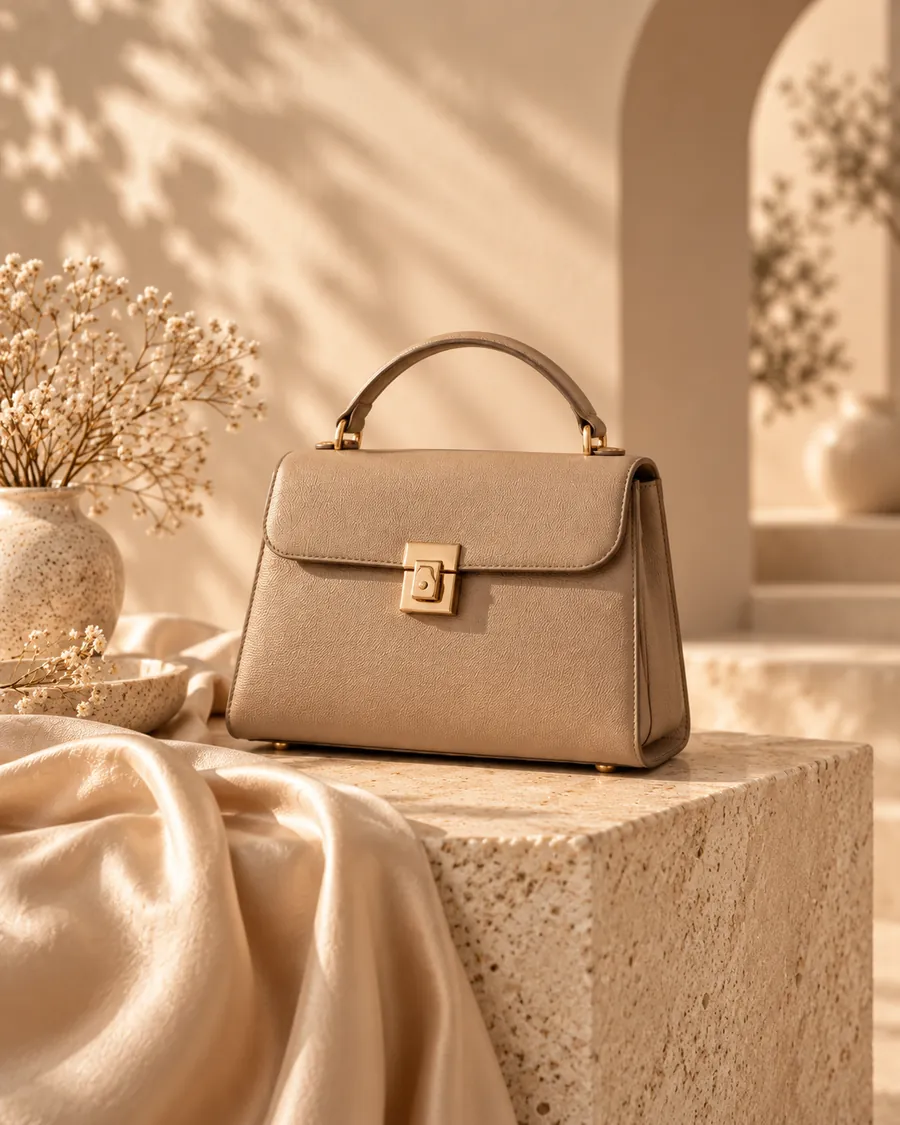
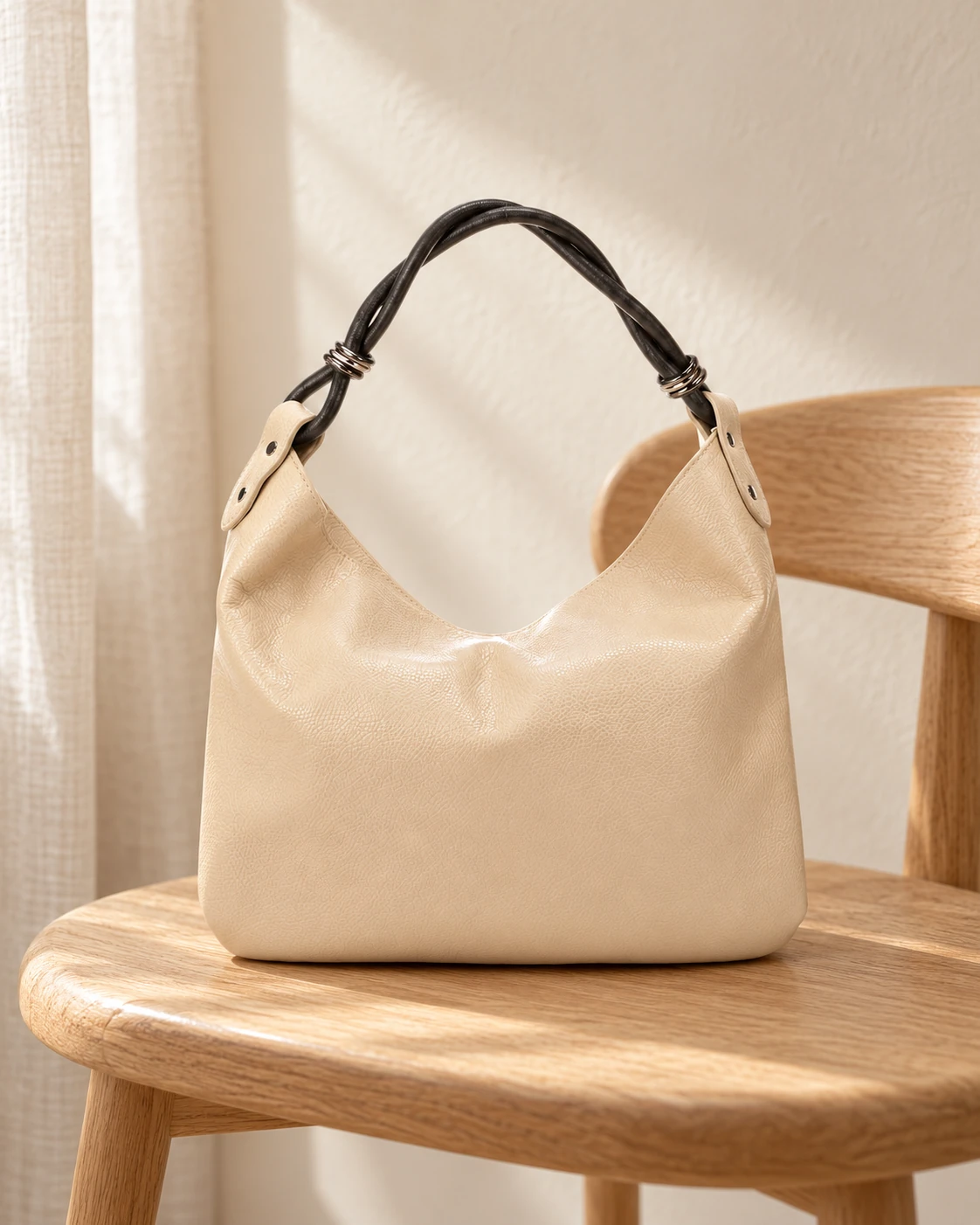
NORA and VINNIE offer an instructive comparison within taupe grained calfskin. NORA is a soft hobo listed at 38 × 4 × 27 cm and 700 g, with a dark contrasting handle and restrained hardware. VINNIE is rounded, with paired long handles and curved contrast piping, and measures 32 × 14 × 28 cm at 800 g. Their outlines suggest different ways of organising belongings, but neither set of measurements confirms the internal layout. Think about whether you prefer a flatter arrangement or carry several small objects that need space beside one another.
Before choosing, lay out the things you take on an ordinary day. Separate daily essentials from occasional extras. A bag selected around a realistic group of belongings is easier to evaluate than one chosen around every item you might possibly need.
The way a shoulder bag sits depends on more than its overall dimensions. Handle length, handle shape, strap attachment and the thickness of your clothing all influence the position. A bag that seems close to the body over a shirt may sit differently over a padded coat. If strap drop is not stated, do not estimate it confidently from a photograph. Compare the product imagery with your preferred carrying position and check any available measurements before relying on a specific fit.
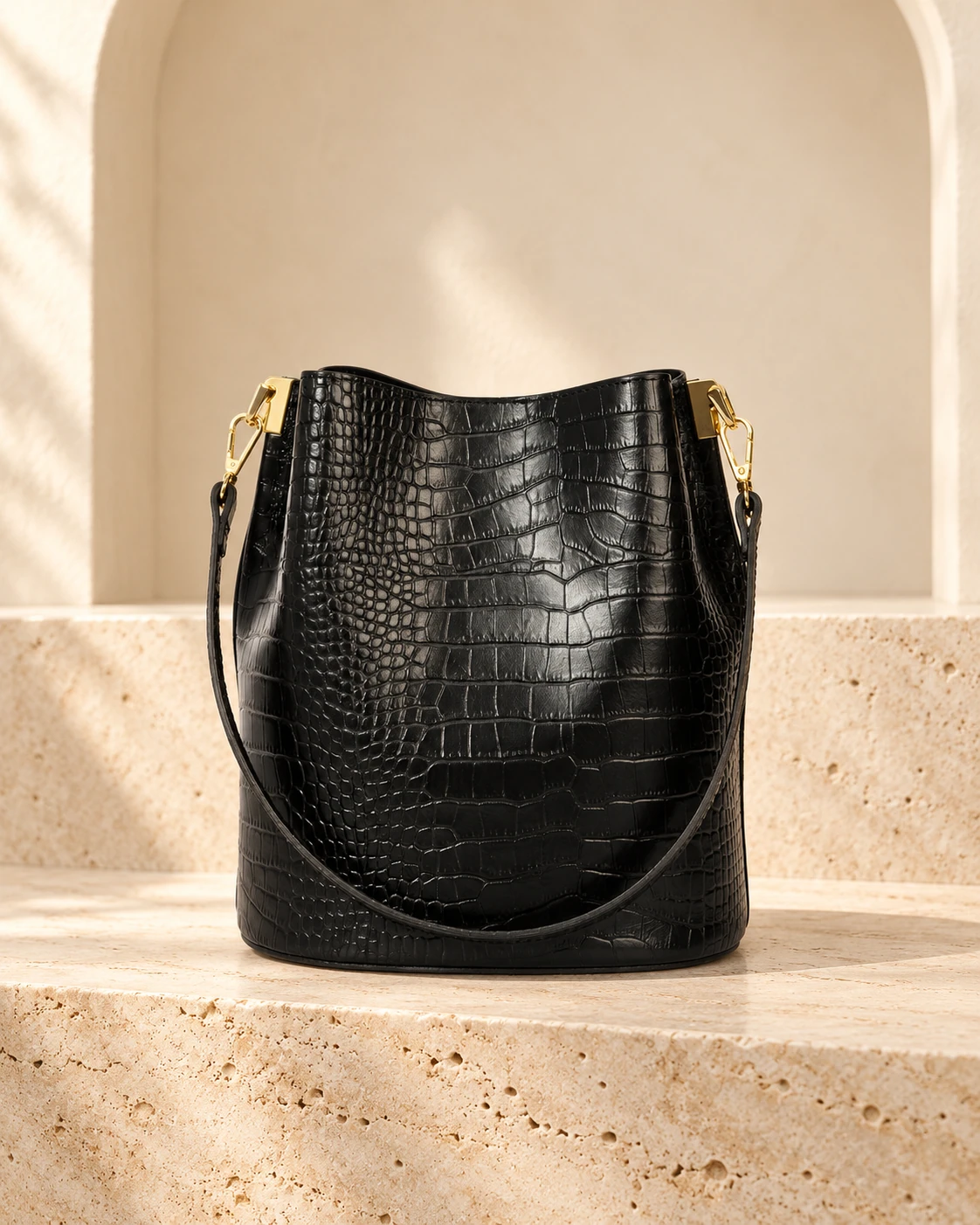
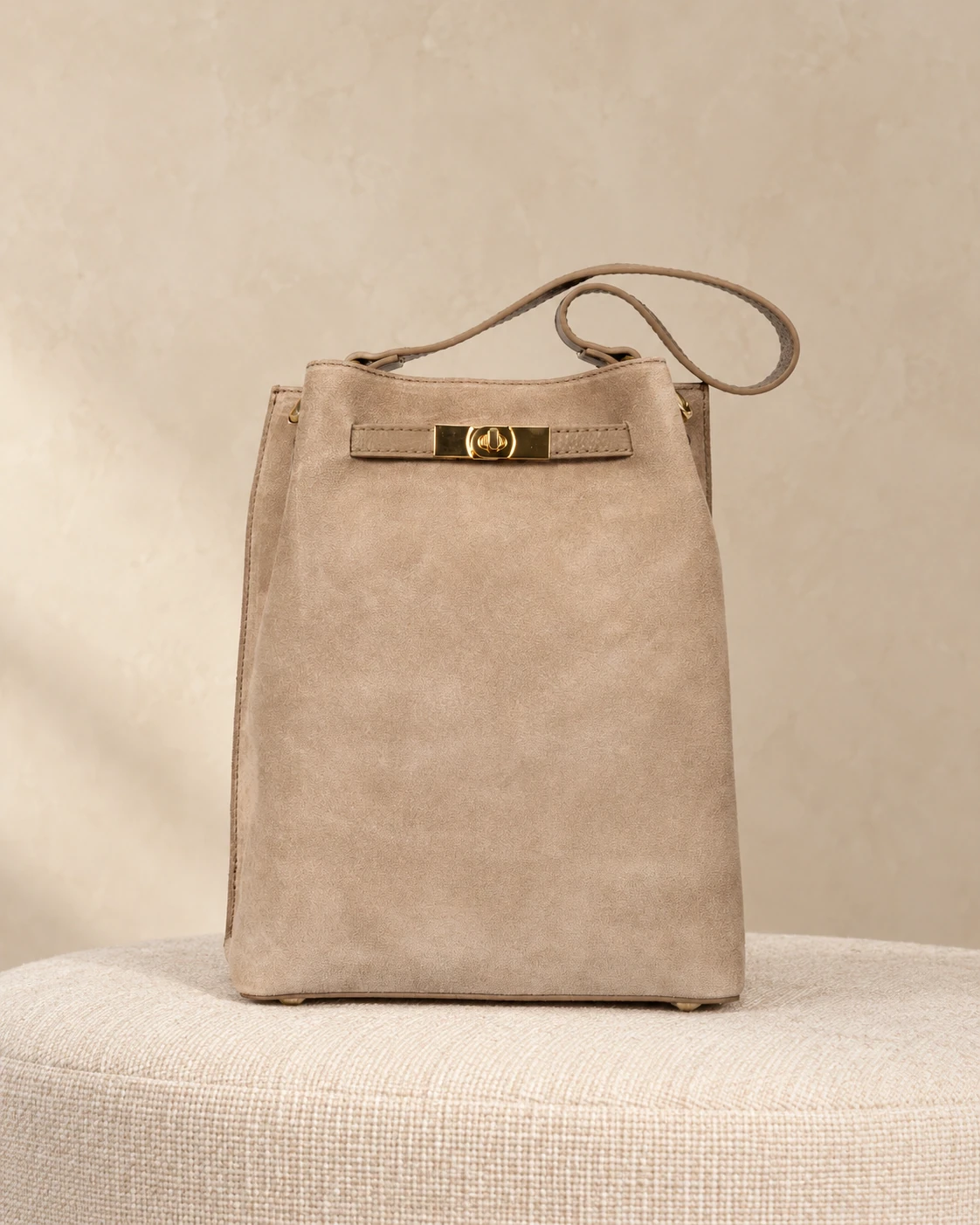
CAPRICE has a wide handle or strap and a curved top on a black bucket silhouette. PHOEBE has a narrower top handle and a tall taupe suede body, with a front strap and fastening detail. These visible differences can help you decide which line you prefer above the bag, but they do not establish comfort for every wearer. Similarly, EDNA’s long detachable strap describes a useful construction detail without establishing every possible way it can be worn.
Consider your most frequent movements: taking the bag off at a café, reaching for a wallet while standing or placing it beside a chair. When you can try a bag, use your normal clothing and a representative load. Check that the position and access feel workable for you rather than assuming a particular strap width guarantees an easy carry.
Organising a shoulder bag starts before anything goes inside. Put the items you use repeatedly in a small, familiar group, and keep occasional items separate. A pouch can help gather loose objects if its dimensions suit the chosen bag. This is an optional organising tool, not a description of an included accessory or interior pocket. Check the actual product details for the construction of any particular model.
Keep hard or pointed objects covered so they are less likely to press against the lining or mark nearby belongings. Pens can go in a closed case, keys can sit in a small holder, and liquids should remain securely closed in suitable containers. Leave enough free space to find what you need without forcing your hand past a tight opening. If the bag must be squeezed shut every time, reduce the contents rather than asking the fastening to hold an overfilled shape.
The empty weight is part of the total you carry. Add your normal belongings when comparing options, especially if you tend to transfer everything from one bag to another. A lighter listed weight does not prove better quality, and a heavier one does not prove stronger construction. Choose a load you find manageable and review what is genuinely needed.
Smooth, grained, embossed and quilted surfaces each change how a bag interacts with an outfit. Smooth calfskin keeps attention on the shape, colour and edge details. A visible grain adds texture without requiring a bold pattern. Crocodile embossing introduces a more graphic surface, while diamond quilting creates repeated lines that remain noticeable even in black. These are useful visual distinctions, not an automatic ranking of materials.
The crocodile effect on BRENDA and CAPRICE is embossed into calfskin. It should not be confused with crocodile skin. EDNA offers smooth calfskin, while HELEN, NORA and VINNIE are described as grained calfskin. SIELLA is described as full-grain calfskin with diamond quilting. The full-grain description belongs to that stated model; it should not be extended to other bags simply because they have a textured surface or a similar colour.
If your wardrobe contains patterned fabrics, choose whether the bag should repeat that visual activity or provide a calmer shape. An embossed brown shopper can become a focal point beside plain clothing. A softly grained taupe bag can contribute a quieter texture. Neither choice requires an entirely plain wardrobe: repeating one colour or one curved line is often enough to make the combination feel considered.
PHOEBE’s taupe suede offers a different surface from the smooth, grained or embossed calfskin options. Suede has a soft-looking nap that changes with the direction of the fibres and the light. In an outfit, that can create a gentle contrast with crisp cotton, structured tailoring or a smooth coat. PHOEBE is listed at 24 × 12 × 30 cm and 730 g, so its tall outline is part of the choice as much as the material.
Choose suede with your routine in mind. If you regularly set a bag on uncertain surfaces or carry it in wet weather, consider how carefully you are willing to handle and maintain it. Do not assume suede is protected against water or stains unless the individual product information explicitly says so. Preventing avoidable contact is usually a more sensible starting point than relying on a treatment to solve every problem.
For maintenance, follow the maker’s instructions and use tools intended for the relevant suede finish. Test any recommended product on an inconspicuous area first. Do not treat suede with the same cream or conditioner you might consider for another type of leather. A stain or spill may need advice from a specialist rather than vigorous brushing or a household cleaning mixture.
Black, brown, cognac and taupe can all work across a varied wardrobe, but they play different roles in individual combinations. Black can repeat a dark shoe, belt or coat detail. Brown and cognac can bring warmth to pale neutrals, navy or denim. Taupe can sit between warmer and cooler clothing tones, depending on the exact shade and the surrounding colours. Product photographs and screens may render shades differently, so treat a precise colour match with caution.
You do not need an identical colour on every accessory. A cognac bag with dark piping can connect to darker footwear through the trim rather than through the main leather colour. VINNIE’s curved contrast piping and NORA’s dark handle offer similar opportunities to repeat a small detail. If several accessories are visible, choose one point of connection and let the remaining pieces stay simple.
Hardware can be either a quiet finishing detail or a stronger visual element. HELEN’s gold-tone chain links add a warm metallic note to a soft cognac form. The description refers to their colour, not to gold as a material. SIELLA combines a chain strap with a turnlock, producing a more defined rhythm alongside its diamond quilting. Match the effect you enjoy rather than treating metal tones as a strict dress code.
A useful workday choice begins with the journey and the objects involved, not with the word work. Someone moving between meetings with a phone, keys and a notebook has different needs from someone carrying equipment. Check the dimensions of anything essential and look for explicit product information about the opening and internal arrangement. A large-looking shopper should not be treated as a confirmed laptop bag without that evidence.
For a wardrobe of jackets and straight trousers, a soft shoulder bag can introduce contrast. HELEN’s grained calfskin and relaxed form, listed at 33 × 16 × 28 cm and 800 g, offer a visual reference for that approach. A more compact bag can make sense when most belongings stay elsewhere, while a tall shopper can suit someone who prefers a larger outline. These are styling possibilities rather than promises about storage.
Think about where the bag will rest during the day. Avoid leaving it where shoes, chair legs or a crowded desk can press against it. When setting it down, keep handles and straps clear of places where they could catch. Small habits can matter as much as the initial choice of silhouette.
Changing from a daytime bag to a smaller shoulder bag works best when you change the contents as well. Select the essentials for the actual outing rather than transferring the full daily load. This keeps the silhouette closer to the one you chose and makes it easier to reach frequently used items. Check the closure without pressing on an overfilled flap or forcing objects against the sides.
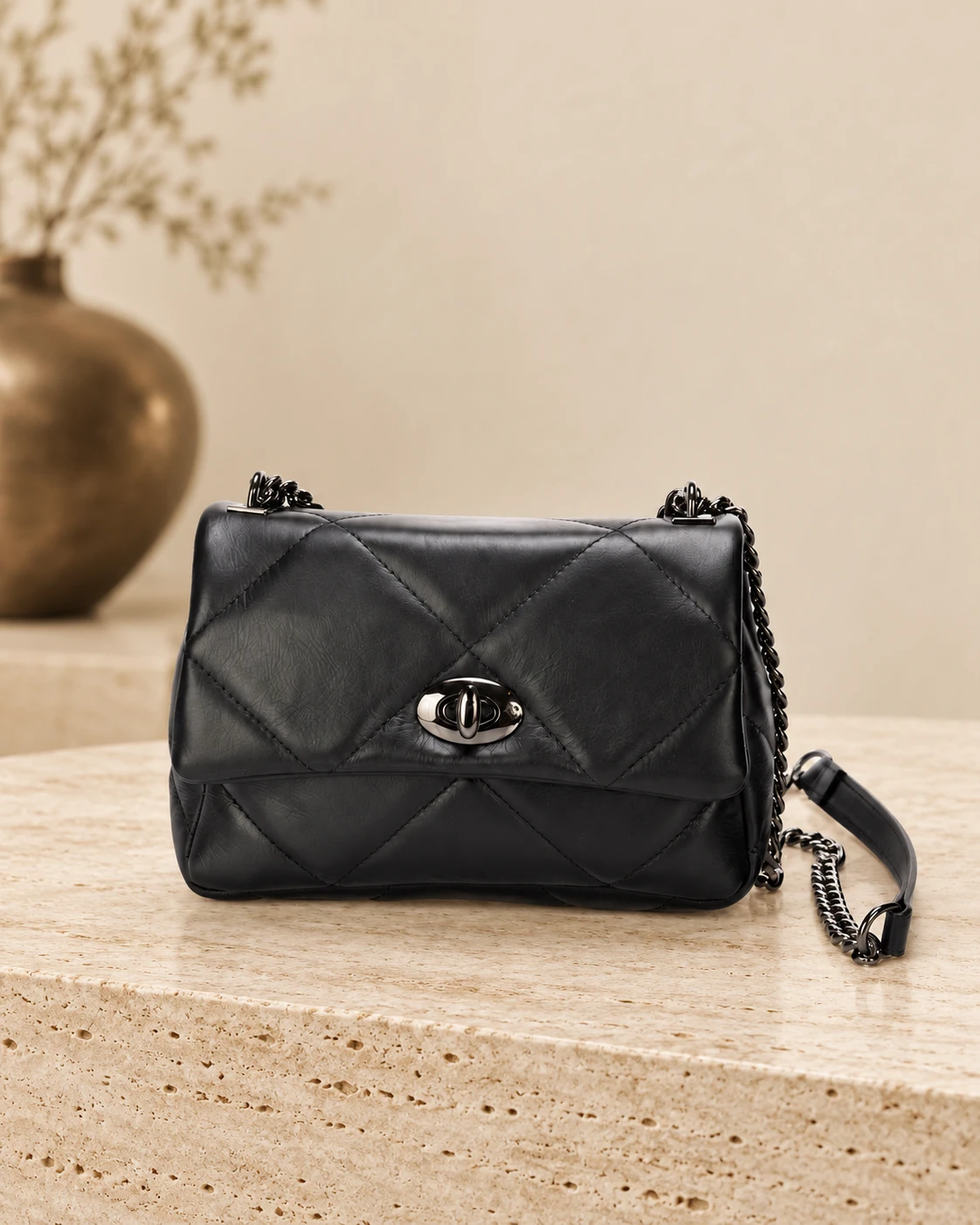
SIELLA is a black diamond-quilted flap bag, listed at 26 × 7 × 18 cm and 500 g, with a turnlock and chain strap. Its defined lines can accompany a simple dress, a shirt and tailored trousers, or a relaxed outfit that needs one more structured detail. EDNA’s cognac colour and dark piping suggest another direction: a compact accent with a softer rounded outline. An evening bag need not be reserved for formal clothing.
For a weekend, start with the activity rather than a trend. A gallery visit, lunch and a short walk may call for a different set of belongings from a day of errands. Choose the silhouette around those needs, then use colour or texture to make the bag feel part of your normal wardrobe.
Read the specific care guidance before applying anything to leather. Different finishes can respond differently, and a product suited to one surface may change the colour or appearance of another. Begin with gentle, minimal handling and test an approved cleaner on an inconspicuous area. Avoid household solvents, improvised oil treatments, soaking, forceful rubbing and direct heat. Decorative stitching, piping, chains and fastenings also deserve care when cleaning nearby areas.
If a bag becomes damp, remove the contents and follow the maker’s drying guidance. Do not put it on a radiator or use a hairdryer to speed the process. Keep it away from prolonged direct sunlight and conditions that encourage trapped moisture. Material-specific professional advice is preferable to repeatedly trying different products on an uncertain stain.
Before longer storage, empty the bag and check that it is clean and dry. Support the shape gently with clean, non-colour-transferring material if appropriate, without stretching it. Store it without heavy objects on top and with hardware positioned so it does not press into the surface. A suitable breathable protective cover can reduce contact with dust while keeping the bag separate from neighbouring items. Avoid hanging a loaded bag by its handles for extended periods.
Start by choosing two or three requirements that matter most: perhaps a compact outline, a particular colour and a carrying position that works over your usual coat. Then compare only bags that could plausibly meet those requirements. This prevents an attractive detail from distracting you from something essential. You can still choose a distinctive texture or chain detail once the basic shape suits your routine.
Use the same set of everyday belongings when evaluating each option. Note the listed empty weight, but also consider whether your organisation system adds unnecessary bulk. Compare the outline against outfits you wear repeatedly, including outerwear. A bag that works with your ordinary clothes is likely to feel more useful than one chosen only for a carefully planned photograph.
If your needs point beyond a shoulder style, compare the wider Bags category rather than expecting one design to handle every role. Wallets, belts, gloves and scarves belong among Accessories, while Gifts brings together selected ideas for giving. Keep those distinctions in mind when building a coordinated set: the bag establishes the main silhouette, and a small accessory can support it without repeating every material or detail.