Tote bags
Textured Cowhide Tote
Preliminary price · taxes and delivery subject to confirmation
A warm textured tote with long handles, a broad front panel and restrained hardware. Choose it around your own carrying routine and the measurements you need.
Check delivery availability
Delivery availability is not yet confirmed.
Shipping costs and taxes require a confirmed quote.
Details, styling and care
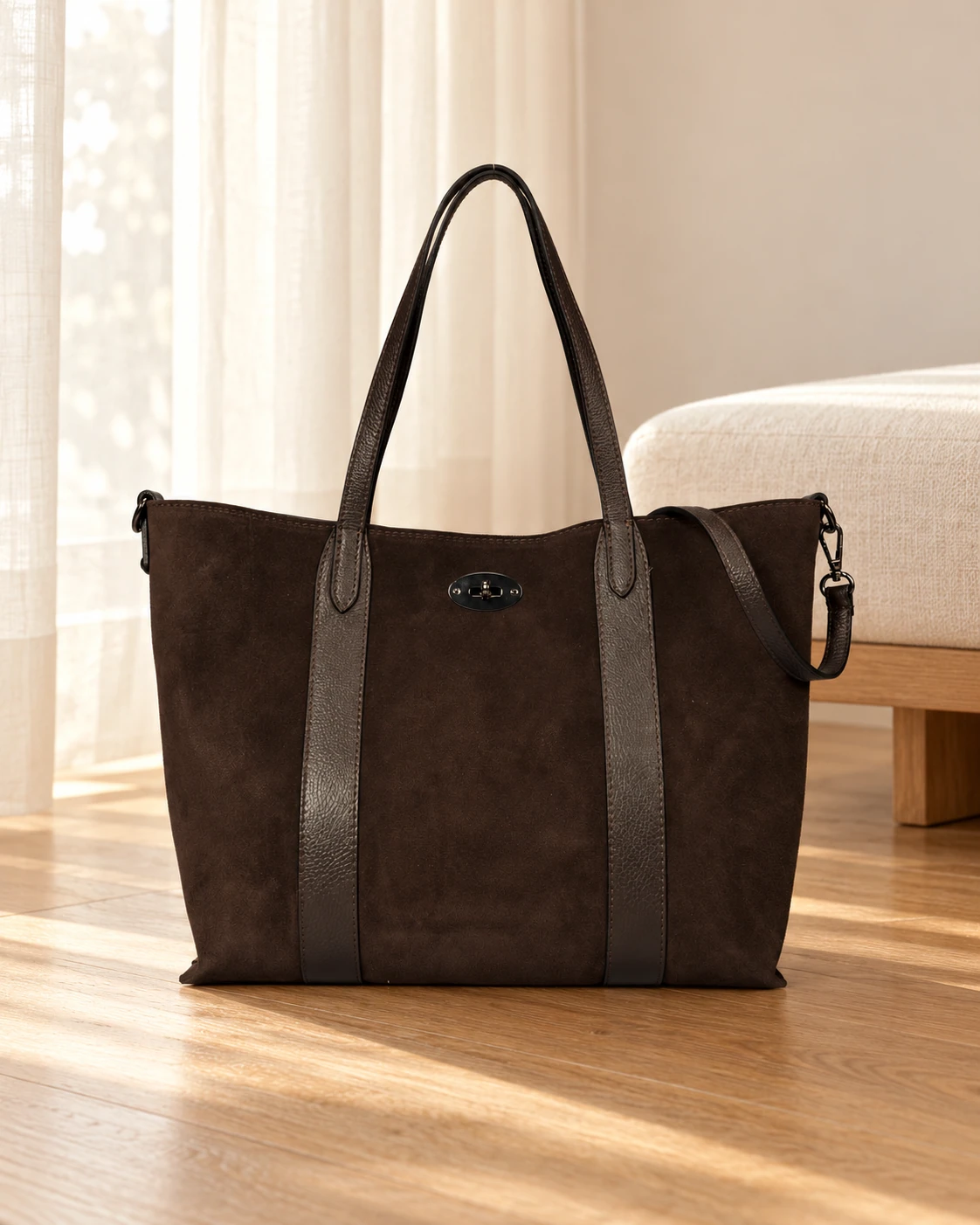
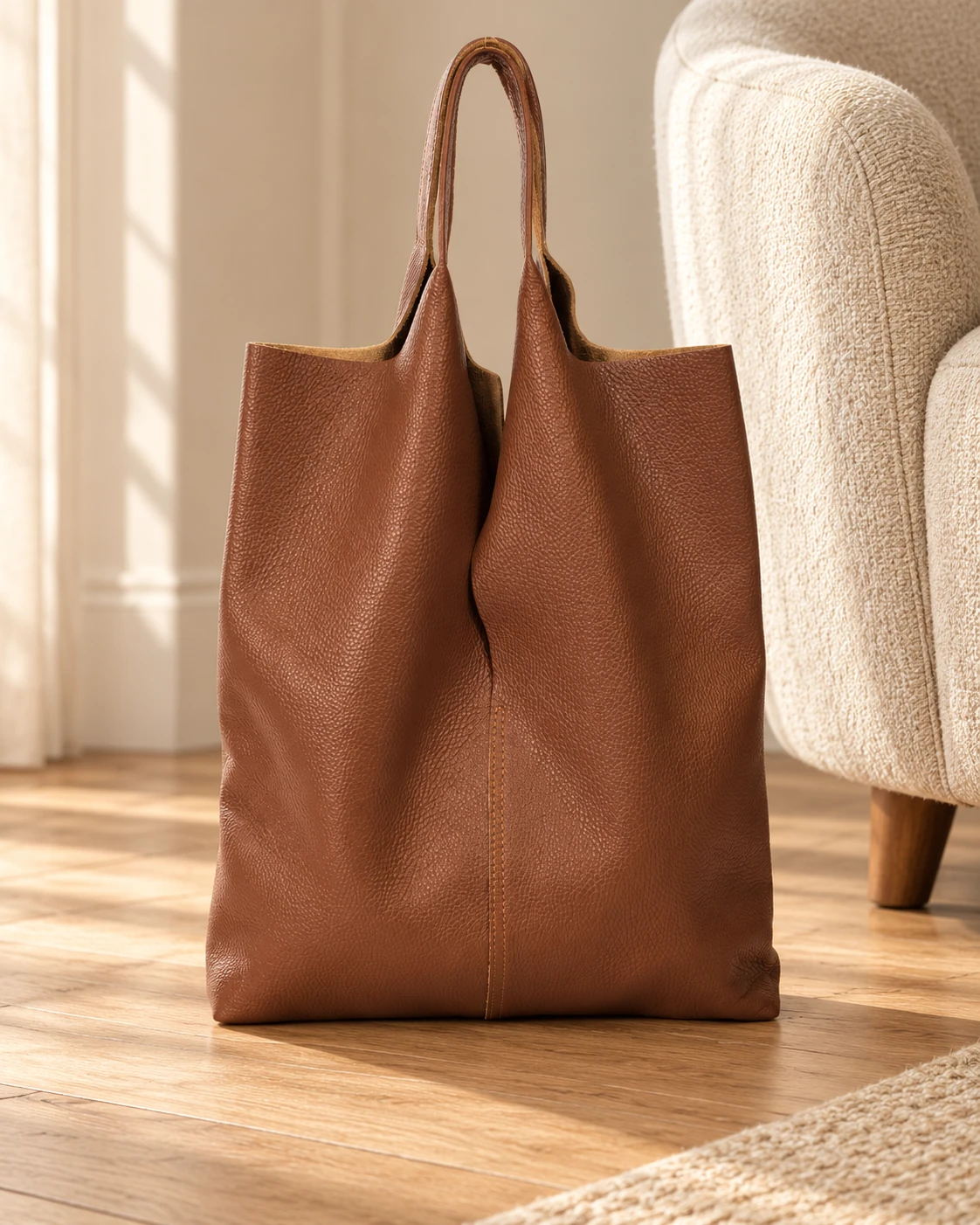
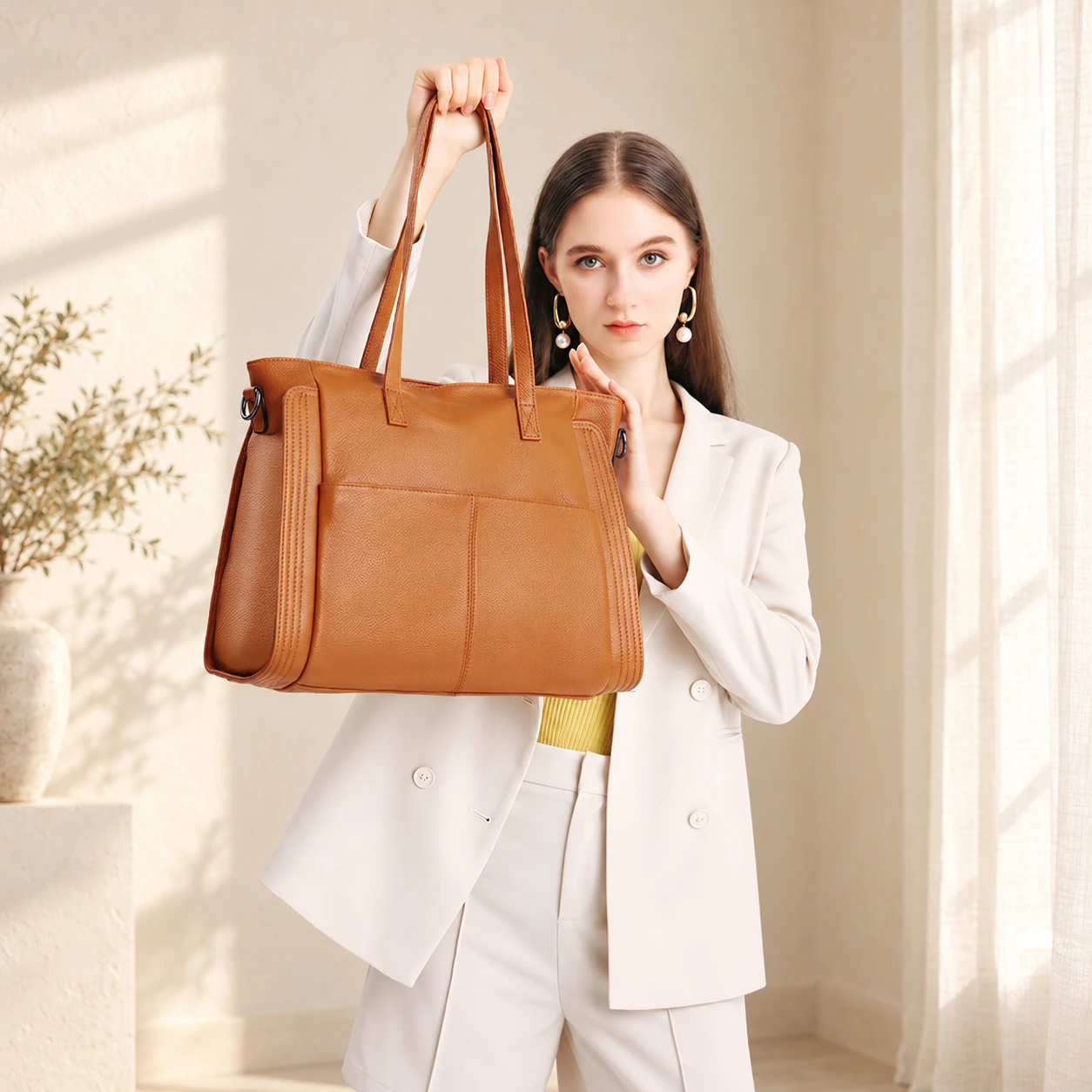
The Textured Cowhide Tote combines a warm, grained-looking surface with a broad rectangular outline. Long handles rise from the upper edge, while the front is organized by a horizontal seam and vertical panel lines. These visible details give the bag definition without a large front ornament competing with the material.
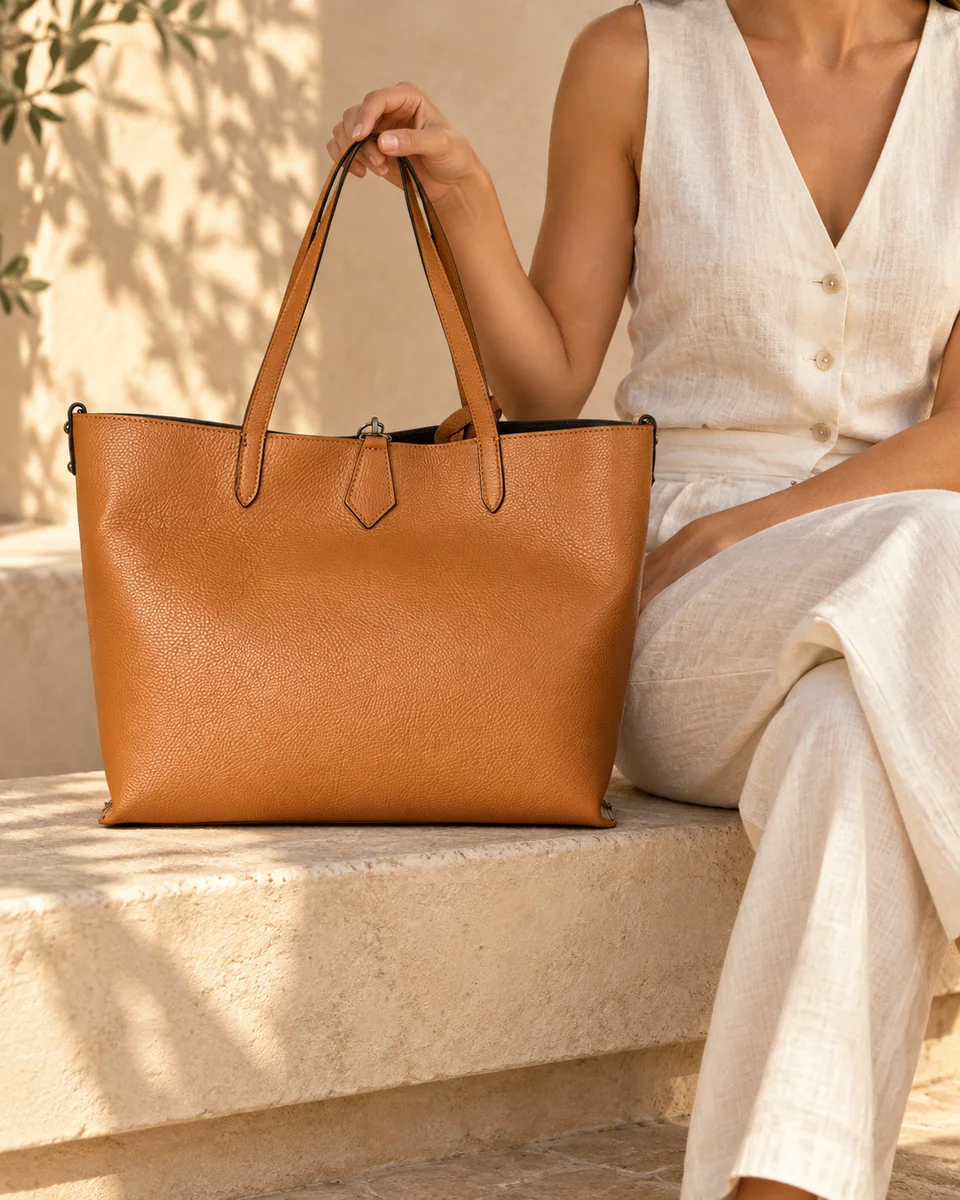
The supplier lists first-layer cowhide for the exterior and polyester for the lining. Those are separate material descriptions: a leather outer does not mean every internal component is leather. The photograph shows the warm tan presentation; use the actual selected colour and item details when comparing options rather than assuming that every colour mentioned in a listing is included.
Start with the way you like to carry a bag. The longer handles are a clear part of this design, but a photograph cannot establish the same shoulder clearance on every person or over every coat. Compare handle space with a tote you already find comfortable, particularly if you often wear thicker sleeves.
Show less
Let the visible texture do the work
A textured leather surface can bring interest to a simple outfit without relying on a printed pattern. Here, the broad face leaves room for that texture to remain visible. Pair it with a smooth knit, a plain cotton shirt or uncluttered tailoring, then decide whether you want the bag to stand out through colour or to sit within a quieter tonal combination.
The side sections and front panel lines are also part of the outline. When reviewing photographs, look at how those lines meet and at the position of the small side fittings. They are more useful identity details than a general description such as “large leather bag”. Do not infer the number or fastening of pockets from a seam alone.
Compare useful space rather than a shipping-box measurement
Choose your reference items before deciding whether this is the right everyday format. Set out a wallet, phone, glasses case and any rigid object you need to carry, then compare them with confirmed finished-bag measurements and the opening. A broad appearance in a model photograph does not by itself establish laptop compatibility or a particular capacity.
Keep packaging dimensions separate
The supplier's recorded 410 × 330 × 60 mm measurement describes packaging, not verified bag dimensions. It should not be used as a promise of internal width, height or depth. If a device or folder must fit, obtain the actual product and opening measurements before choosing; leave room for the case or cover as well as the object itself.
Arrange your essentials around your habits
The lining is listed as polyester, but the available facts do not establish a complete internal pocket layout or the precise main closure. A small separate pouch can help you plan how you would group loose essentials without assuming that an unseen compartment will do the job. Consider which objects you reach for often and which can stay together for longer periods.
Think about carrying comfort with the bag packed, not just its empty outline. A wide tote may invite you to add more than you need. Editing the contents can make a bigger difference to a daily routine than filling every apparent area, especially if you alternate between walking, public transport and short stops.
Build an outfit around a warm neutral
The pictured tan tone works as a warm point beside a cream jacket, charcoal trousers or dark denim. Repeating a related brown in shoes or a belt can connect the outfit, although a precise colour match is not necessary. If your clothing already carries a strong pattern, keep the surrounding accessories quieter so the bag's surface remains easy to read.
Give the surface and handles room in storage
Follow the item's own care instructions before applying a cleaner or conditioner. A clean, soft, dry cloth is a conservative first step for routine attention; avoid harsh solvents, direct heat and experiments on a visible panel. Store the bag without heavy pressure on the front, and leave the handles in a natural position rather than creasing them under other belongings. The aim is to respect the actual finish and shape, without treating a general leather label as permission for every leather-care product.