Cardholders
Flat Leather Card Holder
USD 14.06 · per item · Preliminary price
Check delivery availability
MIRELICE COLLECTION
Home / Accessories / Wallets & cardholders
Cardholders
Check delivery availability
Compare flat cardholders, long folded wallets and zip-around card storage. Read a practical guide to materials, bag fit, coins, closures, styling and choosing a useful everyday arrangement.
A wallet is one of the accessories you handle most directly: you open it, look for a particular card, put something back and move it between bags. Choosing well is therefore less about a general claim of capacity and more about the arrangement that makes sense to you. A flat cardholder, a folded long wallet and a zip-around design with separate coin storage each ask you to organise differently. Start with what you actually carry, then compare how those things would be divided, reached and returned. Color and texture can complete the decision once the format has earned its place.
Empty your current wallet somewhere private and divide the contents into items used regularly, items needed occasionally and things that no longer belong there. You are not trying to create the smallest possible collection for its own sake. The aim is to understand whether your everyday need is mostly a few cards, a wider selection of documents and receipts, or cards together with coins. That difference is more useful than choosing a wallet because it appears to have the greatest number of compartments.
Keep the comparison realistic. A loyalty card used once a month has a different role from a payment card used several times a day. Receipts may be temporary rather than permanent contents. If you carry several objects with very different thicknesses, consider them separately. A format that works for a small daily selection may be preferable to transferring every item from an old wallet without review. There is no single arrangement that suits every person or every outing.
A flat open cardholder makes the relationship between the cards and the visible slots central to the design. There is less of an opening routine than with a surrounding zip or a folded flap. That can appeal when you want to work with a selective group of cards. It also means you should examine the actual slot layout and your own contents rather than imagining the cardholder as a smaller version of a fully divided wallet.
A long folded wallet presents a broader interior when opened. A zip-around wallet encloses a divided arrangement and introduces the action of opening the zip before reaching inside. Neither is automatically better. Compare whether you prefer a spread-out view, a flat collection or separate areas for cards and coins. The useful question is which opening and returning routine you would be comfortable repeating throughout the day.
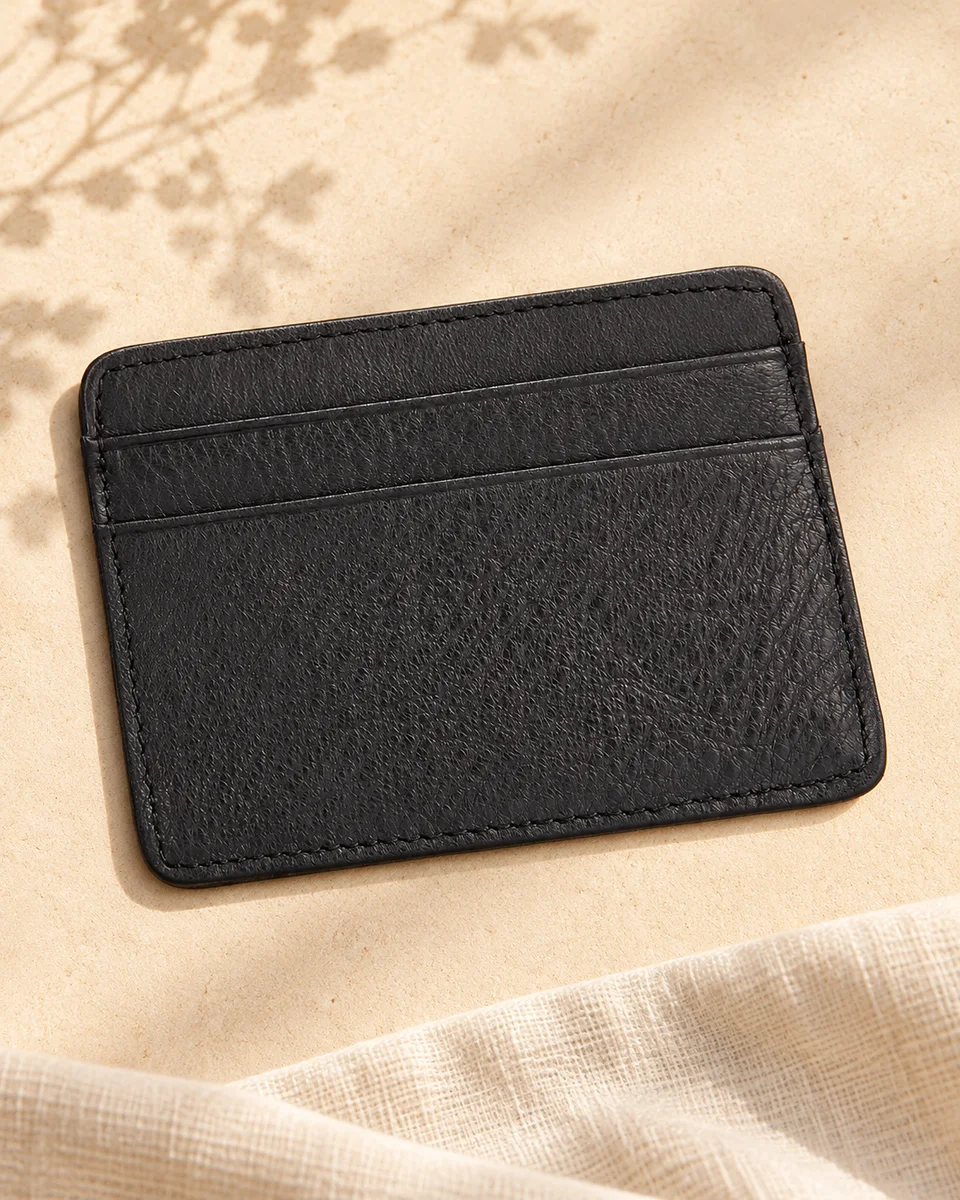
The Flat Leather Card Holder, MR-02069, is the black open format in this selection. Retained observations describe horizontal slot openings, rounded corners and a tonal stitched outline. The supplier declares cowhide without a specified leather grade. Treat those details as the basis for comparison; do not add a particular number of usable cards or a full-grain specification that is not supplied.
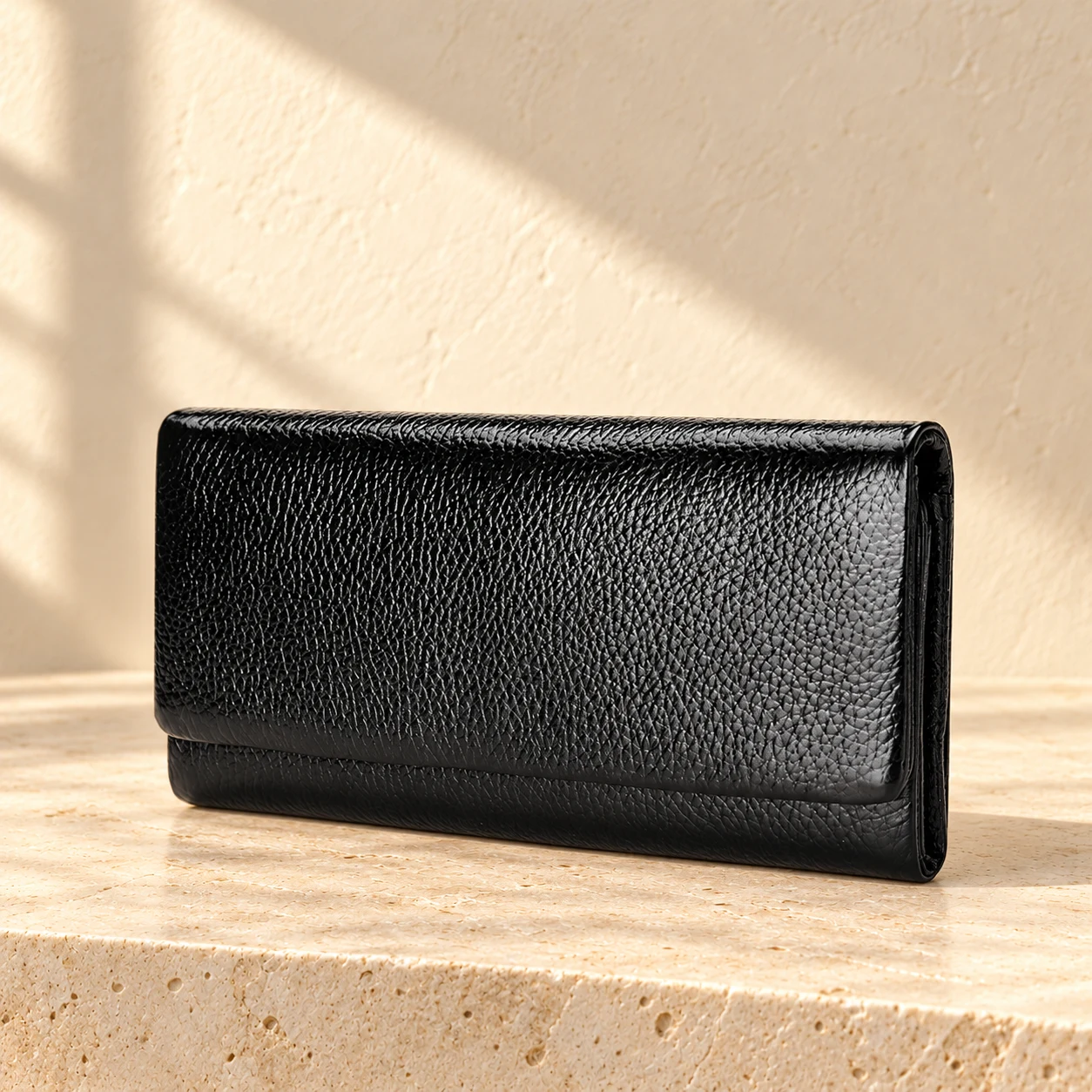
The Pebbled Long Wallet, MR-02068, uses a black folded shape with a plain flap, concealed snap, card slots, an identification window and compartments. The supplier declares first-layer cowhide and polyester lining. The Zip-Around Card Wallet, MR-02071, combines accordion-style card storage with a folding coin tray and an exterior slot. Its selected option is Black / 20 Cards, a supplier variant designation rather than an independently tested capacity result. These are distinct layouts, not simply different names for one wallet.
Choose a principle that you can remember without inspecting every slot each time. You might order cards by frequency of use, separate work-related items from personal ones, or reserve one part for things needed on a particular day. The precise order matters less than returning each item to its place. A divided wallet becomes more useful through that habit than through the number of openings alone.
Check the fit of thicker cards and any protective sleeves before building your arrangement around them. A supplier's card-count label does not describe every possible combination of thicknesses. Do not assume that a slot should be stretched to accept a stack because another model accommodates one. If you need to know the dimensions or construction of a particular compartment, ask for that detail. This keeps the decision tied to the selected wallet rather than a general image of what a cardholder should hold.
Coins create a different organisation question from cards. The folding tray in the zip-around design provides a visibly distinct area, while the other layouts should be assessed from their own stated components. Do not infer a coin compartment from the broad word wallet alone. Think about whether you want loose change within the same accessory or prefer a separate piece, then compare the available construction with that preference.
For notes and receipts, consider the way you prefer to store them rather than assuming a currency or document will fit because a wallet looks long. A window is not a guarantee for every identification format, and an elongated body does not establish an unfolded-note dimension. Review temporary paper regularly so it does not become a thick bundle beneath a flap or beside a zip. Organisation works best when the contents remain relevant to your routine.
A wallet can occupy an acceptable amount of space inside a bag and still be awkward to insert or remove through its opening. Compare both parts of the movement. A small flap bag, a top zip and an interior compartment each create a different route. Use the bag you actually carry, with its usual contents present, as the reference rather than judging fit from two separate photographs.
The retained specifications for these wallet models do not confirm complete usable product dimensions. Packaging measurements must not be substituted for the wallet's closed length, height and depth. If fit is important, request those actual measurements first. Then compare the opening and the space left alongside your phone or pouch. This is more informative than assuming that a compact-looking item will suit every small bag or that a long wallet needs a large tote.
Read each material statement at the level at which it is supplied. Cowhide without a grade is not the same wording as a separately confirmed full-grain declaration. First-layer cowhide is the description retained for the long and zip-around models; it does not give permission to invent a tanning method, thickness or certification. The polyester lining declared for those two models is a separate component and should not be described as leather.
Surface appearance also has a different role from composition. A pebbled pattern can contribute texture to the look, but it does not demonstrate a particular resistance to scratches or water. A photograph cannot establish how the surface feels in the hand or how it will change with use. When a finish or lining detail matters to you, ask about that component for the selected model and color rather than relying on a broad statement about leather goods.
An open cardholder, a concealed snap and a zip-around edge create different small gestures. Consider when you normally take out a card and where you place the wallet while doing so. The choice is about your preference for access and arrangement, not a claim that one closure is universally safer. A snap should meet naturally, and a zip should move without being used to force down excess contents.
Check the selected product's wording rather than transferring a fastening from another item. An exterior slot does not automatically have its own closure. A surrounding zip is not evidence of waterproofing, and a folded flap does not establish a certified security feature. Avoid building a purchase decision around a protection claim that has not been confirmed. The practical comparison is the actual design, the contents you plan to use and the action of opening and closing it.
The selected wallet options in these examples are black, so differences in form and surface take a leading role. A flat cardholder can continue the clean lines of a restrained bag. A pebbled long wallet can add a small contrast beside a smoother surface. A rounded zip-around outline introduces another shape without requiring a brighter color. These visual relationships can be considered once you know which interior arrangement suits you.
Matching every accessory is optional. Black can connect with shoes or a belt, but it can also sit independently inside a tan, cream or patterned bag. If you enjoy coordinated pieces, compare edge lines, texture and the amount of visible hardware rather than seeking an exact match from unrelated photographs. Lighting changes the appearance of surfaces, so a thoughtful combination does not need to depend on a promise of identical shades or finishes.
If you use different bags during the week, decide which belongings should move together. A wallet can act as one organised group, while a cardholder may represent a more selective set for shorter plans. Neither choice requires you to carry everything on every occasion. Make the transition deliberate: review the contents before transferring them, then check the pockets of the bag you are leaving behind.
A long wallet and a small evening bag may call for different decisions, but do not assume a fit until measurements are known. You might prefer to keep one everyday layout and use another format only when the occasion warrants it. The aim is to maintain a recognisable system rather than repeatedly search several bags for a card. Avoid keeping unnecessary personal documents in an accessory simply because an empty section is available.
For a gift, the recipient's existing routine is a better guide than the largest-looking format. Notice whether they use a small cardholder, prefer a longer folded wallet or keep coins separate. A change in colour can be easy to appreciate visually, but a change in organisation can be much more significant in daily use. If you do not know that preference, keep the comparison focused on observable habits rather than assuming everyone wants more compartments.
Check the selected article's contents and any actual gift presentation information. A styled scene does not promise a gift box, wrapping or additional items. Do not assume that an alternative color in a composite photograph comes with the black version. Read return information separately before making a decision, especially where the recipient may want a different format. Gift suitability is a personal choice; it does not establish a universal preference or a particular packaging service.
Follow the care guidance for the actual material and finish. Before applying a leather treatment, check that it is suitable for the selected item. The lining, zip and snap should be considered as well as the body. Do not let a cleaning product reach neighbouring components simply because it is intended for leather, and do not use household solvents as a shortcut for a persistent mark.
Empty the wallet before storage. Avoid a thick stack that keeps a fold forced open or a zip under tension, and keep it from being compressed beneath heavy belongings. Separate liquids and open cosmetics in your bag. If the wallet becomes damp, avoid direct heat while seeking the appropriate guidance. These are cautious handling habits, not a promise of waterproofing, stain resistance or a particular service life.
It identifies the supplier's version. Card thickness, sleeves and other contents still affect the arrangement. Ask for the particular slot layout or closed dimensions you need. Treat the name as a starting point for the selected version, not a laboratory capacity result or permission to force an overfilled closure.
No. Packaging and product dimensions describe different things. Request the closed wallet's length, height and depth, then consider the bag opening and remaining space. A comparison with the bag empty can also be misleading if you normally carry a phone, pouch or other bulky items beside the wallet.
No. Read the individual declaration and its scope. Body, lining and fittings may have different materials. A cowhide label alone does not confirm a grade, a lining or a test result. Use the exact model reference if you need a detail that is not supplied in its description.
Return to the contents you identified at the start. Choose the format that gives those items a sensible arrangement, check any missing measurements, and decide which opening routine you prefer. Then consider the color and texture with the bags you use. This order keeps the visual appeal connected to a practical reason for selecting the wallet.
If a detail remains unresolved, make the question concrete: identify the model, selected black option and the measurement or component concerned. An answer about usable depth or a particular slot is more useful than a broad promise that a wallet will hold everything. A considered everyday accessory should fit your way of organising, not require an imagined capacity to justify the choice.