Rings
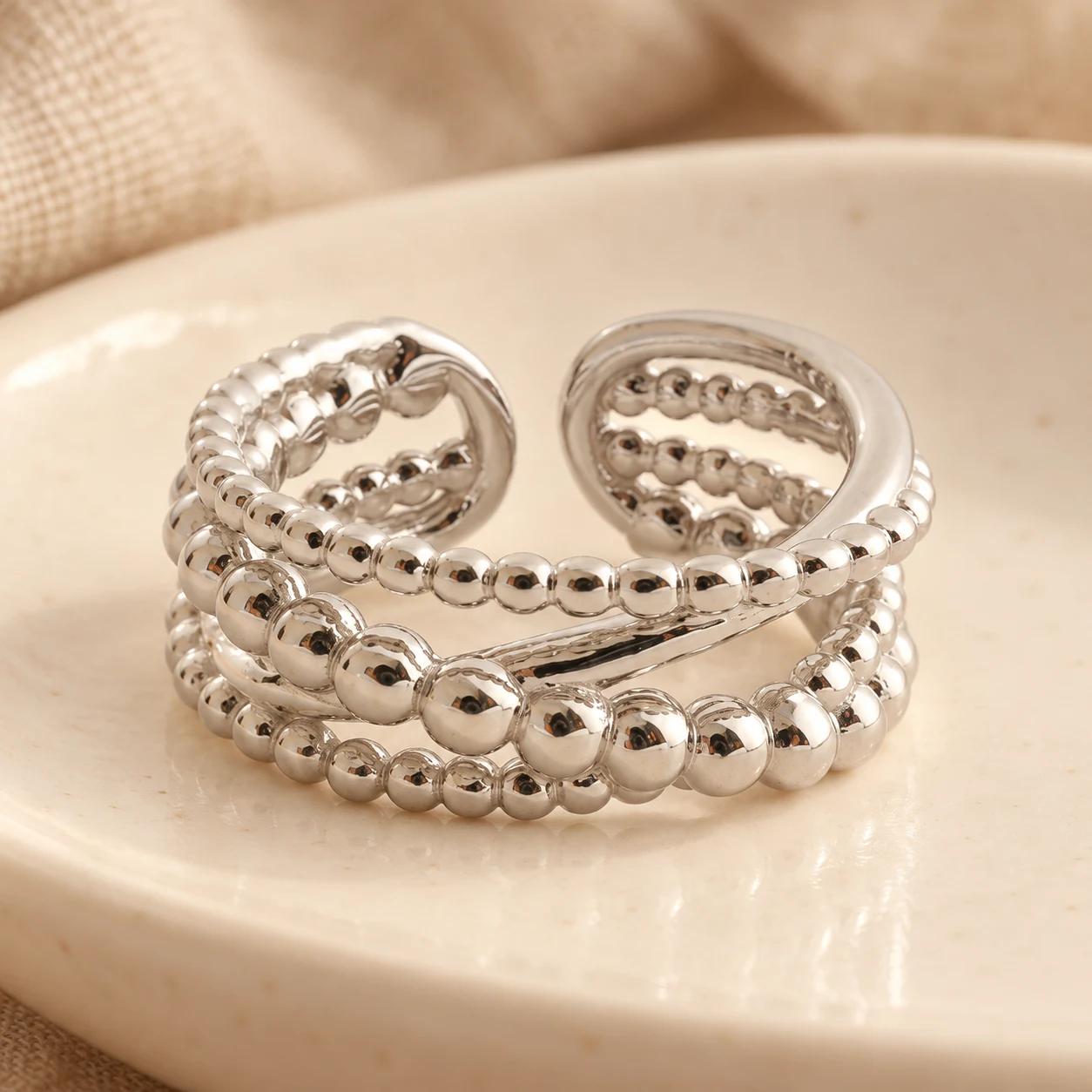
Crossed Bead Ring
Preliminary price · taxes and delivery subject to confirmation
Check delivery availability
Delivery availability is not yet confirmed.
Shipping costs and taxes require a confirmed quote.
Details, styling and care
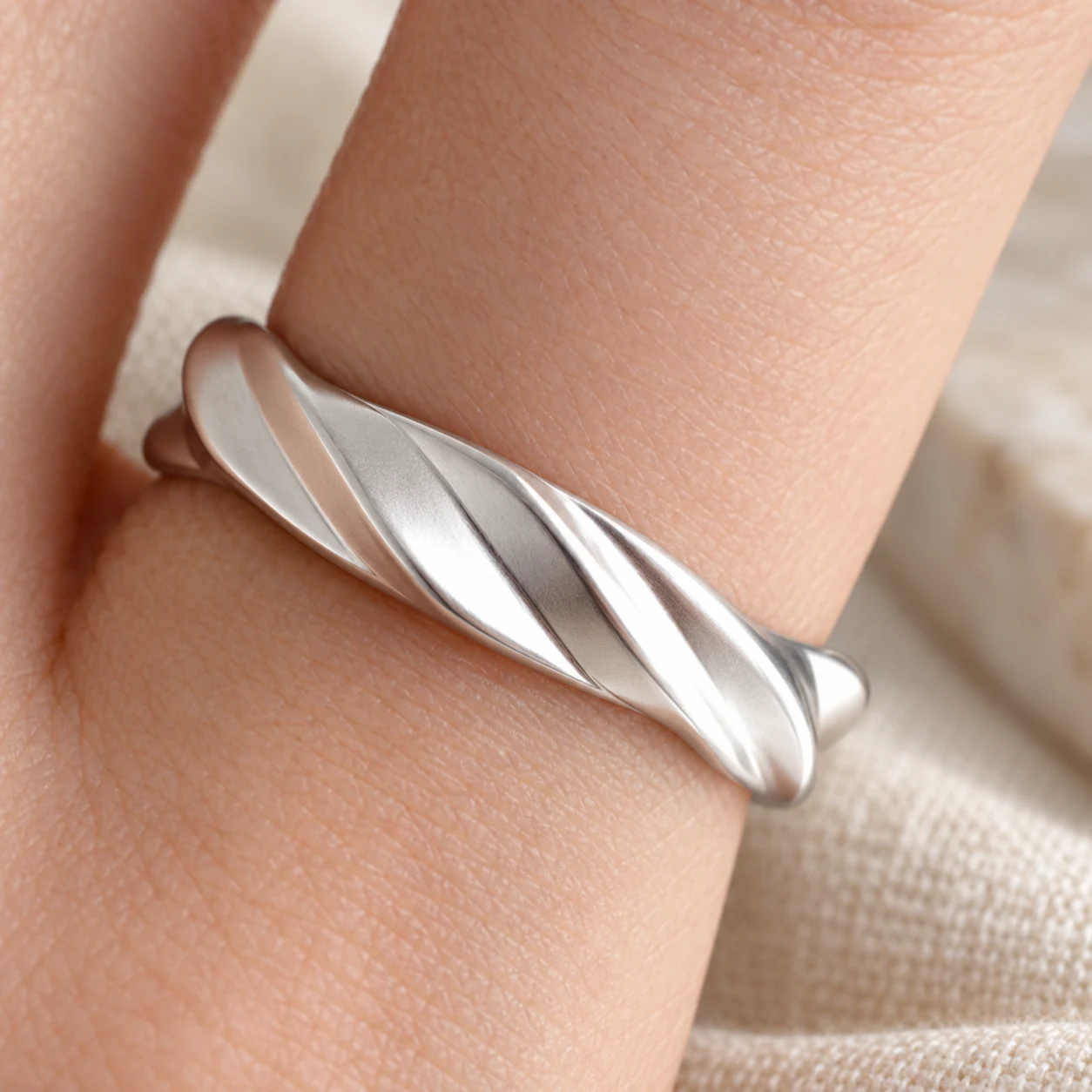
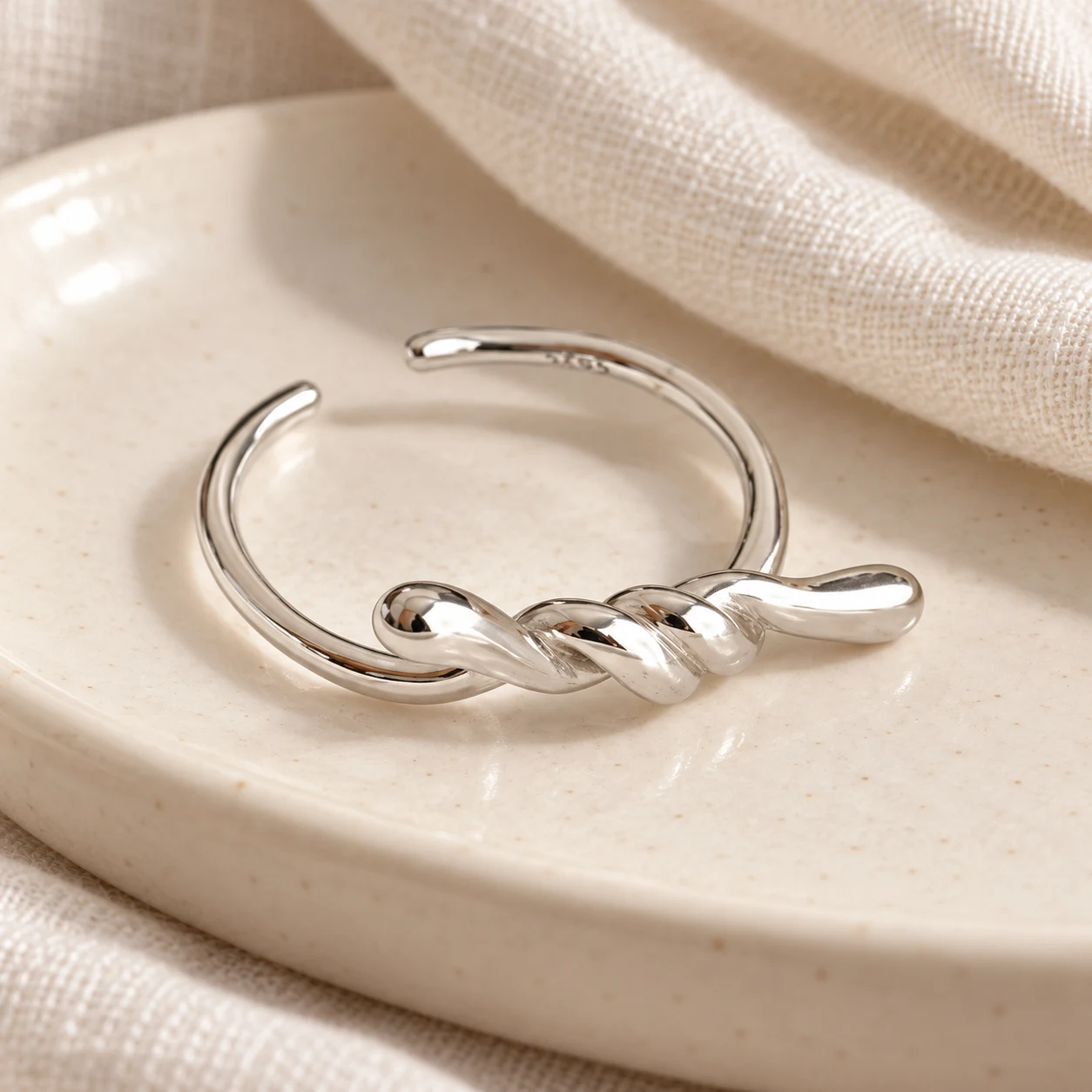
Rows of polished beads cross to form the broad face of this sculptural ring. A smooth cuff makes a calm partner for the crossed bead rows.
Crossing rows with a rounded surface rhythm
The bead rows combine small rounded units into a broader crossing shape. Their repetition can bring texture to the hand without requiring a separate motif such as a flower or heart. A smooth cuff gives the pattern a quiet background, while a plain bracelet can provide continuity toward the wrist. Keep the main crossed area visible so the individual rows do not disappear among equally textured neighboring rings.
The existing design description refers to polished beads, but that visible character does not by itself establish their internal construction or suggest a strand of loose elements. Treat the ring as the documented design rather than assuming the beads move independently. When comparing combinations, look from the side as well as above. The crossing arrangement may occupy space that is not obvious when only its front pattern is considered.
Show less
Supplier figures for the selected Silver option
For Silver, the supplier declares 925 sterling silver, a ring width of 7.5 mm, a ring diameter of 16.5 mm and a total weight of 4.75 g. The size is described as open and adjustable. These are retained supplier specifications, not independent measurements or laboratory verification of the particular ring supplied. The width concerns the ring and is not a separately stated diameter of each rounded bead element.
The family electroplating field mentions 18K yellow gold and rhodium, but the exact finish of this Silver choice remains unresolved. Silver does not prove rhodium plating or the absence of a coating. The supplier's solid silver wording does not separately establish nonhollow construction. No explicit main or accent stone specification is retained either; an unknown field cannot be converted into a promise that the ring contains no stones or other decorative components.
Separate band width from the space needed on the hand
Compare the 7.5 mm width with a ring you already wear to consider the area along the finger. The 16.5 mm diameter is a separate fit reference and should be compared using the same measurement method. Neither tells you the height of the crossing rows above the hand. If clearance beside another ring or beneath a glove matters, ask for that profile instead of estimating it from the rounded surface.
The open, adjustable description does not establish a tested minimum and maximum size. Request the supported range and instructions before making a significant change. Avoid using a bead row as a handle for bending or repeatedly resizing the ring to switch fingers. Check the fit at the knuckle and finger base while moving the hand gently. A textured top should also be assessed for contact with neighboring fingers during ordinary gestures.
Preserve the row detail and spaces
A simpler band worn on a different finger can support the pattern, provided the tops do not rub when the fingers come together. Check loose knits and fine threads around the crossing area before settling on an outfit. If fabric catches, support the ring and release it gently rather than pulling the material sharply. The declared weight helps comparison but is not a guarantee of comfort or of resistance to deformation.
Remove the ring for swimming, household cleaning, weight lifting and forceful gripping. Let creams or perfume dry before wear, then wipe with a soft dry cloth and store apart from harder pieces. Do not scrape between the rounded details or assume abrasive polish, silver dips or ultrasonic treatment are suitable for the unresolved finish. Ask for guidance about persistent marks or a changed shape rather than increasing pressure or bending the crossed rows.