Rings
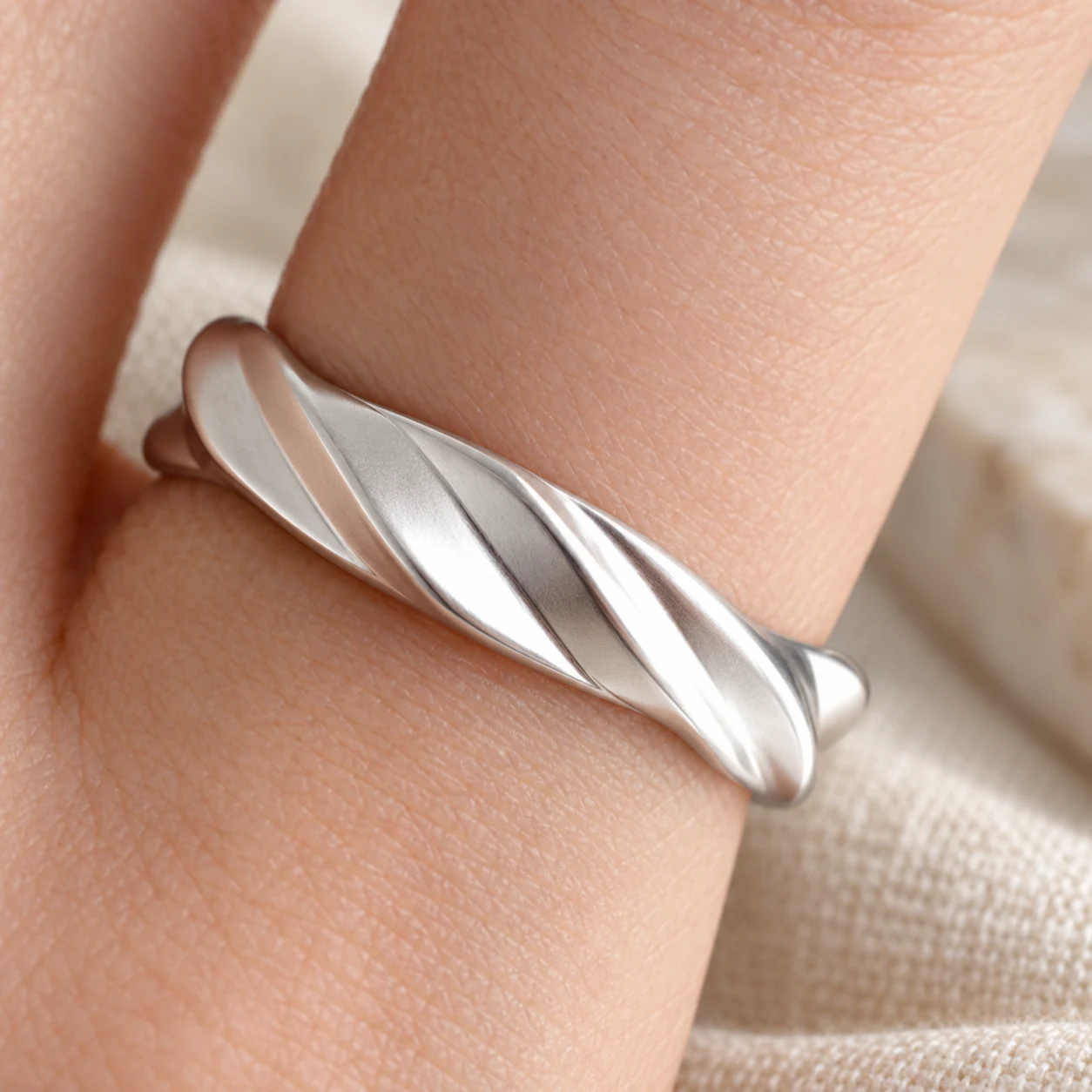
Turning Point Ring
Preliminary price · taxes and delivery subject to confirmation
Check delivery availability
Delivery availability is not yet confirmed.
Shipping costs and taxes require a confirmed quote.
Details, styling and care
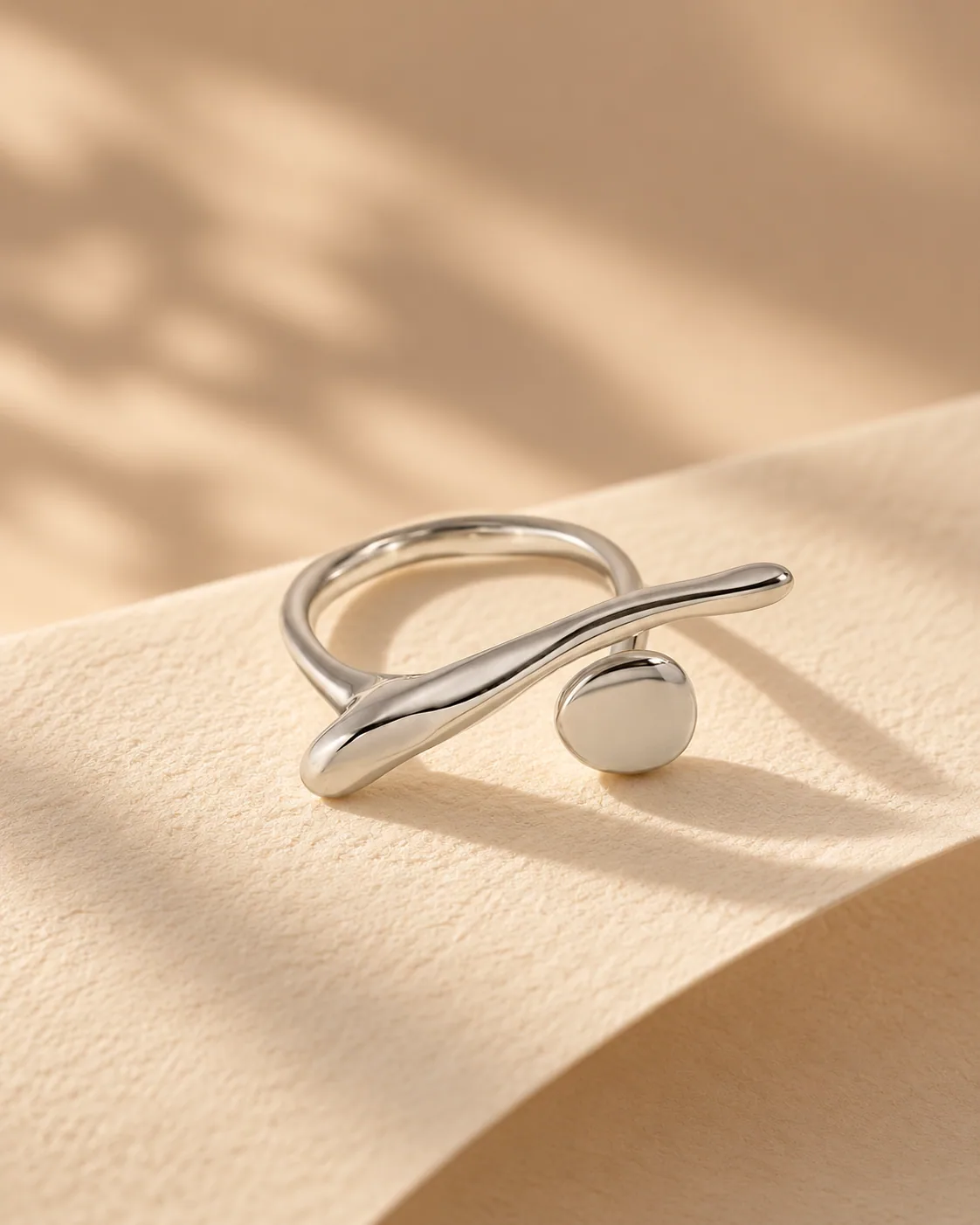
A twisted design brings a sense of movement to this adjustable 925 sterling silver ring. Wear it beside a plain band to make the contrast between straight and turning lines count.
A turning line in a simple arrangement
The twist gives this ring a directional quality: the eye follows the changing line around the finger instead of settling on a single central ornament. A plain band can make that movement easier to see. Try the two on separate fingers first, so their outlines remain distinct. If you prefer stacking, check the way the actual edges meet before deciding on a close arrangement.
A smooth cuff, an unpatterned sleeve or a simple watch strap provides another way to frame the twisted detail. The ring can carry the texture in an otherwise quiet combination without requiring a matching necklace or earrings. Look at the arrangement with your hand relaxed as well as extended. The pattern occupies a different position as your fingers move, which is part of its visual interest.
Show less
What the retained specification establishes
The supplier declares 925 sterling silver for the selected Silver option and lists a ring width of 5 mm. The available record also describes an open, adjustable size and gives a total weight range of 3.8–3.98 g. These are supplier statements rather than independent laboratory results or a measurement of the individual ring you will receive. No particular point within that weight range is assigned to this selected finish.
The family specification mentions rhodium and 18K yellow gold electroplating, but it does not resolve the coating on the selected Silver option. Silver is therefore not a confirmation of either rhodium plating or an unplated surface. The retained record does not identify a stone, and that omission should not be turned into a verified statement that stones are absent. It also does not establish whether the metal structure is solid or hollow.
Clarify the sizing field before choosing
One source field reads Ring Perimeter: 17.6 mm. That wording is retained as an unresolved specification; it has not been silently relabelled as a diameter or converted into a ring size. Ask for a confirmed internal measurement and the supported adjustment range before using that figure to choose a fit. The description of an adjustable opening does not supply the missing measurement or establish a universal size.
For a useful scale comparison, mark the confirmed 5 mm width on paper beside a ring you already wear. This helps you assess how much of the finger the band may cover, without proving its internal fit. A twisted profile may also meet neighbouring rings differently from a flat band. Check that the pieces stay separate during normal hand movement and that an open end does not press against an adjacent finger.
Keep the twist and opening in shape
Follow the supplied fitting instructions rather than repeatedly opening and closing the band to move it between fingers. If the fit needs altering, ask for advice about the permitted adjustment for this construction. Hold the main band when taking it off instead of pulling at an individual raised detail. Remove the ring before tasks involving a firm grip, rough surfaces or repeated contact with tools.
For routine care, use a soft dry cloth and store the ring separately from jewellery that could rub against the turns. Let hand cream dry before putting it on, and remove it before swimming or cleaning. Because the selected coating is unresolved, do not assume an abrasive silver polish or chemical dip is suitable. Request the appropriate cleaning instructions for persistent marks, and have a changed shape checked before further wear.