Rings
Triple Branch Ring
Preliminary price · taxes and delivery subject to confirmation
Check delivery availability
Delivery availability is not yet confirmed.
Shipping costs and taxes require a confirmed quote.
Details, styling and care
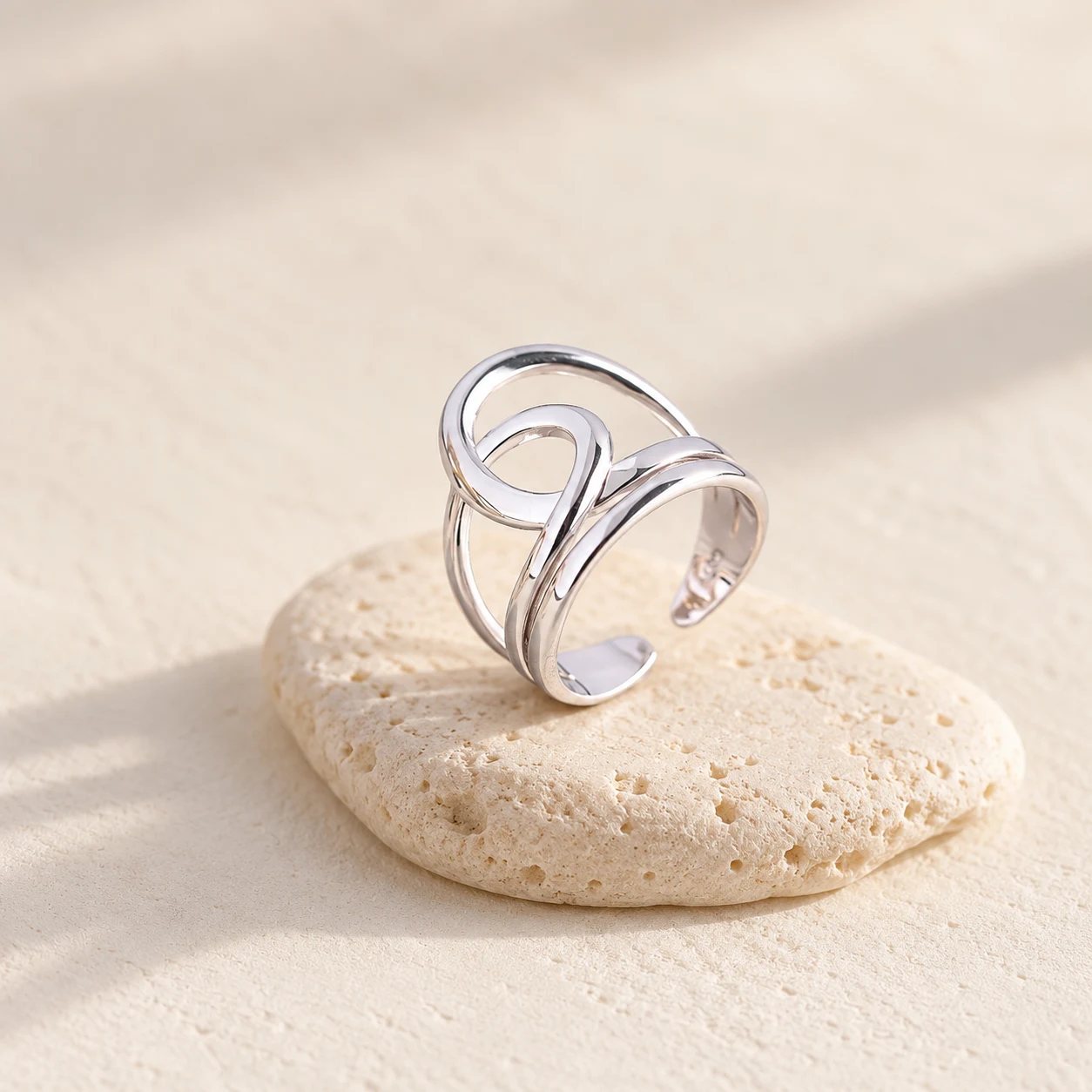
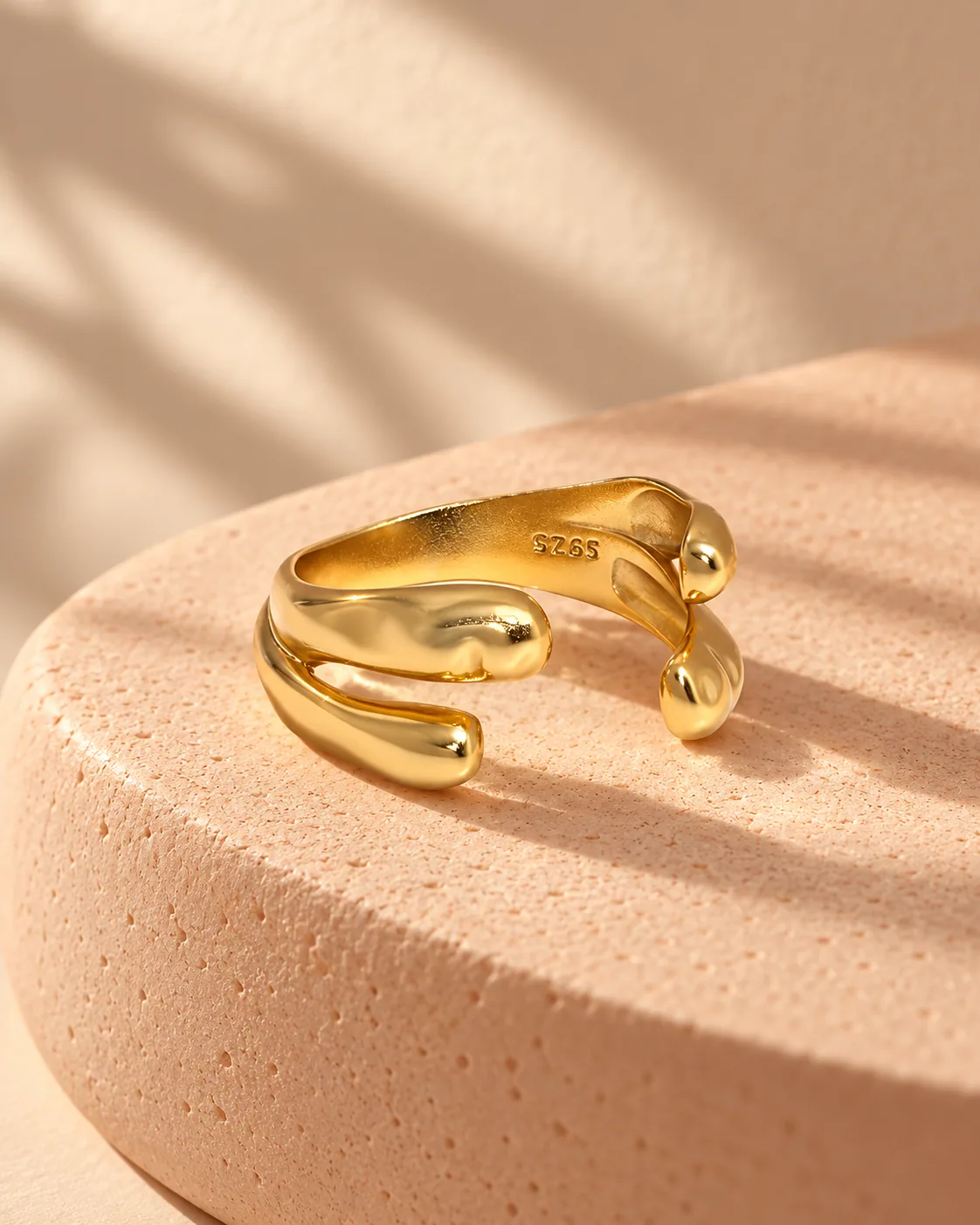
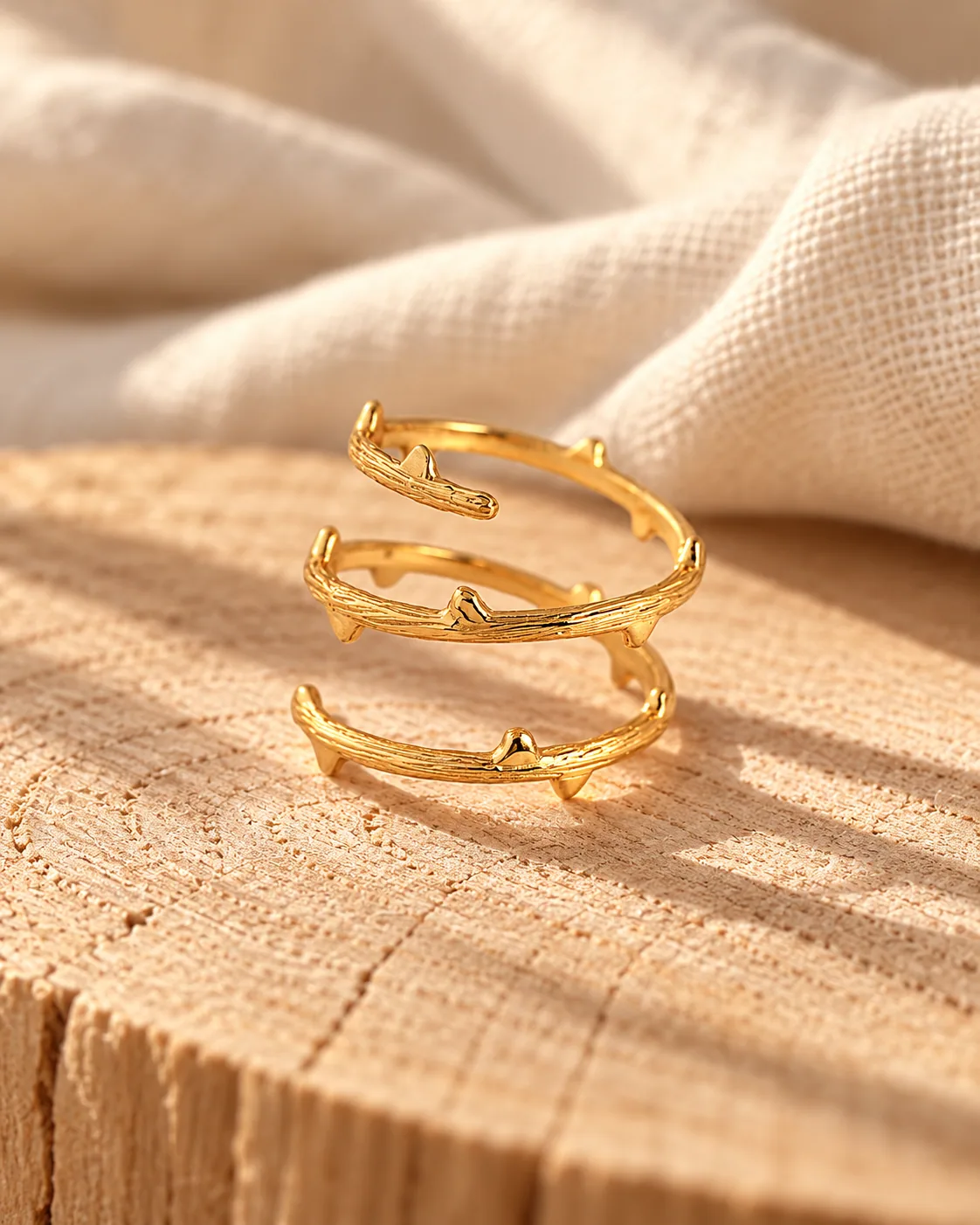
Three slender, branch-like rows curve around an open ring with airy spaces between them. The three-line arrangement creates a layered look without adding separate bands.
A layered effect within one open ring
Three branch-like lines give this ring its identity. The spaces between them are as important as the metal outlines: they create an airy, layered appearance without requiring several independent bands. The selected option is Yellow Gold. Choose it when you prefer a ring that has some visual spread across the finger but still allows the individual lines to remain distinguishable rather than reading as one broad, uninterrupted surface.
The organic description refers to the branching design, not to a botanical material or a manufacturing method. A plain band on another finger can provide a useful contrast, while several equally open rings may create a more intricate combination. Consider the space between neighbouring fingers and how your hand moves during everyday tasks. A pleasing appearance in a still photograph does not by itself establish your preferred fit or comfort.
Show less
Supplier size and metal information
The supplier gives a ring diameter of 16.5 mm and describes the size as Open Size/Adjustable. It also lists a total weight of 2.3 g. The diameter is a reference measurement, not a complete guaranteed fitting range, and the adjustable description does not mean the ring can safely be expanded or compressed without limit. Compare it with a ring that fits you and seek the permitted adjustment range if needed.
The stated material is 925 sterling silver with 18K yellow gold electroplating corresponding to this selected option. These are supplier declarations rather than independent laboratory results. The record does not establish coating thickness, stone composition or whether every part of the ring has nonhollow construction. An omitted stone field should not be converted into a firm stone-free claim, and the plating description does not make the piece solid gold.
Wearing the branches without crowding them
Let the open lines remain visible by leaving some space around the ring. A very wide adjacent band may hide the branching effect or feel crowded when you close your hand. If you prefer several rings, try them together while making ordinary movements such as holding a cup or fastening a sleeve. Those checks give a more useful sense of the combination than judging only the front-facing view.
Smooth fabrics make an uncomplicated backdrop, but loose knits and open weaves deserve extra care around projecting or separated details. Remove the ring for tasks where the open form could catch or be pulled. This precaution does not mean that snagging is inevitable; it recognises that an open design behaves differently from a completely plain band. Keep the choice focused on the shape you enjoy and the fit you can actually confirm.
Adjustment and surface care
If adjustment is necessary, obtain guidance on the intended method rather than repeatedly bending individual branches. Uneven pressure can alter the spacing that gives the design its character. Put the ring on after hand products have settled and remove it before cleaning, swimming or handling abrasive materials. After wear, a soft dry cloth used gently is preferable to aggressive polishing or an unconfirmed chemical cleaning treatment.
Store the ring in its own compartment so that the separated lines are not pressed beneath heavier pieces. For gifting, ask about a familiar comfortable size instead of treating the word adjustable as a universal fit guarantee. The recorded diameter, weight and supplier-declared finish support comparison, while sensitivity claims, tested durability and a precise adjustment span remain outside the available evidence. The open three-line design should be chosen with those practical distinctions in mind.