Rings
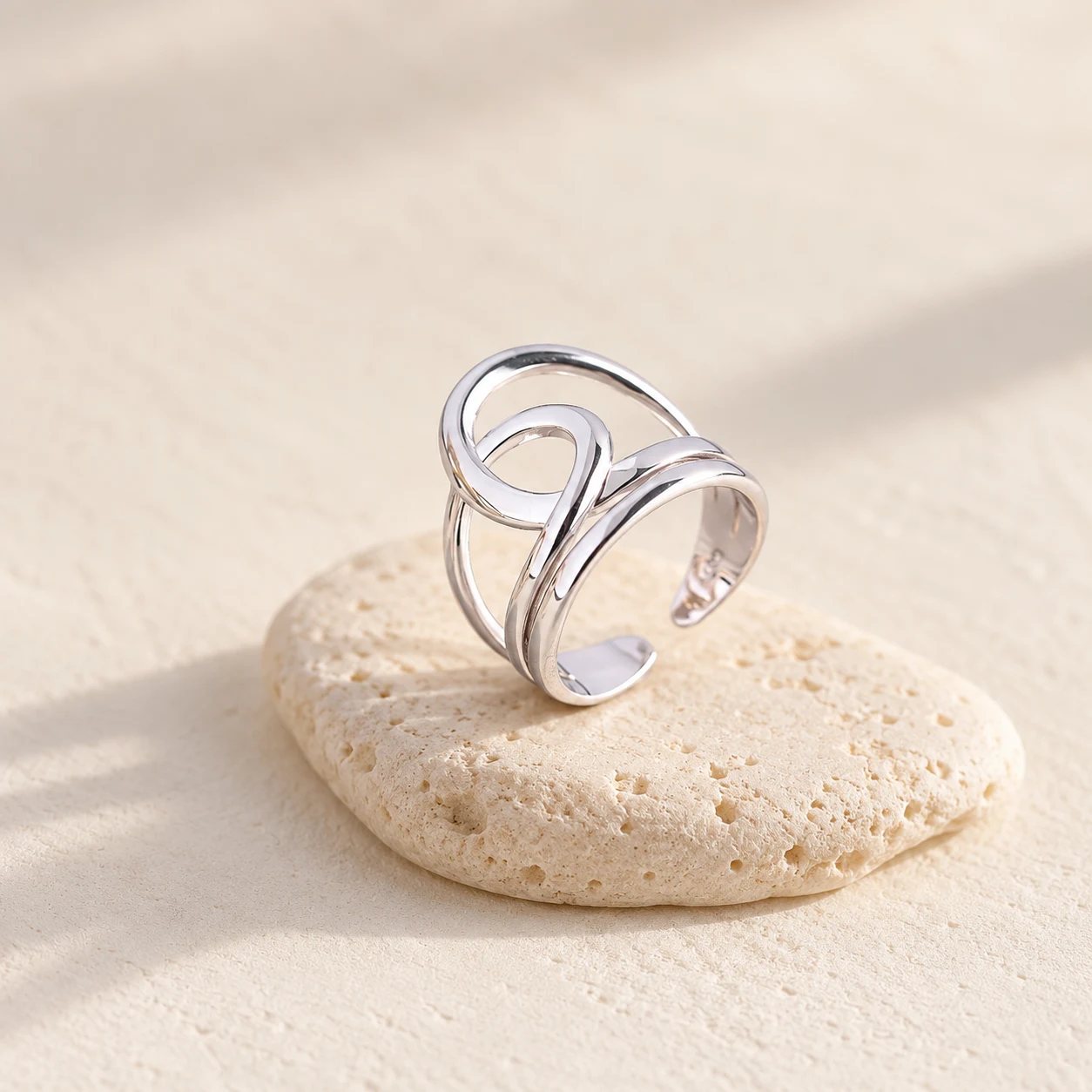
Crossing-loop open ring
Preliminary price · taxes and delivery subject to confirmation
Check delivery availability
Delivery availability is not yet confirmed.
Shipping costs and taxes require a confirmed quote.
Details, styling and care
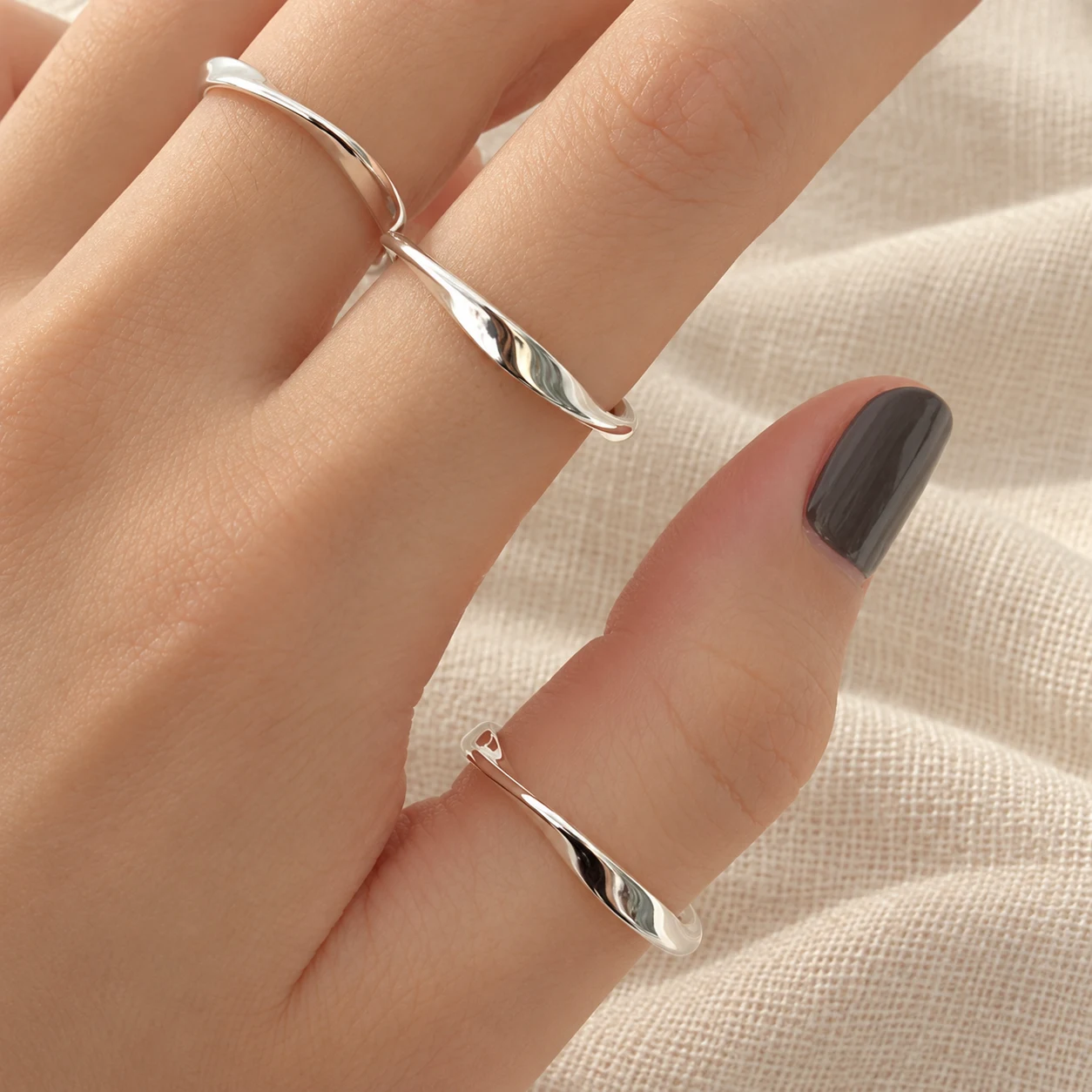
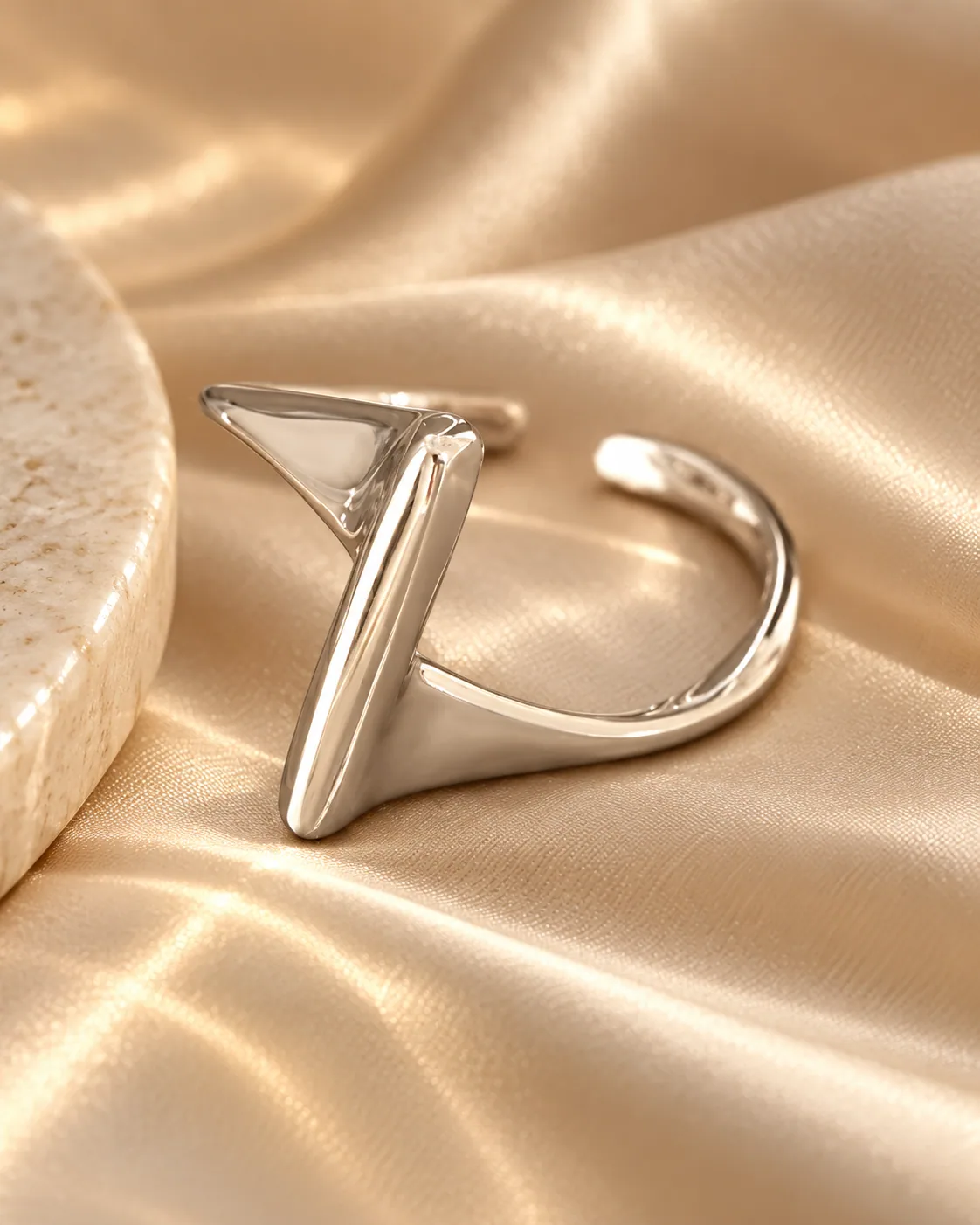
Flowing loops cross above an open band, creating a layered outline with visible space between the curves. Keep adjacent fingers lightly accessorized to preserve the rhythm of the crossing loops.
Crossing curves with space between them
The loops create a layered outline within a single ring, making the spaces between the curves part of the composition. Let those spaces remain visible by keeping neighboring fingers comparatively clear. A simple cuff or a bracelet with a quieter line can complement the movement without adding more crossings at the same point. The design does not need a separate symbolic motif to give the hand a distinct focus.
View the ring from the side as well as from above to understand how the crossing lines read in an outfit. The layered effect may be more noticeable against plain clothing than against a busy pattern. If another ring is part of your usual combination, check that its raised section does not enter the loop area during a relaxed bend of the fingers or ordinary hand movements.
Show less
Silver option and retained supplier figures
For the selected Silver option, the supplier declares 925 sterling silver, a ring top size of 17 mm, a ring diameter of 16.5 mm and a total weight of 4.22 g. The ring is described as open and adjustable. These are supplier specifications rather than independently checked measurements or material tests. The 17 mm figure describes the top and should not be substituted for the separate finger-diameter measurement.
The family electroplating entry mentions 18K yellow gold and rhodium, but the exact finish of this Silver option is unresolved. Neither a silvery appearance nor the option name establishes rhodium or no plating. No explicit stone specification is retained, so unknown stone information should not become a claim of absence. The supplier's solid silver wording likewise does not prove that the loop construction is nonhollow throughout.
Protect the loop shape when considering fit
The recorded top size does not give a confirmed height above the finger, thickness of each curve or spacing between the loops. Request a side profile if clearance under gloves or beside another ring matters. Compare the 16.5 mm diameter with a known ring measured in the same way, and avoid reading the apparent gap in a photograph as a reliable measurement of the supported finger size.
An open and adjustable description provides no verified minimum or maximum fit in the retained information. Ask for the supported range and adjustment method before making a substantial change. Do not use the crossing loops as handles or repeatedly flex them to switch fingers. Check the ring at the knuckle and finger base, then move the hand gently to see whether the layered top contacts adjacent fingers.
Keep fabric and neighboring jewelry clear
The open spaces call for attention around loose knits, fine threads and straps that could pass between the curves. Check those contacts when trying a particular outfit, and support the ring itself when removing it rather than pulling caught fabric sharply. A plain band on the other hand can balance the composition while preserving the layered ring's own space. The listed weight alone cannot establish comfort or resistance to deformation.
Take the ring off before swimming, cleaning, weight lifting and forceful gripping. Let hand creams and perfume dry before wear, then use a soft dry cloth for gentle wiping. Store it separately where other items cannot press into the open form. With the finish and stone information unresolved, avoid abrasive polish, silver dips or ultrasonic treatment without confirmation. Ask for guidance on persistent marks or changed shape instead of stronger cleaning or bending.