Rings
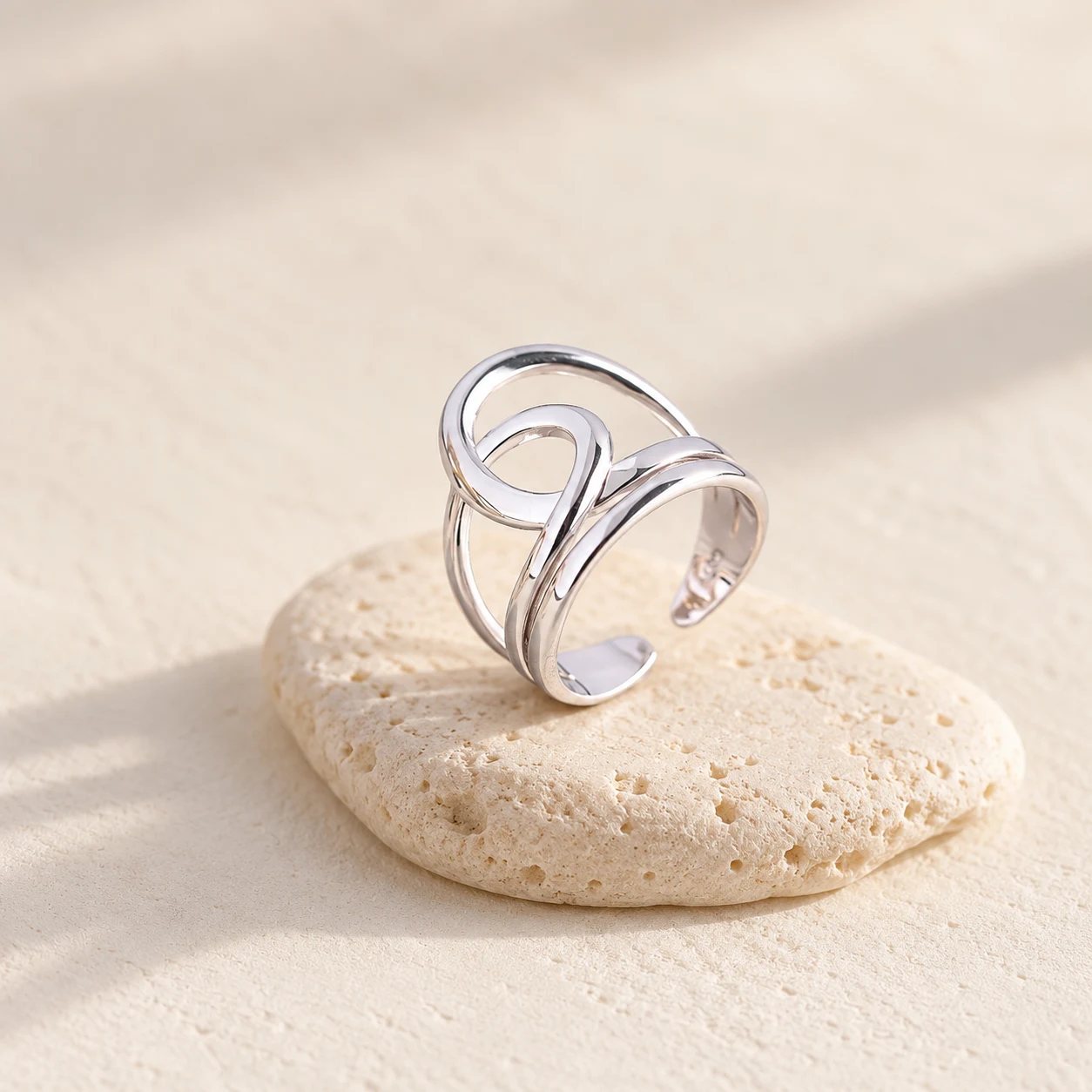
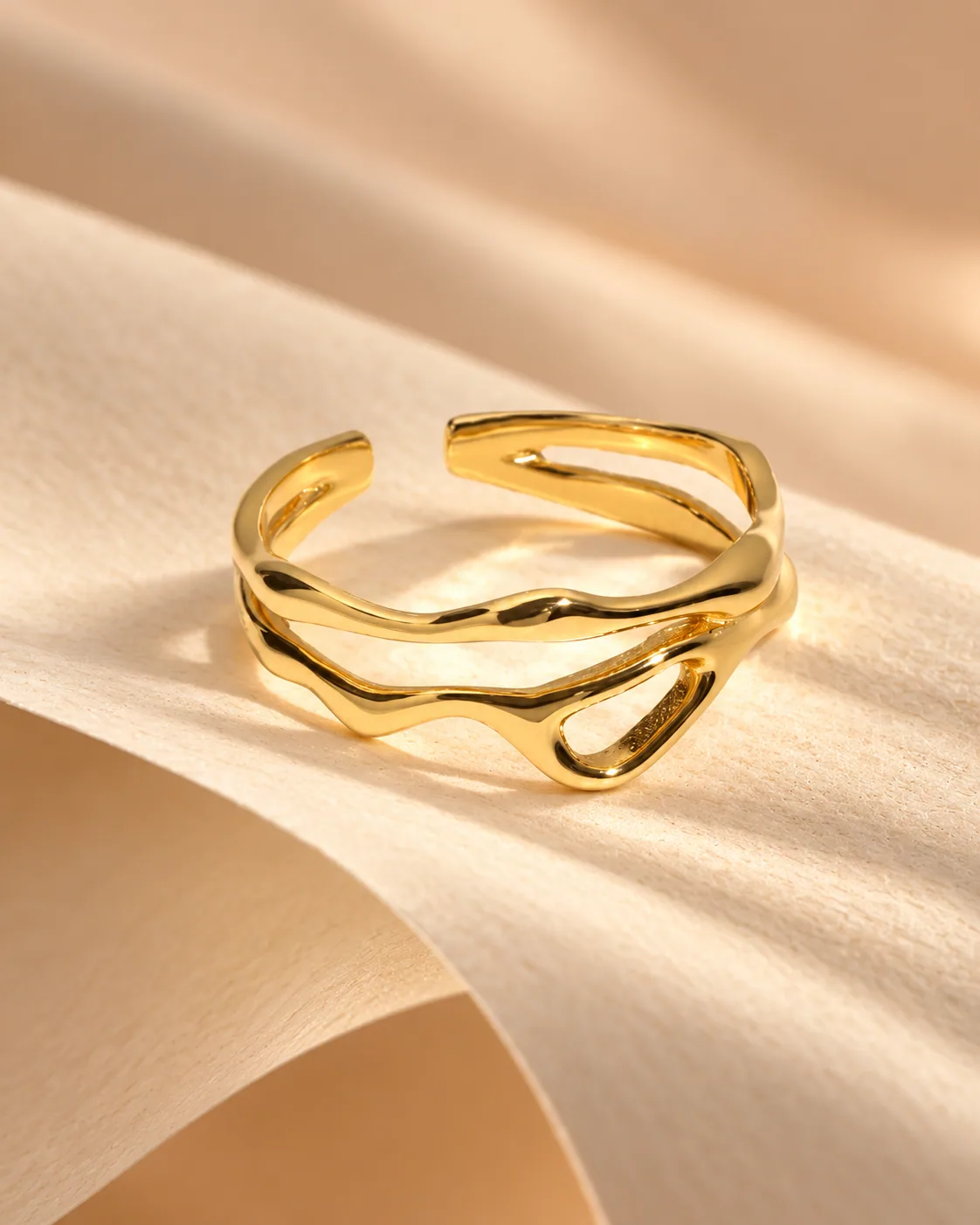
Fluid openwork ring
Preliminary price · taxes and delivery subject to confirmation
Check delivery availability
Delivery availability is not yet confirmed.
Shipping costs and taxes require a confirmed quote.
Details, styling and care
Irregular flowing bands cross and separate across the ring, creating an openwork shape with uneven windows. Wear it on its own to give the open shape room, especially alongside a simple sleeve or cuff.
Flowing bands with open windows
The ring creates its shape through crossing and separating lines, leaving uneven spaces within the upper design. The selected option is Yellow Gold. A simple sleeve lets these windows remain visible, while additional rings close against the openwork may obscure the pattern. The open areas describe the visible design rather than an independently established hollow interior inside the metal itself. Those are different construction questions and should not be treated as interchangeable.
Wear the ring alone at first and look at the pattern as your hand moves naturally. The changing background of skin and clothing can make the openings read differently without any need to rotate or bend the bands. A smooth bracelet can accompany the fluid shape while keeping the hand uncluttered. If you add another ring, allow clearance between its edge and the crossing lines so they do not press against one another.
Show less
The selected finish and its limits
The supplier declares solid 925 sterling silver with electroplating. The selected Yellow Gold option maps to the listed 18K yellow gold finish over that silver base. The karat value applies to the surface material, not to the entire ring as solid gold. Neither coating thickness nor a complete alloy analysis is supplied. These are supplier declarations, not independently tested findings or an assurance of a particular lifespan under everyday wear.
No explicit main-stone or accent-stone entry is retained. A missing field does not establish stone absence, even where the visual description concentrates on flowing metal lines. The supplier's solid-silver terminology also does not independently verify fully filled internal construction. No separate nickel-free, allergy-safe or waterproof guarantee is documented. If a technical property is essential to your choice, ask for confirmation for this particular finished piece instead of inferring it from the openwork appearance.
Top scale, reference diameter and weight
The ring-top size is stated as 7.6 mm, but the measurement axis is not identified. It should not automatically be called the total width, height or opening size. Ring diameter is listed as 16.5 mm. Total weight appears as 2.15–2.2 g, without a documented assignment of an exact point in that range to this selected finish. Retain the range rather than choosing an endpoint or attributing the difference to an unconfirmed construction detail.
The size field reads Open Size/Adjustable. There is no supplied safe adjustment interval or numbered size range, so use the diameter as a reference rather than a universal fit promise. Avoid spreading the decorative crossing lines to change the fit. Ask for guidance before adjustment, especially if a substantial change seems necessary. During normal hand movements, check that the openwork does not pinch skin or catch against a ring on the neighbouring finger.
Keeping the open spaces clear
Remove the ring for exercise, lifting, swimming and cleaning tasks where the crossing bands could be pressed or exposed to chemicals. Let hand products absorb before putting it on. Wipe reachable surfaces gently with a soft dry cloth while supporting the structure. Do not force cloth, brushes or pointed objects through the small windows. For residue in a difficult area, seek a suitable cleaning method instead of scraping at the plated surface.
A separate storage compartment keeps chains from threading through the openwork and reduces rubbing against stones or other metal edges. Lay the ring where heavier jewellery cannot press down on the crossing lines. Check the opening and connections occasionally without twisting them. If a band becomes displaced or the shape changes, stop wearing it and arrange an inspection. The fluid visual effect should come from the design, not from repeated flexing during handling.