Earrings
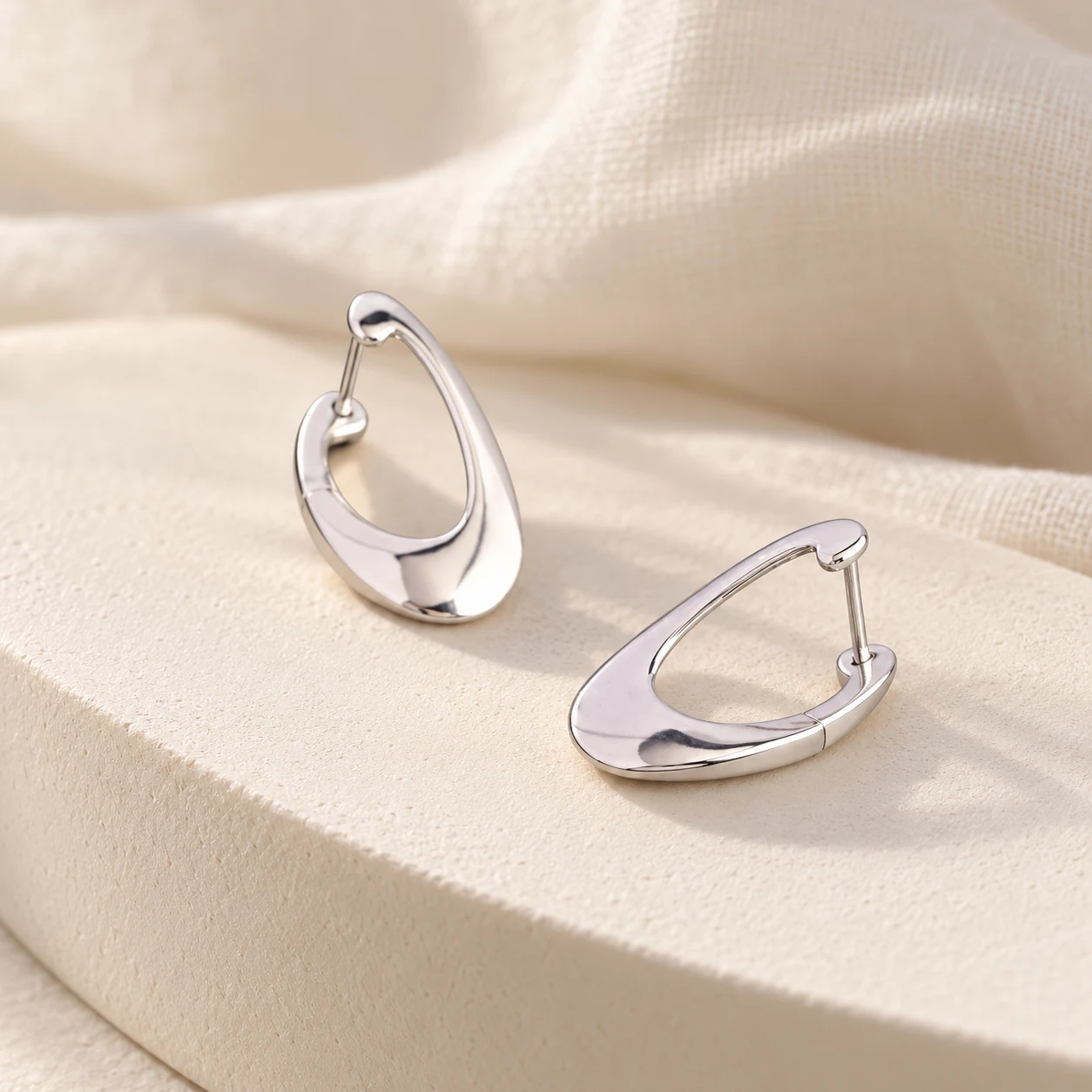
Tapered Sculptural Hoops
Preliminary price · taxes and delivery subject to confirmation
Check delivery availability
Delivery availability is not yet confirmed.
Shipping costs and taxes require a confirmed quote.
Details, styling and care
Smooth open curves taper unevenly to give these hoops their asymmetric profile. They make a considered focal point with a plain T-shirt.
An uneven taper within an open curve
The Tapered Sculptural Hoops use a changing width to give a familiar open curve a less symmetrical profile. Their appeal lies in the transition along the form rather than a separate charm or decorative surface motif. They can become the considered detail in a plain outfit without requiring a matching set. The selected supplier option is Silver, and the description follows that exact version rather than borrowing a finish from the yellow-gold alternative.
A simple T-shirt gives the sculptural outline a clear background. A structured collar can create a sharper contrast, while a smooth ring repeats the restrained surface elsewhere in the outfit. If you add another earring, leave enough space for the tapered profile and check the arrangement from the side. The changing width can make these hoops sit visually differently from a thin wire circle even when the overall dimensions seem comparable.
Show less
Silver and the limits of the finish description
The supplier specifies 925 sterling silver as the metal. Its family information lists 18K yellow-gold and rhodium electroplating, but the selected option is labelled only Silver. That name does not establish rhodium plating or an unplated surface for the chosen variant. The exact finish remains unspecified. These details are supplier declarations rather than independent laboratory findings, and no plating thickness or separately supplied certificate is recorded.
No stone identity is retained in the specification. The smooth appearance should not be turned into a technical guarantee that every component is stone free. The supplier's solid-silver wording also does not independently establish whether the sculptural sections are solid or hollow internally. There is no supported nickel-free, allergy-safe or waterproof assurance. The taper is a visual design feature, not evidence that the earrings are flexible or intended to be reshaped during fitting.
Comparing the shape with a familiar hoop
The listed earring size is 17 mm by 10 mm, and the total weight is 2.09 g. These dimensions help you compare the overall presence with earrings you already wear. They do not identify the internal opening, thickness at either end of the taper or post dimensions. The total weight remains the supplier's figure rather than being divided into an assumed weight for each individual earring.
A paper outline based on the listed measurements can help you judge the scale near your piercing and collar. Consider the fuller part of the curve as well as the outer size when planning an ear arrangement. The retained specification does not establish the fastening mechanism or a safe adjustment range. If you need a particular closure or precise internal clearance, confirm that detail before treating the open shape as evidence of a suitable fit.
Keeping the intended contour intact
Put the earrings on after fragrance and hair products have dried, and remove them before bathing, swimming, exercise or sleep. A soft dry cloth is a gentle first step for light marks along the surface. Avoid abrasive polish and harsh chemical dips while the precise finish is unresolved. Do not pull on the narrow end or force the curve wider to fit; the intended fastening should determine how the earring is handled.
Store the pair separately from heavier jewellery that could compress or scratch the sculptural profile. Inspect the fastening and taper before wear, particularly after a snag or accidental pressure. If the shape appears altered or a closure feels insecure, set the piece aside for assessment rather than repeatedly bending it. Preserving the deliberate transition in width keeps the design's asymmetry intentional and distinct from accidental distortion.