Earrings
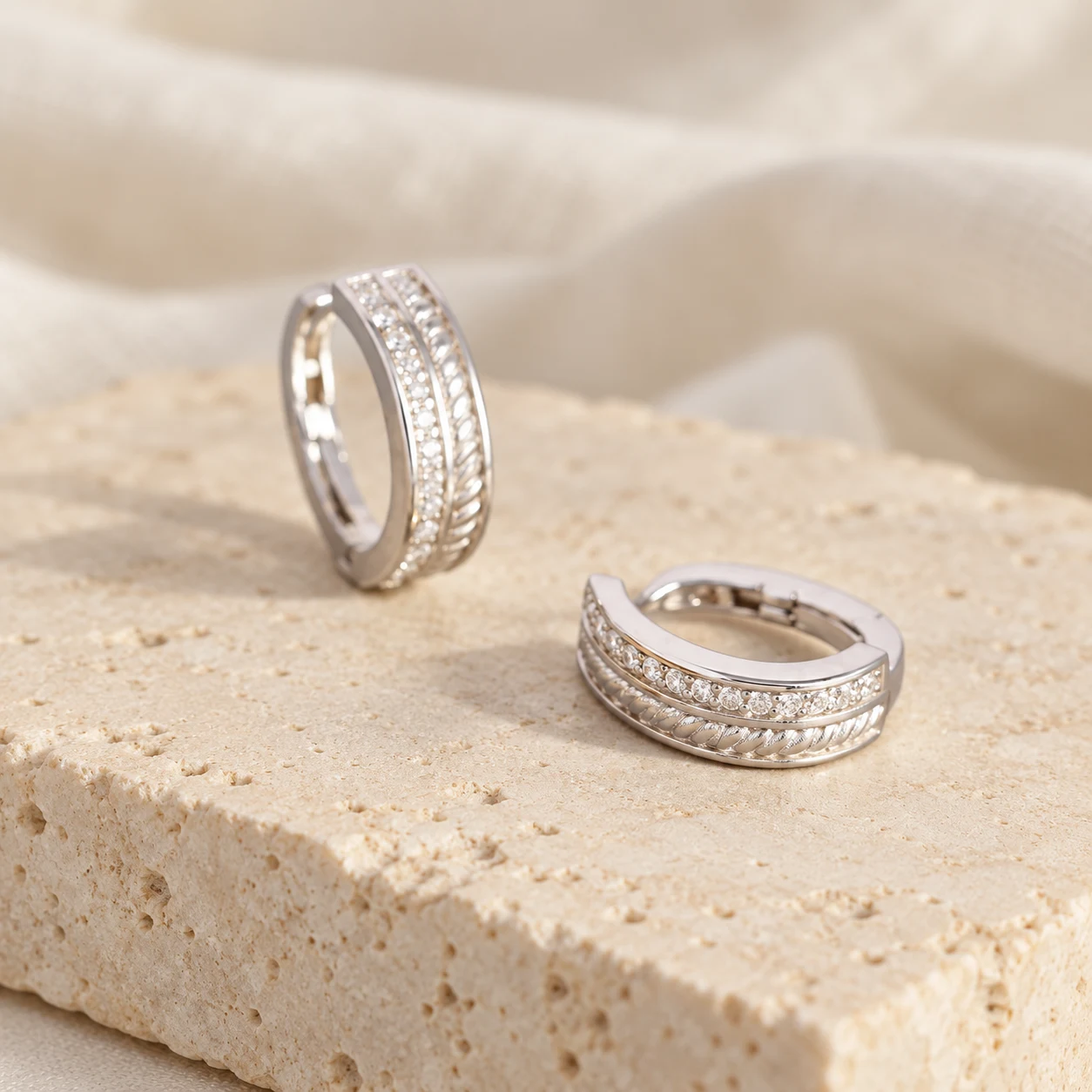
Multi-row open ear cuff
Preliminary price · taxes and delivery subject to confirmation
Check delivery availability
Delivery availability is not yet confirmed.
Shipping costs and taxes require a confirmed quote.
Details, styling and care
Parallel textured and stone-set rows create a stacked-line effect within an open ear-cuff shape. The parallel rows bring visual layering to an ear arrangement without needing several different motifs.
Several lines within one open shape
The Multi-row Open Ear Cuff creates the impression of a layered arrangement through parallel textured and stone-set rows. Instead of combining several unrelated motifs, it repeats a small group of lines within one open form. The contrast between textured areas and clear accents gives the design its visual depth. The selected variant is Rhodium, so its surface description follows that specific option rather than the yellow-gold version in the wider supplier family.
Consider it as the more detailed element in an otherwise restrained ear arrangement. A simple stud or plain hoop nearby can leave the parallel rows easy to distinguish, provided the pieces have enough space between them. The name ear cuff describes the intended design category, but it does not by itself establish the attachment mechanism, whether a piercing is required, or the exact part of the ear it will fit. Those practical details should be confirmed before planning a placement.
Show less
Declared silver and clear accents
The supplier specifies 925 sterling silver with rhodium electroplating and identifies the accent stones as cubic zirconia. Cubic zirconia is manufactured; the clear decoration should not be described as diamond content or natural gemstones. The supplier's AAA wording is its own quality description, not an independent laboratory grade. No exact stone count, individual stone dimensions or separate setting specification is retained for the rows.
These are supplier declarations rather than independently tested findings supplied by MIRELICE. The rhodium description identifies a surface treatment, but no plating thickness or guaranteed wear period is stated. The supplier's solid-silver wording does not separately establish the internal construction of every row. There is also no supported claim of nickel-free composition, allergy safety or waterproof use. The material description should remain separate from assumptions about comfort, flexibility or long-term surface performance.
Size, opening and fit are different questions
The listed earring size is 12.4 mm by 4.1 mm, and the total weight is 1.93 g. These figures help you compare the visual scale with jewellery you already wear. They do not specify the internal opening, the gap between ends or a safe adjustment range. The total-weight entry also does not establish how many pieces are supplied; confirm the unit quantity if that is material to your choice rather than inferring it from a photograph.
An open shape should not be forced onto an unsuitable position or repeatedly squeezed to make it grip. Fit depends on the actual attachment method and the wearer's anatomy, neither of which can be established from the outer dimensions alone. If the piece presses, slips or feels insecure, stop and obtain fitting guidance. Before selecting it for a particular placement, confirm the required mechanism, opening and quantity so the stacked visual effect is matched by an appropriate practical fit.
Care between the rows
Put the piece on after hair products and fragrance have dried, and remove it before bathing, swimming, exercise or sleep. For light surface residue, begin with a soft dry cloth and work gently along the rows. Do not force cloth fibres or sharp tools beneath stone settings, and avoid pulling the rows apart during cleaning. Abrasive polish, harsh chemical dips and unconfirmed machine cleaning may be unsuitable for the rhodium finish and assembled details.
Store the cuff separately so its open ends and parallel rows cannot catch in chains or be compressed beneath heavier jewellery. Inspect the settings and outline before wear, particularly after a snag or accidental pressure. If a row appears distorted or an accent looks loose, arrange an assessment instead of trying to bend it back yourself. Keeping the intended spacing intact preserves the layered effect and helps avoid turning a fit uncertainty into a damaged piece.