Earrings
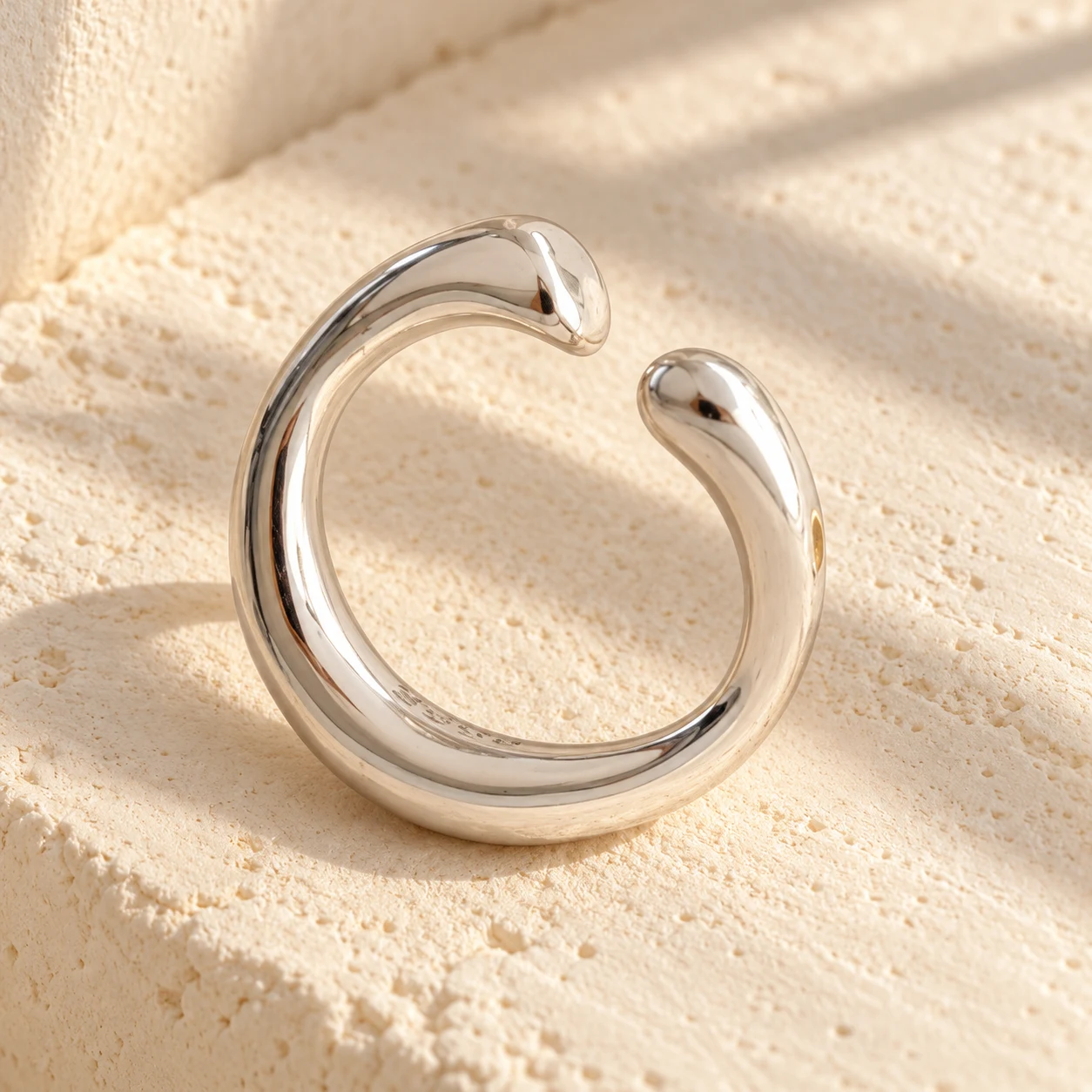
Irregular Silver Ear Cuff
Preliminary price · taxes and delivery subject to confirmation · Price for one earring
One irregular silver ear cuff for an asymmetric accent without a piercing. Supplied as a single piece.
Check delivery availability
Delivery availability is not yet confirmed.
Shipping costs and taxes require a confirmed quote.
Details, styling and care
An uneven silver outline adds an off-centre accent without a piercing. This ear cuff is supplied as one piece, not a pair. Wear it on its own for an asymmetric detail.
One asymmetric detail
The Irregular Silver Ear Cuff uses an uneven outline to create an off-centre accent. The preserved product introduction identifies it as a single piece worn without a piercing, which is important when planning an arrangement or choosing a gift. It is not presented as a matching pair. The selected supplier option is Silver. Its interest comes from the irregular line and the way one small shape can interrupt a more orderly selection of jewellery.
Wear the cuff by itself when you want the asymmetry to remain clear, or combine it with a simple earring placed far enough away that the two shapes do not compete. A plain stud can provide a quiet counterpoint, while several textured pieces may make the irregular outline harder to distinguish. Try the arrangement with your hair and glasses in their usual positions, since these can affect both visibility and the space available around the ear.
Show less
The metal declaration and finish uncertainty
The supplier states 925 sterling silver as the metal. Its family specification lists 18K yellow-gold and rhodium electroplating, but the selected option is only named Silver. That wording does not establish rhodium plating or an unplated surface for this exact piece. The precise finish remains unresolved. These are supplier declarations rather than independent laboratory findings, and no plating thickness or separately supplied purity certificate is recorded.
No stone identity is specified. The uneven silver outline should not be expanded into an unsupported technical guarantee that the entire piece contains no stones. The supplier's solid-silver wording likewise does not independently establish whether all sections are solid or hollow internally. There is no supported nickel-free, allergy-safe or waterproof assurance. The single-piece and non-piercing presentation does not remove the need to check whether the cuff's actual shape is suitable and comfortable for your ear.
A size reference without an adjustment promise
The earring size is listed as 11 mm, and the total weight is given as a range of 1.33 g to 1.4 g. The single size figure does not identify the internal opening, gap between the ends or thickness of the cuff. The weight range should remain a range rather than becoming a guaranteed individual figure. Compare the listed scale with a cuff you already find comfortable, while recognising that an irregular contour may sit differently.
The retained technical specification does not give an adjustment range or a particular placement procedure. Do not force the cuff onto an unsuitable part of the ear or repeatedly squeeze it to make it grip. A suitable position should feel secure without pressure, pinching or slipping. If it feels uncomfortable or unstable, remove it and obtain fitting guidance. The fact that no piercing is required does not mean one shape will fit every wearer or every position.
Handling an open irregular shape
Put the cuff on after hair products and fragrance have dried, and remove it before bathing, swimming, exercise or sleep. Handle it gently around its main structure instead of pulling the open ends apart. For light surface marks, start with a soft dry cloth. Avoid abrasive polish and harsh chemical dips while the exact finish is unspecified, and do not use a cleaning method that requires forcing tools into the opening.
Store the single cuff in a small compartment where it cannot become caught in a chain or compressed beneath heavier jewellery. Inspect the outline after any snag and check that it still sits as expected before wearing it again. If the shape has changed, set it aside for assessment rather than bending it repeatedly. Preserving the intentional irregular line keeps the design distinct from damage and helps make fitting decisions more reliable.