Rings
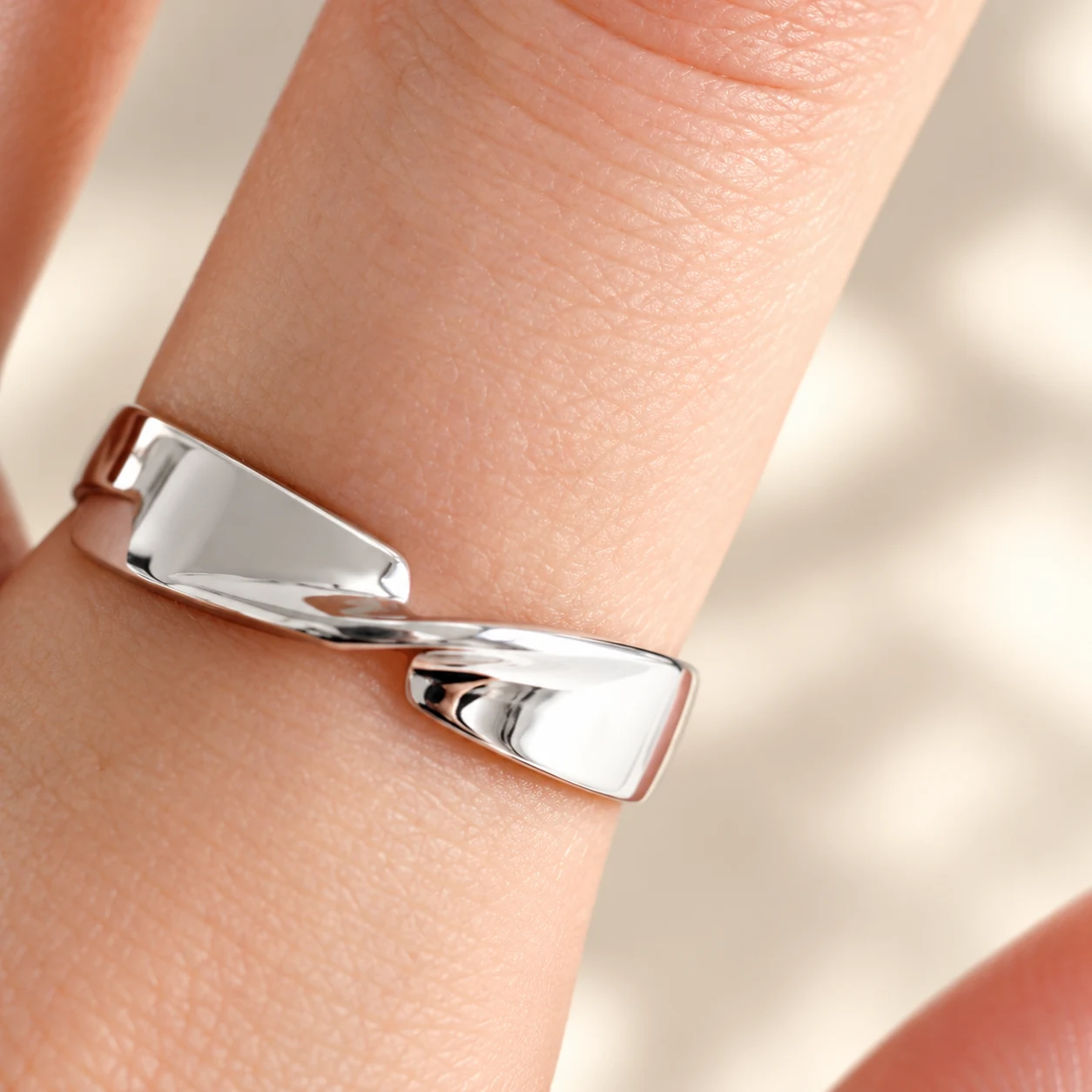
Twisted Crossover Ring
Preliminary price · taxes and delivery subject to confirmation
Check delivery availability
Delivery availability is not yet confirmed.
Shipping costs and taxes require a confirmed quote.
Details, styling and care
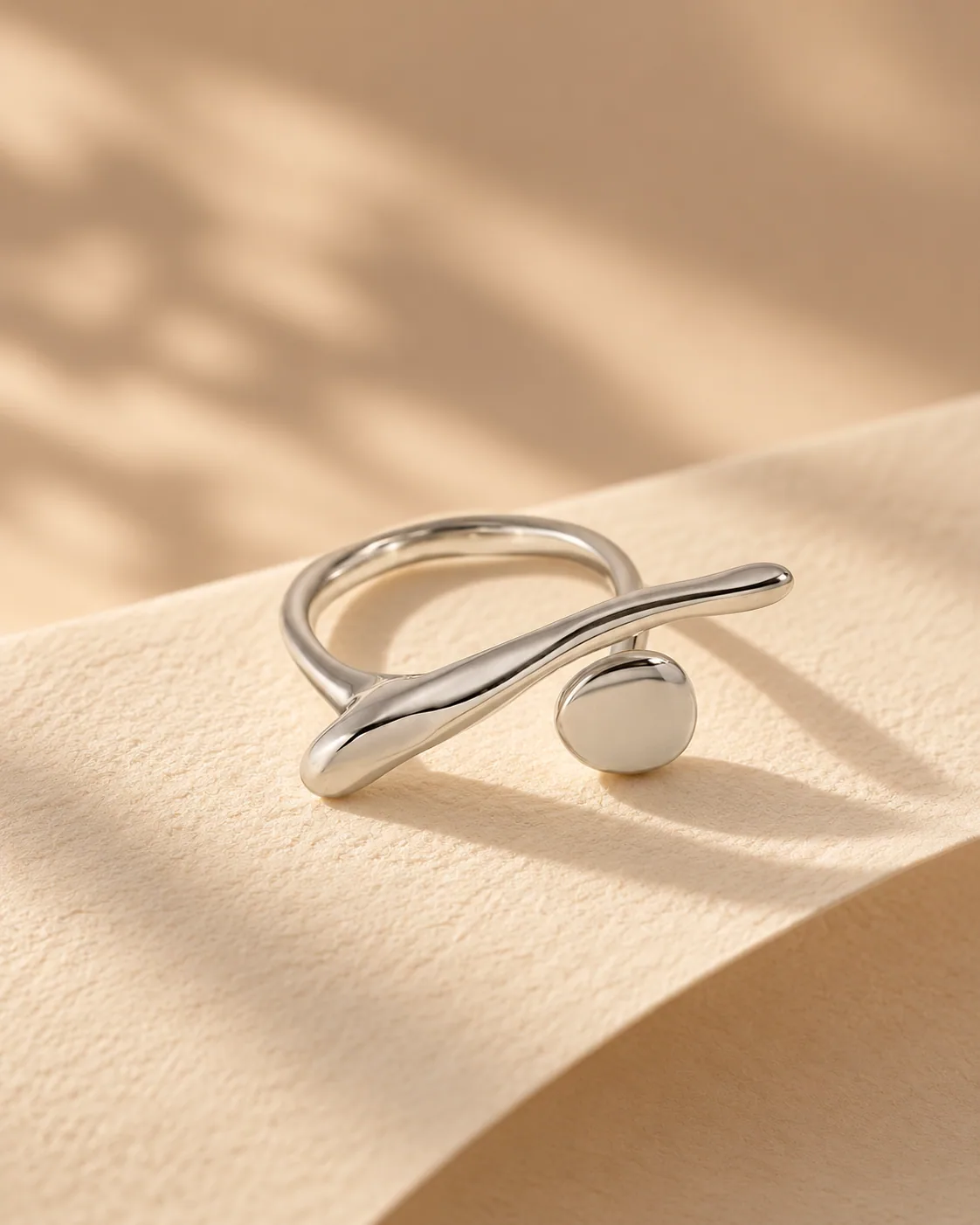
Twisted lines give this adjustable ring its crossover character. Let that meeting of curves stand out beside a clean cuff or a straight-cut sleeve.
Crossing curves beside a straight sleeve
The twist gives the ring a change of direction within a relatively compact band. A straight cuff can make that meeting of lines easier to notice than another densely patterned accessory placed beside it. Let the crossover occupy a clear area on the hand, then add a smoother bracelet if you want to carry the composition toward the wrist without repeating the same texture immediately next to it.
Try the ring with the hand relaxed and gently turned, since the crossing lines will not always be viewed from above. When combining several bands, compare their profiles as well as their front outlines. A neighboring raised design may touch the twist during ordinary movement even when both tops appear separate in a photograph. An undecorated ring on the opposite hand offers another way to balance the composition.
Show less
Silver selection and the supplier record
For the selected Silver option, the supplier declares 925 sterling silver, a ring width of 5 mm and a ring diameter of 16.9 mm. The retained family total weight range is 2.48–2.78 g, without a unique selected-piece allocation. These figures are supplier declarations rather than independently verified material tests or measurements of the delivered ring. They should not be sharpened into a single exact weight for this option.
The family electroplating field lists rhodium and 18K yellow gold, but the actual finish of this Silver selection remains unresolved. The option does not prove rhodium or an unplated surface. The supplier's solid silver wording also does not separately establish nonhollow construction. No explicit main or accent stone field is retained, so missing information cannot confirm stone absence. The twisted appearance should not be used to fill any of these specification gaps.
Separate width, diameter and adjustment questions
The 5 mm width helps compare the band area along a finger, whereas 16.9 mm is the diameter reference. Neither tells you the crossover height above the hand. Compare the diameter using the same method as a ring you already know, and request a side profile if gloves or neighboring jewelry matter. The apparent crossing in a photograph does not provide an accurate extra height measurement.
The existing introduction describes the ring as adjustable, but the retained supplier fields do not specify a verified adjustment range or method. Ask for those details before changing its fit substantially. Do not use the twisted top as a lever or repeatedly bend the band to switch fingers. Check passage over the knuckle and the resting position at the finger base without assuming that the visual crossing guarantees a particular adjustment mechanism.
Keep the twist clear of friction
If you wear the ring beside another band, check whether their edges meet when you bend your fingers or hold an everyday object. Give the twist enough space to remain distinct rather than forcing the pieces together for a tightly packed arrangement. The family weight range provides a comparison but cannot predict personal comfort. Keep Silver in care enquiries so advice for another finish is not silently assigned to this selected version.
Remove the ring before swimming, household cleaning, lifting weights or forceful gripping. Allow creams and perfume to dry before wear, wipe with a soft dry cloth and store separately from harder pieces. Do not scrape into the twist or assume silver dips, abrasive polish or ultrasonic treatment suit the unresolved surface. If a mark persists or the shape changes, seek advice rather than stronger polishing or repeated bending to restore the appearance.