Rings
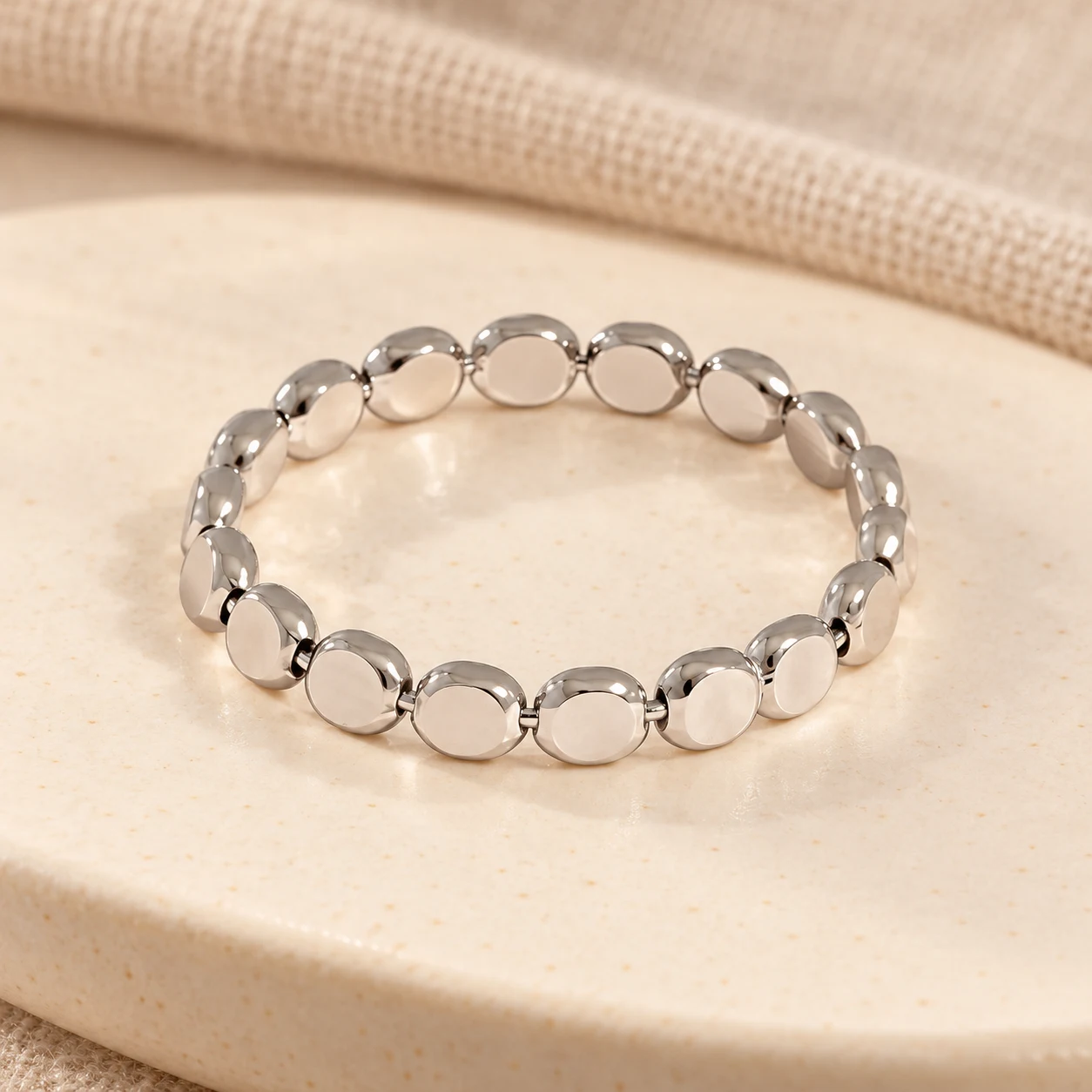
Pebble Rhythm Ring
Preliminary price · taxes and delivery subject to confirmation
Check delivery availability
Delivery availability is not yet confirmed.
Shipping costs and taxes require a confirmed quote.
Details, styling and care
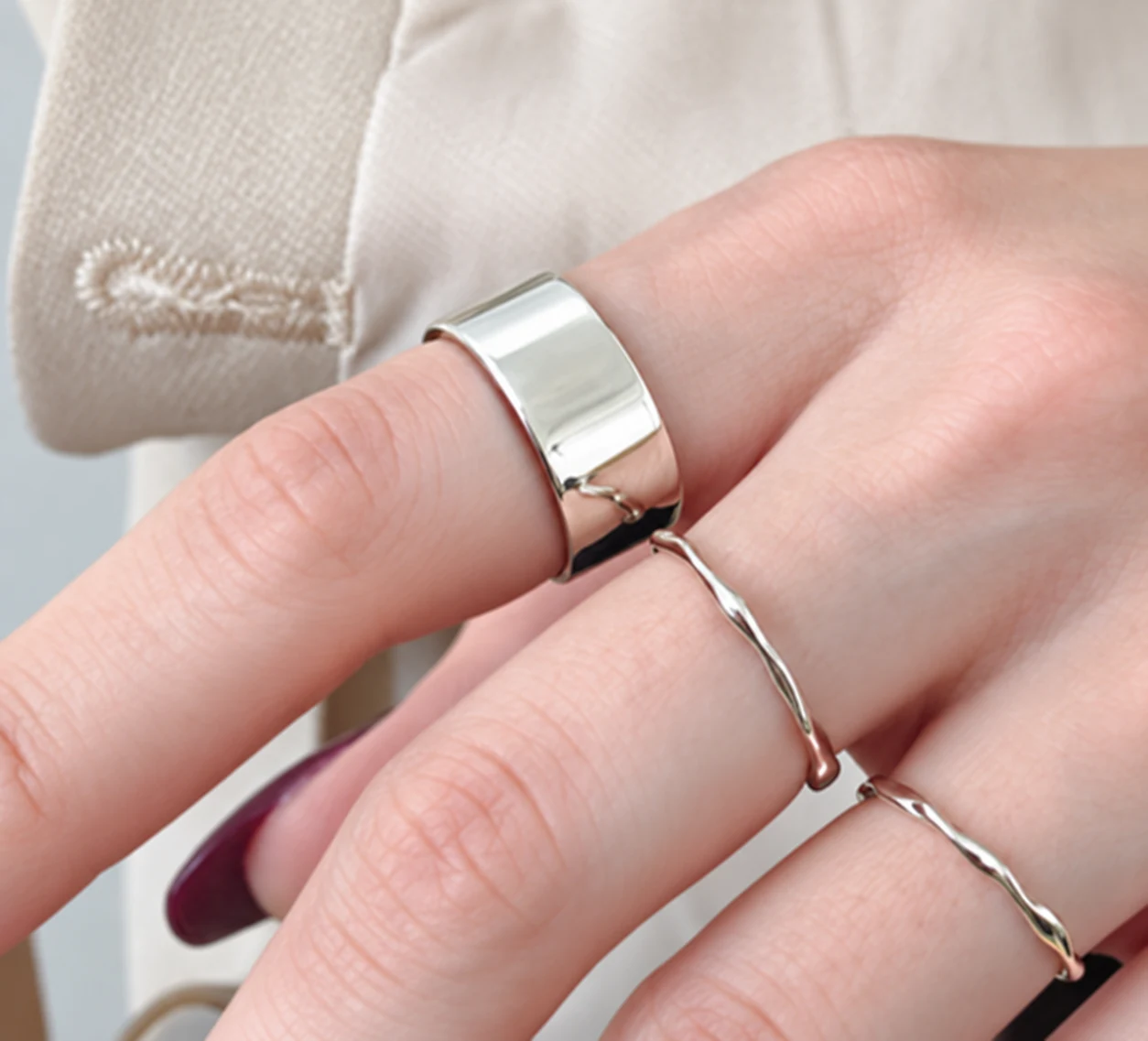
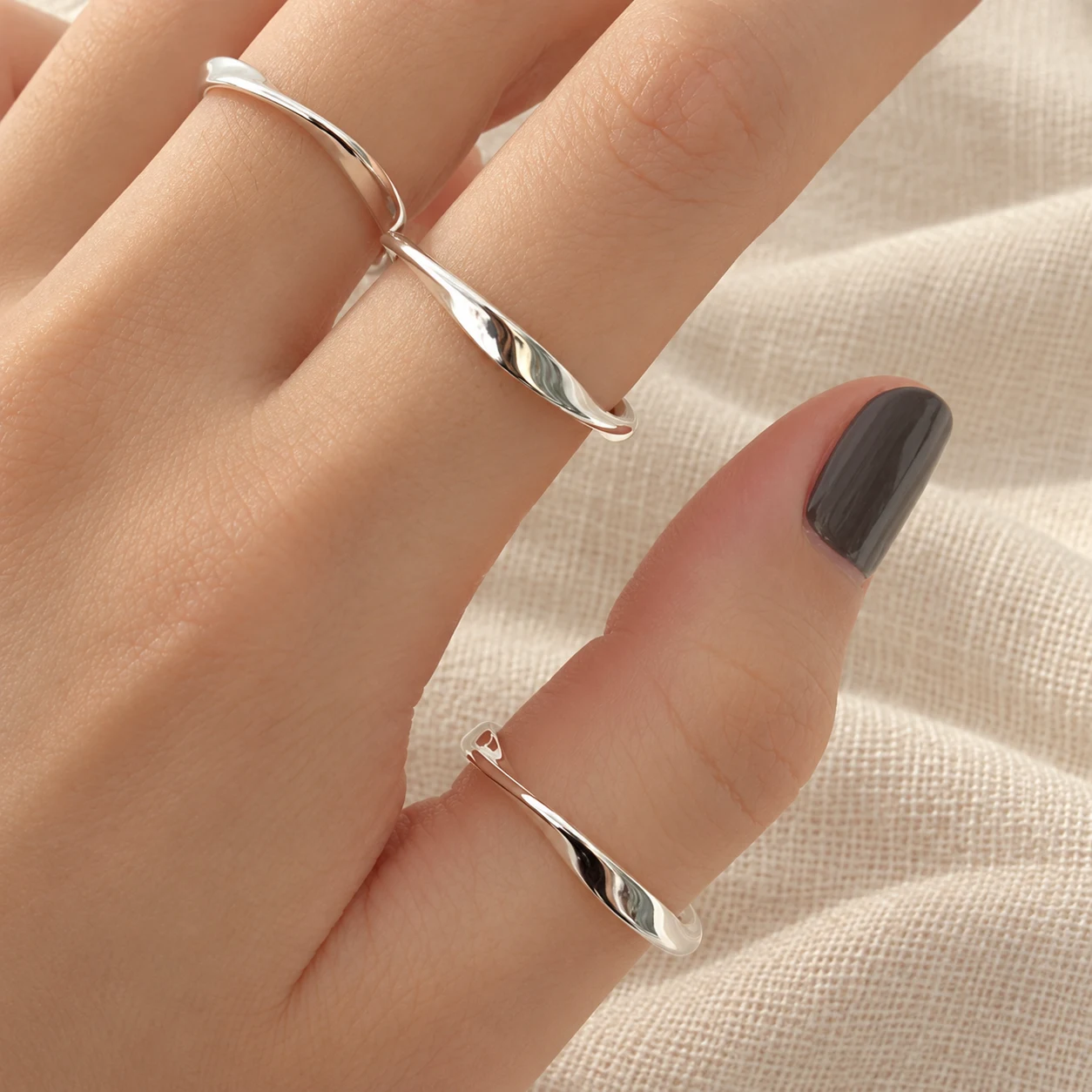
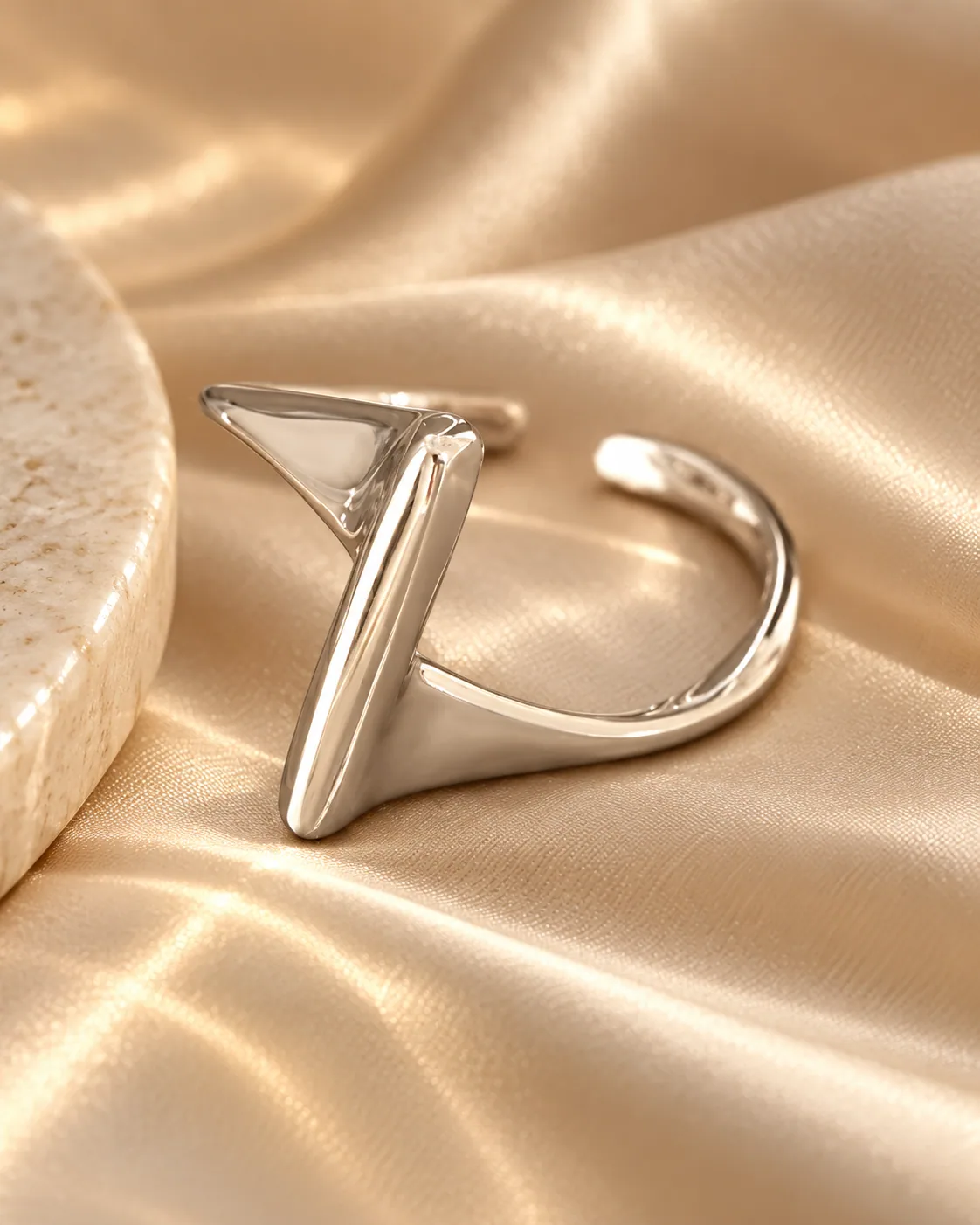
This ring in 925 sterling silver uses flattened bead forms to soften a geometric design. Pair its rounded character with angular jewellery for a considered contrast of shapes.
Rounded forms along a fine band
The Pebble Rhythm Ring repeats flattened bead-like forms to create a softer interpretation of geometry. The pebble and bead language describes its visible shape, not a claim that separate natural stones or pearls are present. It can bring a gentle rhythm to a simple hand arrangement or contrast with a more angular ring. The selected supplier option combines Silver with US 6, which is important to retain when discussing fit.
Try the ring on its own to appreciate the repeated rounded forms before combining it with another piece. A plain broader band can make the smaller shapes more distinct, while an angular companion creates the contrast suggested by the design. Leave enough room for the rings to move without pressing their edges together. A stack should remain comfortable during ordinary hand movements; a balanced photograph does not establish how the pieces will feel when gripping or typing.
Show less
Material and finish information
The supplier describes the metal as 925 sterling silver. Its family specification lists 18K yellow-gold and rhodium electroplating, but the selected colour option is only Silver. That does not establish rhodium plating or an unplated surface for this exact variant. The finish therefore remains unspecified. These are supplier declarations rather than independent laboratory findings, and no plating thickness, certified purity result or complete alloy composition is supplied.
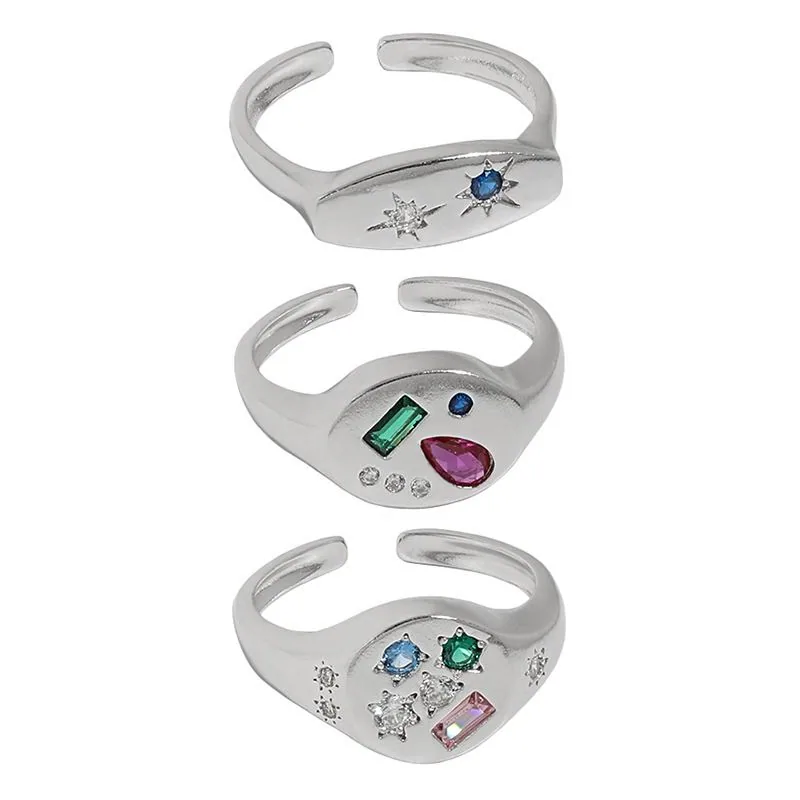
No stone identity is recorded. The rounded motif should not be described as pearl decoration or promoted into a technical guarantee that the whole ring is stone free. The supplier's solid-silver wording also does not independently establish solid internal construction in every flattened form. There is no supported nickel-free, allergy-safe or waterproof claim. The design's fine appearance is not evidence of a particular level of flexibility or resistance to pressure.
The selected size and an unresolved adjustment detail
The retained width figure is 2.6 mm, and the supplier lists a total weight range of 0.9 g to 1.08 g. The selected option says US 6, while the general size field says Open Size / Adjustable. Both pieces of information must remain visible: the generic adjustment wording should not erase the selected size or establish an unlimited fitting range. No ring diameter, circumference or safe adjustment limit is provided.
If your choice depends on an exact fit, compare the selected size with a ring that is comfortable on the intended finger and confirm how adjustment applies to this variant. Do not repeatedly bend the ring to reconcile the two descriptions. A suitable fit should feel secure without pinching or slipping, and finger size can vary with conditions and time of day. The supplier's weight range should also remain a range rather than becoming a single guaranteed figure for the selected piece.
Care for the repeated contours
Remove the ring before cleaning, exercise, heavy lifting, bathing or swimming. Allow hand creams and other products to dry before wearing it again. A soft dry cloth is a gentle first step for removing marks around the rounded contours. Avoid abrasive polish, sharp tools between the forms and unconfirmed chemical dips, especially while the precise surface finish is unresolved. Do not use force to straighten or widen the band during routine cleaning.
Store the ring separately so heavier jewellery cannot press against the repeated shapes or force the opening apart. A supported compartment is preferable to leaving it loose among chains and larger rings. After a snag, check whether the contour or fit has changed. If it has, set the ring aside for an appropriate assessment instead of bending it back repeatedly. Careful handling protects the quiet rhythm of the flattened forms and keeps fitting decisions separate from accidental distortion.