Rings
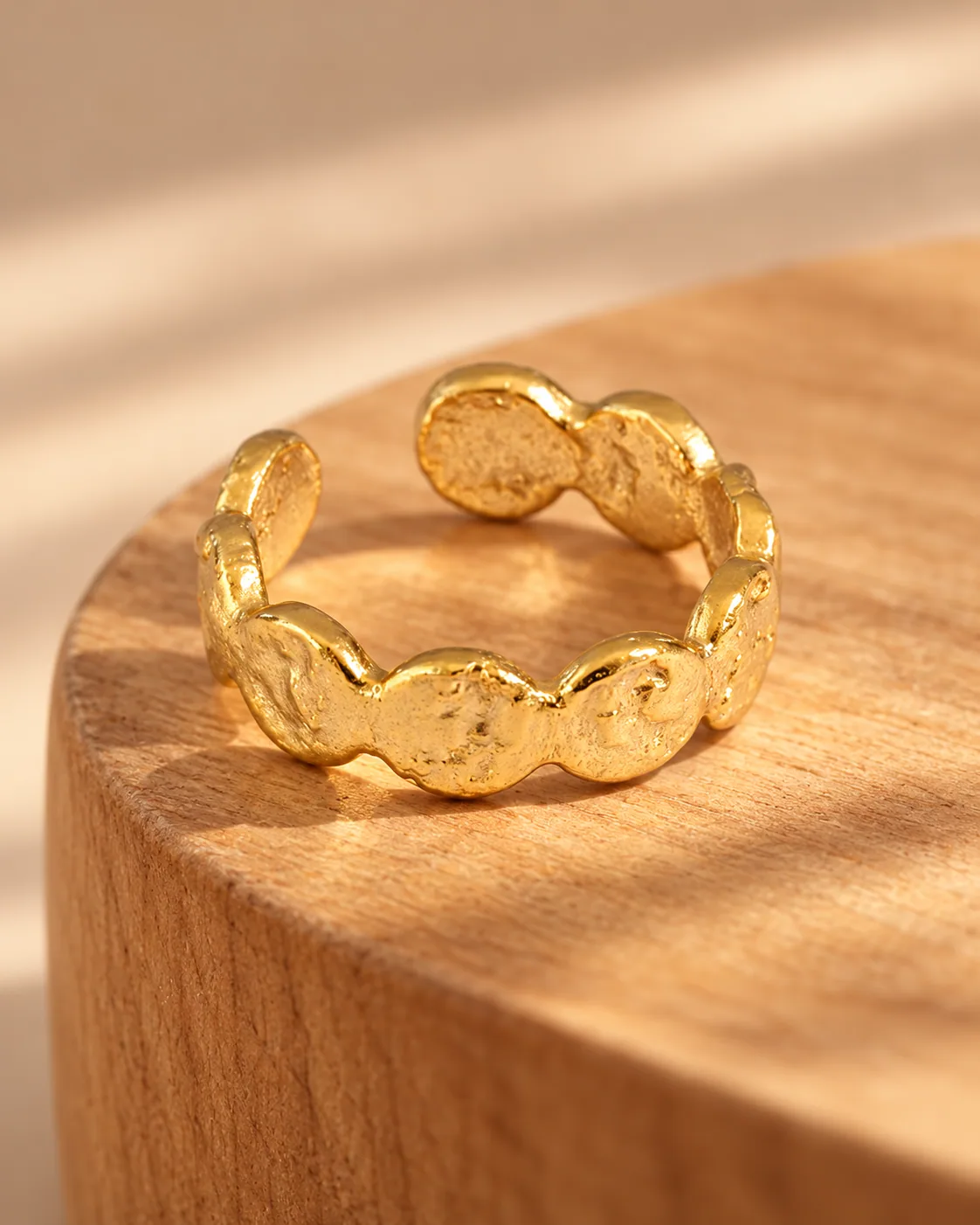
Irregular disc open ring
Preliminary price · taxes and delivery subject to confirmation
Check delivery availability
Delivery availability is not yet confirmed.
Shipping costs and taxes require a confirmed quote.
Details, styling and care
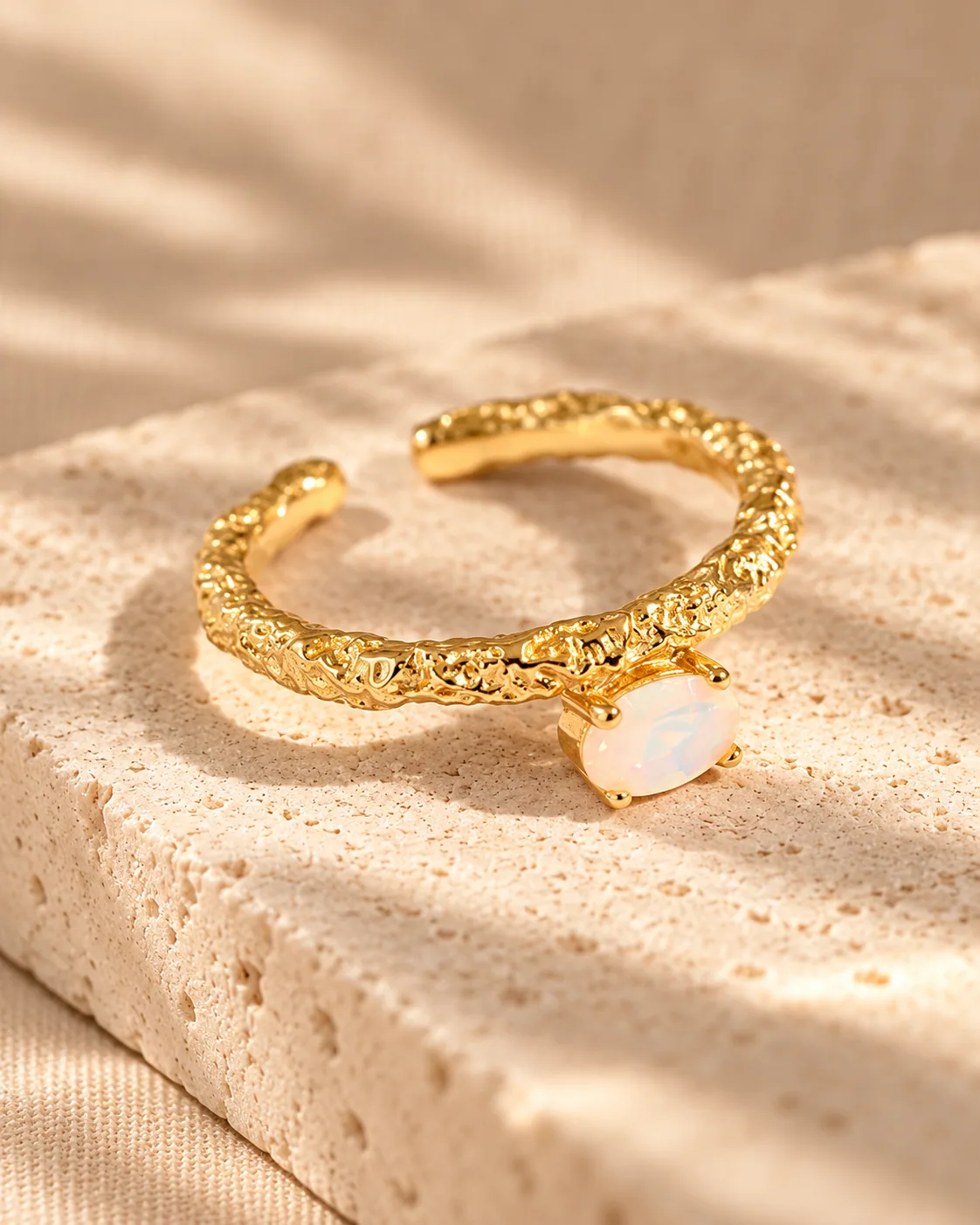
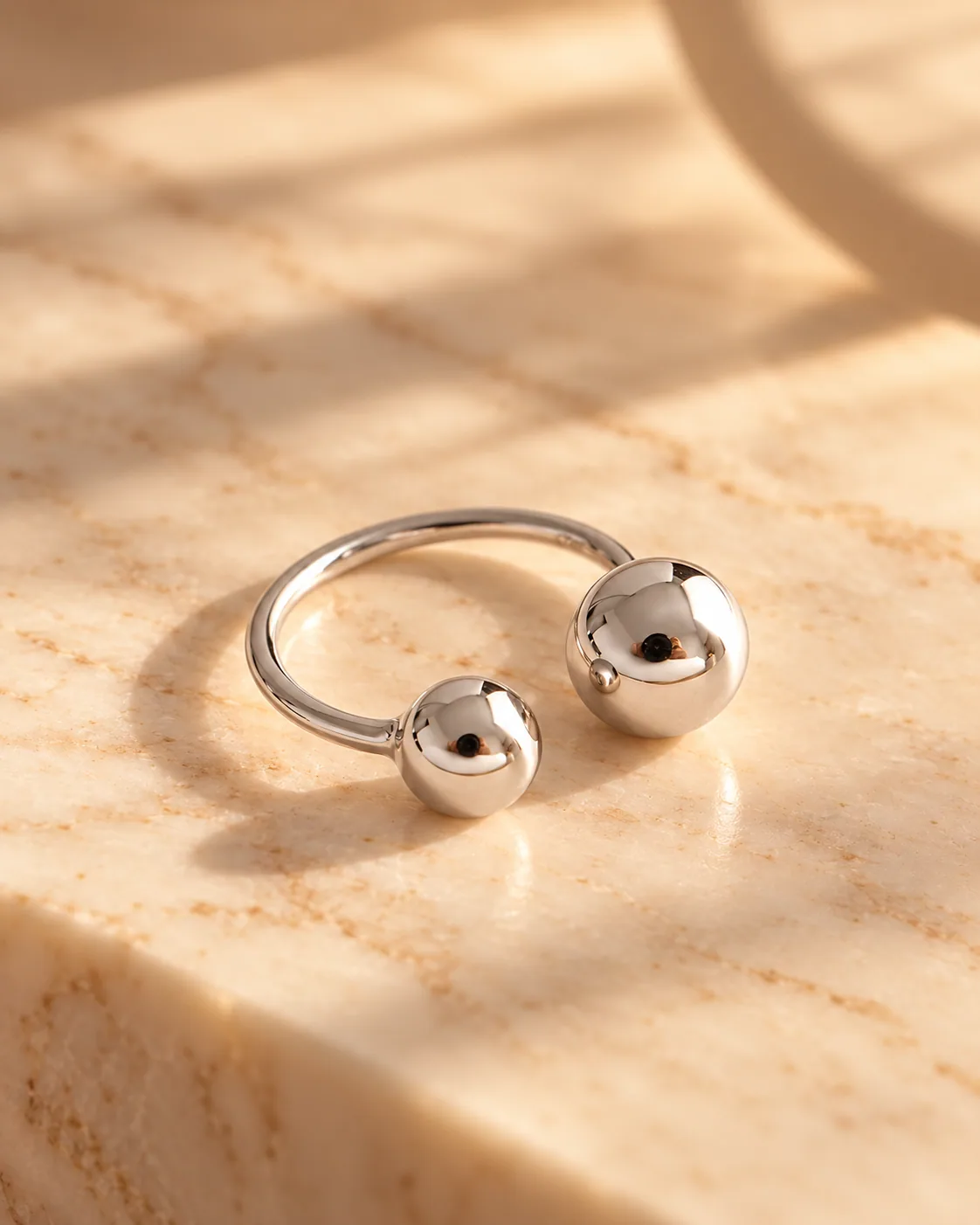
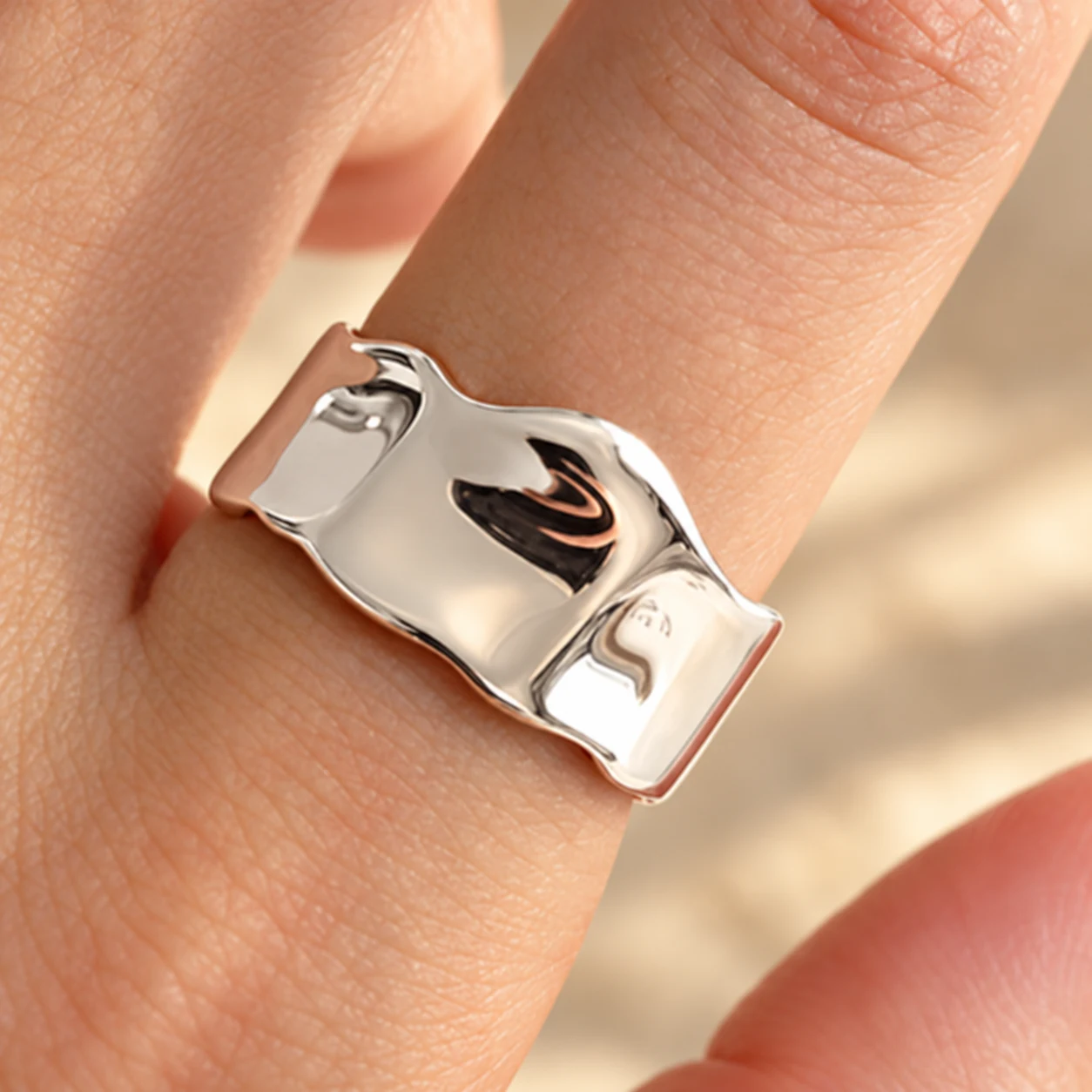
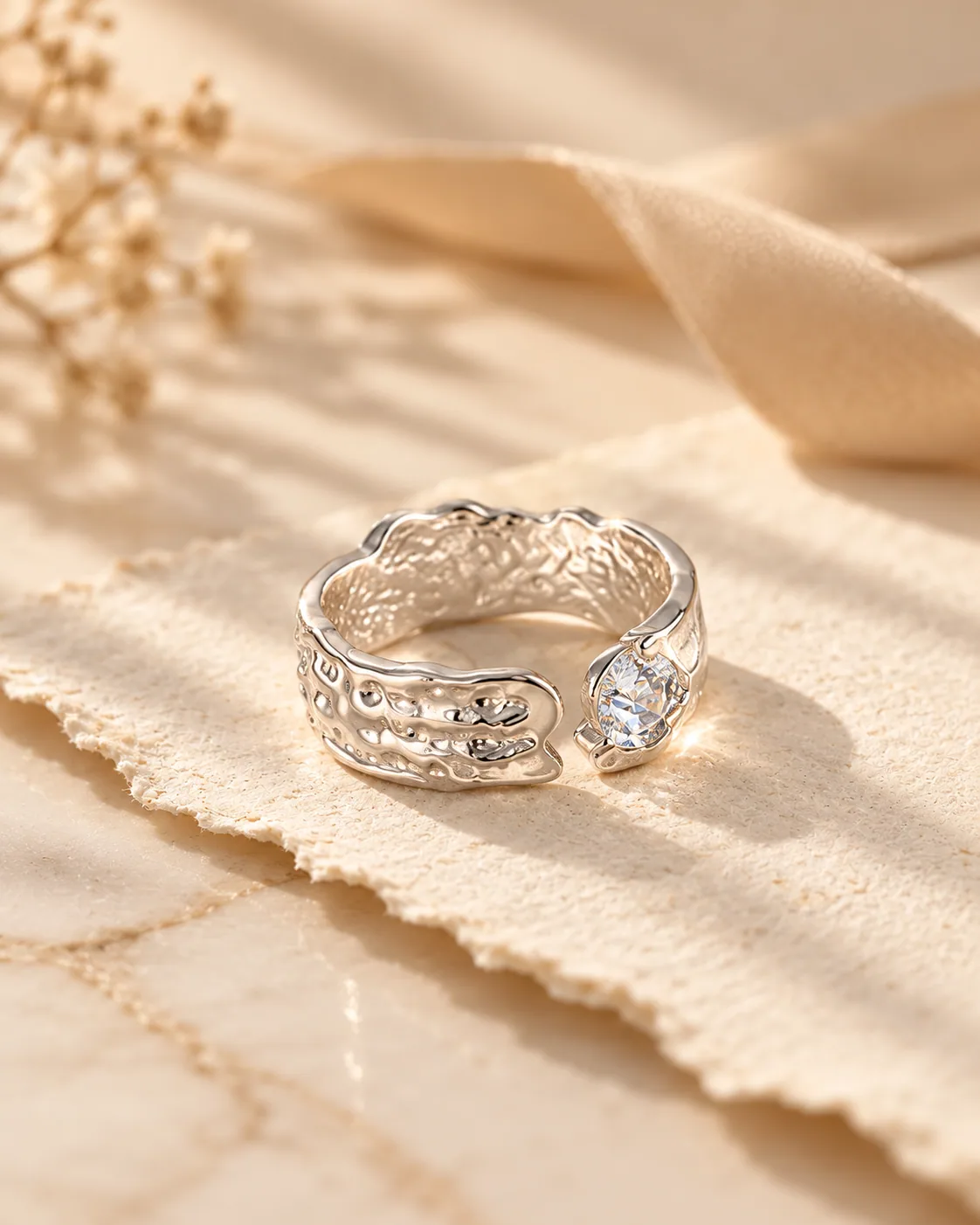
Joined rounded discs form an uneven outline around this open ring, with soft edges rather than a straight band. Its disc-like outline offers a rounded counterpoint to crisp cuffs and straight tailoring.
Rounded discs against straight clothing lines
This design follows the uneven rhythm of connected disc-like forms instead of presenting a straight, uninterrupted band. The selected option is Yellow Gold. A plain sleeve or tailored cuff gives the rounded outline a clear background and allows the irregular edge to remain visible. The joined appearance describes the composition; it does not establish that the individual discs are articulated, detachable or meant to move independently when the ring is worn.
Wear the ring on its own initially to judge how much visual space the broader upper area takes on your hand. If you add another piece, a slim ring on a different finger can echo the finish without competing with the scalloped contour. Leave practical clearance between them when closing your hand. Repeating several rounded motifs can be a deliberate styling choice, but a quieter bracelet often makes the connected-disc construction easier to read.
Show less
Silver beneath the selected gold surface
The supplier declares solid 925 sterling silver with electroplating. For the selected Yellow Gold option, the retained finish evidence identifies 18K yellow gold plating over that silver base. The karat value describes the surface material, not a ring made throughout from gold. Coating thickness, the complete alloy formulation and a tested wear lifetime are not supplied. These are attributed supplier details rather than independent laboratory findings or a separate certificate of fineness.
The specification contains no explicit main-stone or accent-stone entry. That omission should not be converted into a verified stone-free statement or an assertion about every decorative component. Similarly, solid-silver wording does not independently settle whether every part of the linked disc form is filled internally. No verified nickel-free, allergy-safe or waterproof guarantee accompanies the retained evidence. The visible rounded pattern is useful for styling, but cannot resolve those technical questions.
Width, reference diameter and the weight range
The supplier gives a ring-top width of 6 mm and a ring diameter of 16.5 mm. The width is specifically a top measurement, not automatically the width of the band at every point. Total weight is recorded as 4.35–4.42 g. No exact point within that range is assigned to this selected finish, so neither endpoint should be presented as the confirmed weight of the Yellow Gold version or divided into individual discs.
The ring is labelled Open Size/Adjustable. This confirms the supplier's size description but does not provide a safe adjustment interval or establish that the ring fits every finger. Treat the stated diameter as a reference and ask for fitting advice if you need a substantially different size. The joined upper elements should not be used as leverage for opening the band. Check that the irregular edges remain comfortable as the finger bends and straightens.
Keeping the joined outline clear and secure
Remove the ring for exercise, swimming, showering and household work where the top might be pressed against hard surfaces. Put it on after lotions have absorbed. A soft dry cloth can remove ordinary surface residue; support the ring gently while wiping around the rounded outline. Avoid abrasive polish, stiff brushes and forceful scrubbing between adjacent forms. A plated surface needs a cleaning method suited to the complete ring, rather than treatment intended for uncoated silver alone.
Store the ring separately from chains and stone-set pieces that could rub against its disc edges. A small divided compartment keeps the shape visible and reduces pressure from heavier jewellery. Inspect the joining areas occasionally without twisting them, and pause wear if a section becomes loose or the opening changes. Do not assume that an apparently linked design is intended to flex. Any repair or reshaping should respect the actual construction rather than the visual chain-like effect.