Necklace
Sculpted Crossover Silver Collar Necklace
Check delivery availability
Delivery availability is not yet confirmed.
Shipping costs and taxes require a confirmed quote.
Details, styling and care
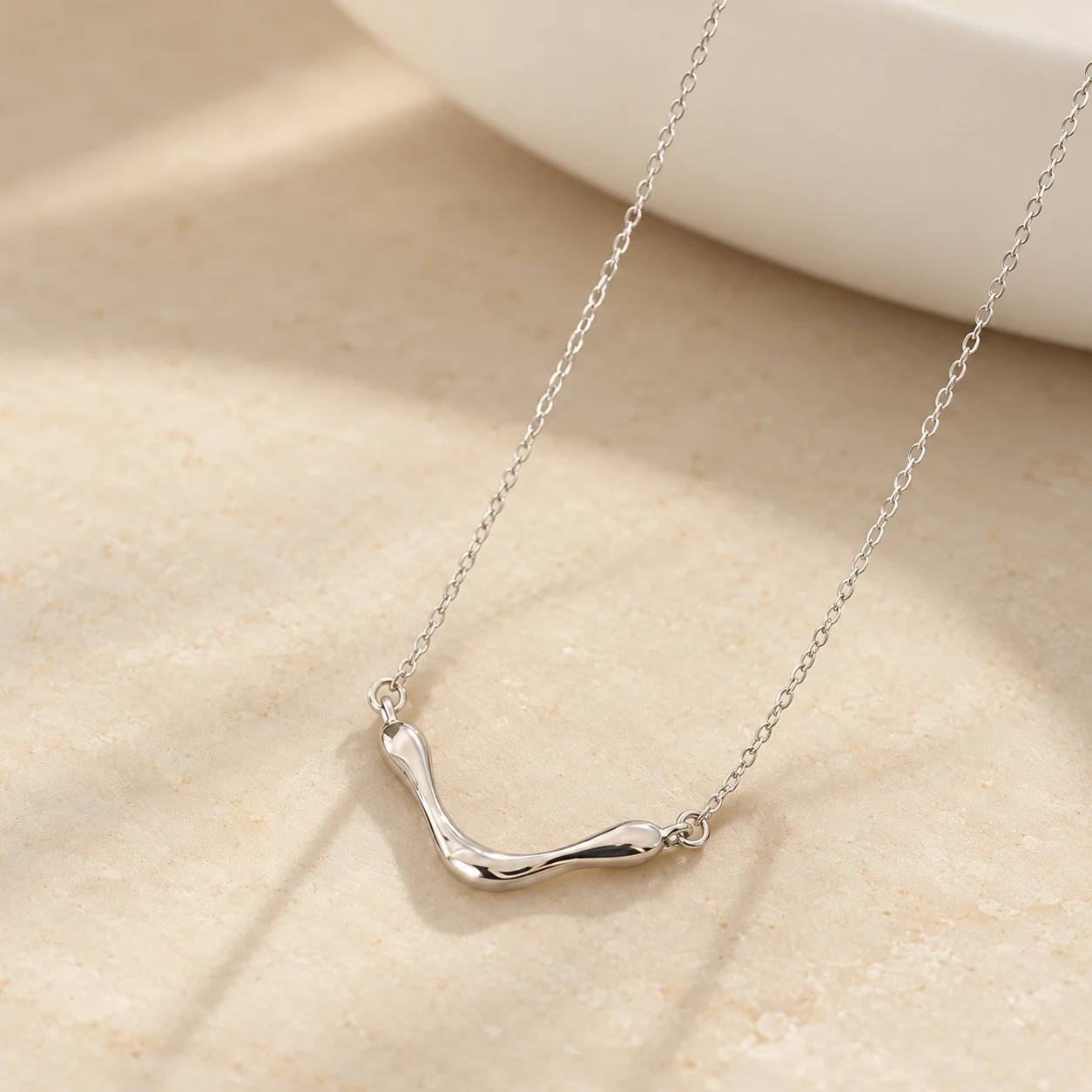
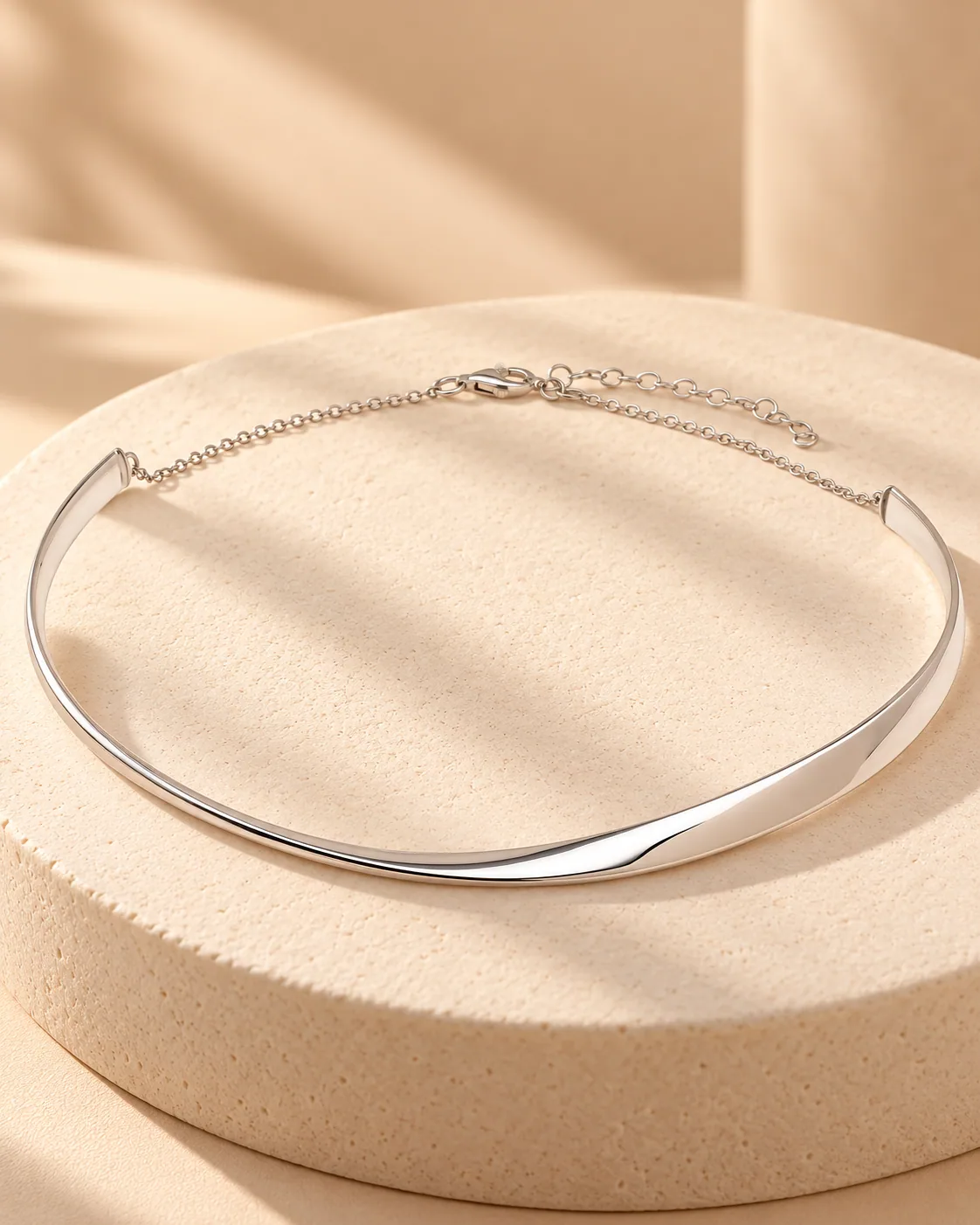
Fluid silver curves cross at the front, turning the necklace into a sculpted line around the neckline. Rhodium-plated sterling silver gives the collar a cool finish that stands out against matte fabric.
Crossing curves create a sculpted neckline
The preserved introduction describes fluid curves crossing at the front, making the necklace a sculpted line around the neckline. The crossing provides the central visual detail without relying on a hanging pendant. Matte fabric can offer a quiet contrast to the reflective curve. Begin with the collar alone so the line remains clear, then consider whether earrings or another accessory add balance without covering the front arrangement.
Look at the necklace while standing, sitting and turning your shoulders. A collar-shaped piece can meet clothing differently from a flexible chain, but the design name alone does not establish rigidity, flexibility or an adjustment mechanism. The crossing is a visual description rather than proof of a working closure or separable sections. Do not assume the ends should be spread or twisted simply because they appear to overlap at the front.
Show less
The title supports an attributed silver and rhodium description
The exact supplier title names a sculpted collar necklace in rhodium-plated sterling silver. This is title-only evidence rather than a verified product-level material specification. Silver fineness, actual plating and the selected variant still require confirmation. The inherited material language should remain attributed to the available wording rather than being presented as an independent assay or a guarantee of the composition of every connection.
There is no confirmed coating thickness, full alloy composition, total weight or construction diagram. A broad reflective curve does not prove a solid rather than hollow build, exceptional rigidity or a particular resistance to pressure. Stone information is unknown instead of confirmed absent. These questions must be answered for this exact collar, not from the specifications of another sculpted necklace or a similarly coloured bangle.
Confirm the opening and fit before judging placement
The available record does not supply inner dimensions, neck opening, front width, depth, weight or adjustment range. Ask for the actual measurements and fitting method before deciding where the crossed curves will rest. A nominal necklace length, even if later supplied, may not fully describe a sculpted collar’s internal shape. Compare the confirmed dimensions with a collar you already wear comfortably rather than estimating the opening from a close photograph.
The fastening type and operating instructions are also unavailable. Confirm whether and how the piece opens before applying pressure to the front curves. Do not use the crossing as a lever or assume it can be tightened by bending. Check the intended position with the clothing you plan to wear, allowing for fabric thickness. The retained title does not establish that the same opening or resting contour suits every neck shape.
Protect the front crossing from pressure and overlap
A plain top can let the sculpted line serve as the main necklace detail. If you add another necklace, compare both during normal movement so a pendant does not repeatedly strike the crossing or a fine chain wind around it. Put the collar on using its confirmed method after clothing likely to catch an edge. Release trapped fabric carefully instead of pulling the curve through it or twisting the front arrangement.
Care should follow confirmed instructions for the metal, plating and complete structure. Do not assume abrasive polish, chemical dips or ultrasound are appropriate from the title alone. Store the collar separately without heavier jewellery pressing across its curves. Remove it before activities involving impact or compression. If an edge, crossing or closure changes, seek assessment before further wear rather than reshaping it. Exact dimensions and operating guidance remain necessary for stronger fit claims.