Earrings
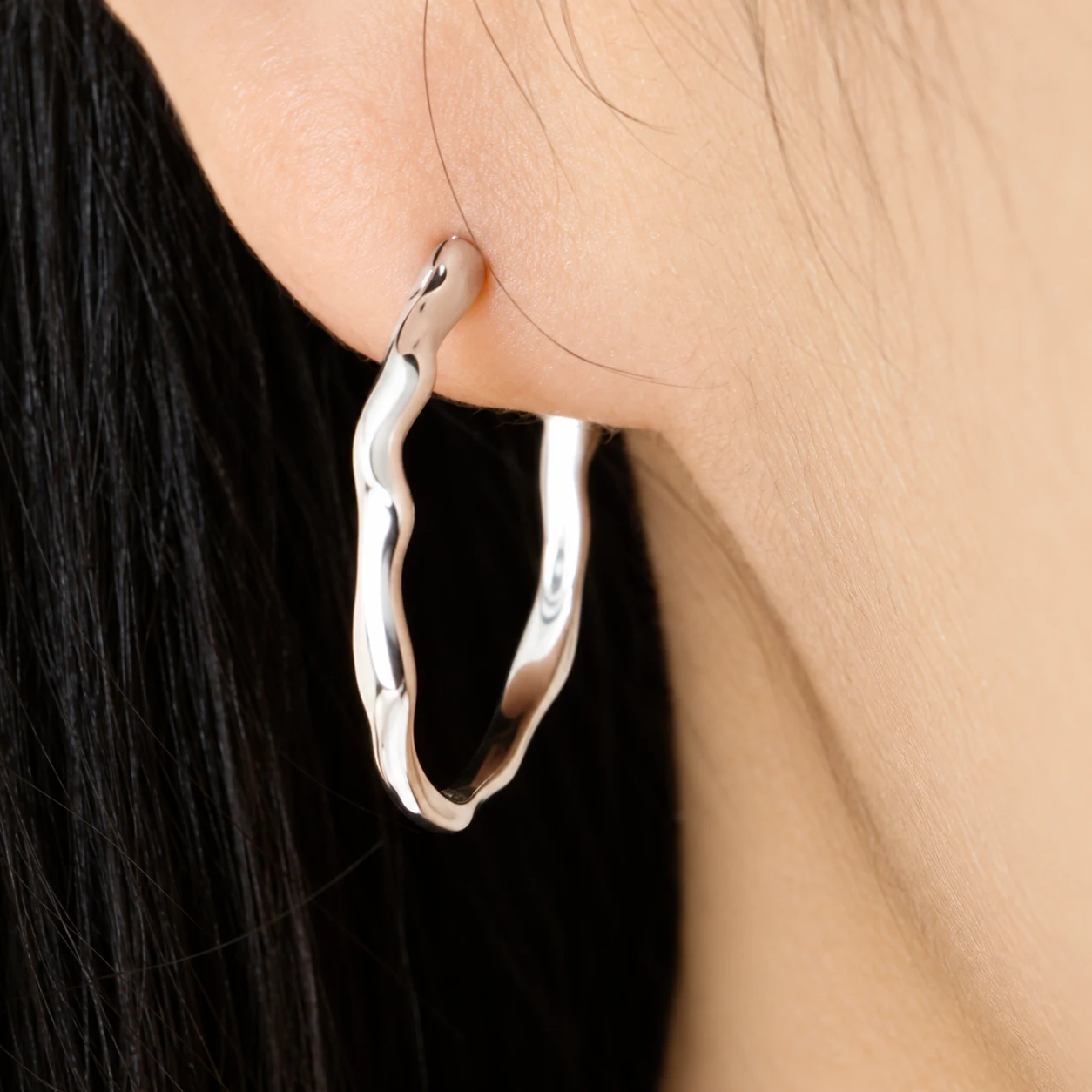
Organic Circle Hoops
Preliminary price · taxes and delivery subject to confirmation
Check delivery availability
Delivery availability is not yet confirmed.
Shipping costs and taxes require a confirmed quote.
Details, styling and care
An irregular circle lends these silver hoops an organic interpretation of geometry. Their softer outline brings variety to a wardrobe built around straight seams and sharp collars.
A circle with an organic outline
The Organic Circle Hoops offer an irregular interpretation of a familiar circular form. Their softer outline can bring variety to clothing built around straight seams and sharp collars, without requiring a separate charm or elaborate motif. The selected version is Rhodium, keeping the finish description tied to the exact supplier option. Organic describes the visual character of the geometry, not a natural material or a particular production method.
Try the hoops against a plain shirt or a clean neckline so the less regular contour remains visible. A smooth ring or quiet pendant can complement the earrings without repeating their outline too closely. If you wear several earrings, leave enough room for the irregular profile rather than assuming it occupies the same space as a uniform wire circle. Check the arrangement from different angles and during movement to see how the shapes sit together.
Show less
Silver and the declared rhodium treatment
The supplier specifies 925 sterling silver with rhodium electroplating. Rhodium is the surface treatment over the stated silver base, not the composition of the entire earring. These are supplier declarations rather than independent laboratory findings or a separately supplied purity certificate. The retained specification does not give plating thickness, a full alloy analysis or a guaranteed period of surface resistance.
No stone identity is recorded. The irregular circular appearance should not become a technical guarantee that every component is stone free. The supplier's solid-silver wording also does not independently establish whether the hoop is solid or hollow internally. There is no supported nickel-free, allergy-safe or waterproof assurance. The less regular contour is intentional geometry and should not be treated as evidence that the metal can be freely bent or adjusted during wear.
Understanding the single scale reference
The listed earring size is 20 mm, and the total weight is 2.3 g. The single size figure gives a reference for comparison with a familiar hoop, but the record does not identify a measurement axis, inner diameter, width or post gauge. The weight remains the supplier's total rather than being divided into an assumed value for each individual earring. An irregular outline may also look different from a perfect circle carrying the same size label.
Use a ruler beside a known earring to judge the general scale and consider the position of your piercing relative to the lobe and collar. A magnified photograph can show the contour well without providing reliable clearance measurements. The retained specification does not establish the closure mechanism. If you need an exact internal opening or a particular fastening, confirm those details before using the single size figure as a complete guide to fit.
Preserving the intended contour
Put the earrings on after hair products and fragrance have dried, and remove them before bathing, swimming, exercise or sleep. Start with a soft dry cloth for light surface marks and use gentle pressure along the irregular curve. Avoid abrasive polish and harsh chemical cleaners unless their compatibility with the rhodium finish is confirmed. Do not try to make the outline more circular or widen it to force a fit.
Store the pair separately from heavier jewellery and fine chains that could press against or catch in the openings. Inspect the fastening and shape before wear, especially after a snag or accidental compression. If the contour changes or the closure feels insecure, set the piece aside for assessment rather than repeatedly bending it. Keeping the original outline intact preserves the organic visual character and distinguishes it from unintentional distortion.