Earrings
Möbius Curve Stud Earrings
Preliminary price · taxes and delivery subject to confirmation
Check delivery availability
Delivery availability is not yet confirmed.
Shipping costs and taxes require a confirmed quote.
Details, styling and care
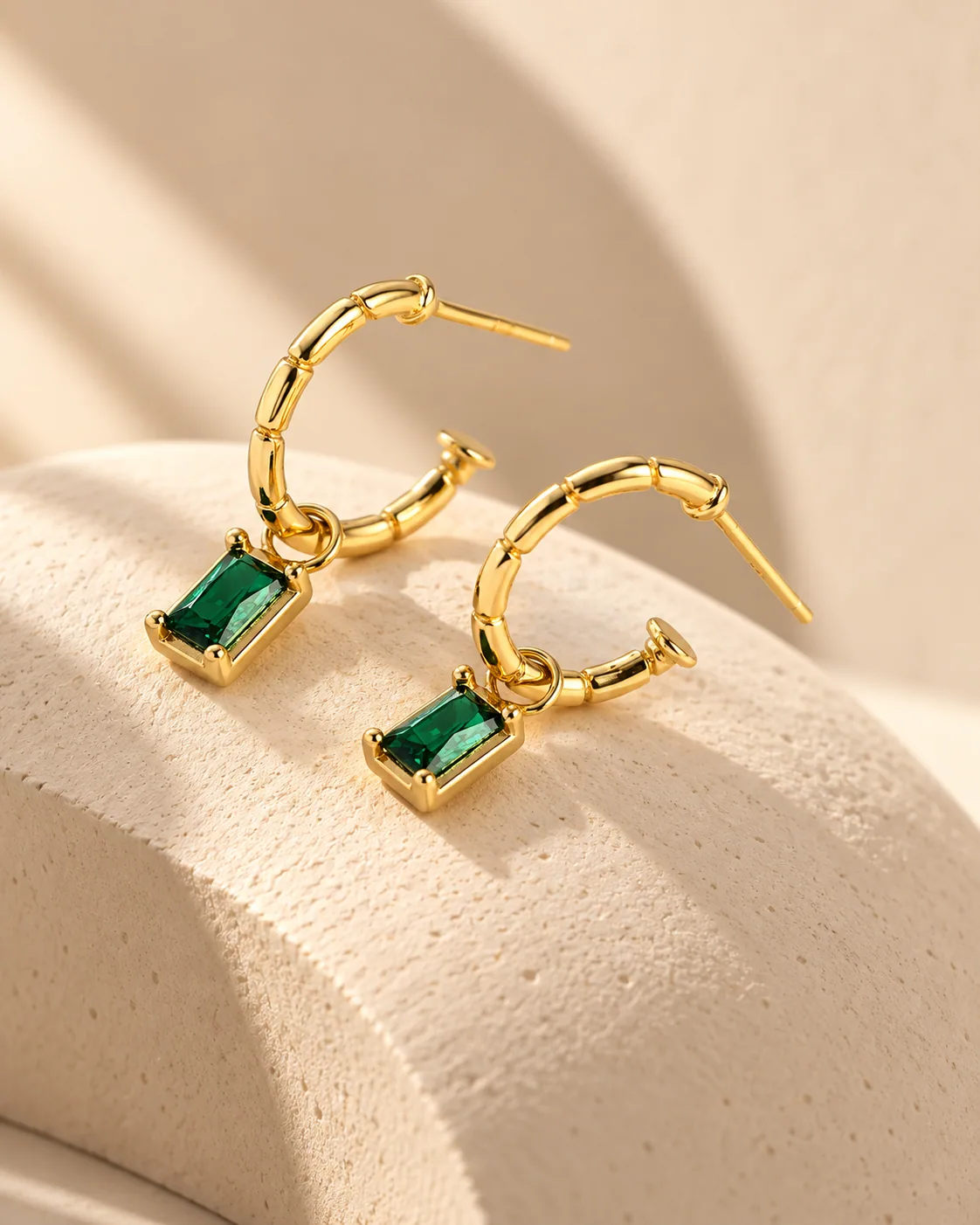
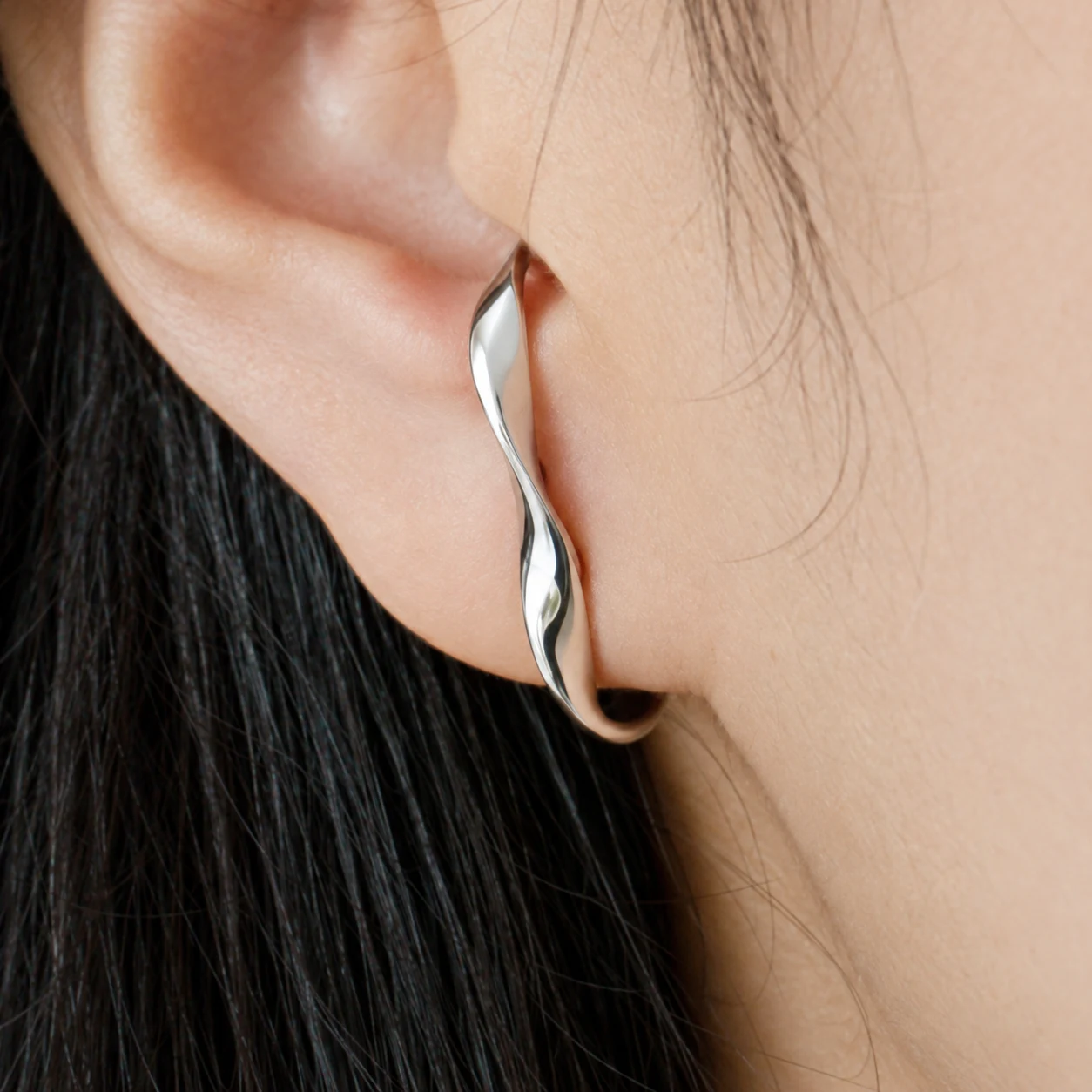
These C-shaped stud earrings in 925 sterling silver borrow their twisting geometry from the Möbius motif. An understated neckline gives their sculptural idea room to stand on its own.
A twist expressed through an open curve
The Möbius Curve Stud Earrings borrow their visual idea from a twisting ribbon, shaping that reference into an open C silhouette. The motif name describes the design inspiration; it does not assert a mathematically continuous Möbius surface. Their appeal lies in the changing direction of the curve and the way its sculptural outline differs from a simple round hoop. The selected version is Rhodium, giving the surface treatment a clear basis in the supplier record.
An understated neckline allows the curve to remain the main detail near the face. A tailored jacket can emphasise its sculptural quality, while a soft plain top provides a gentler contrast. If you add a necklace, a quiet chain or small pendant leaves space for the earrings' shape. Check the arrangement from the side as well as the front, since an open C form can occupy a different amount of visual space as you turn your head.
Show less
Supplier-declared silver and rhodium
The supplier identifies the earrings as 925 sterling silver with rhodium electroplating and also lists the backs as 925 sterling silver. The surface treatment and base metal are distinct parts of that description. These are supplier facts, not independent laboratory findings or a separately supplied purity certificate. No plating thickness or guaranteed period of surface resistance is recorded, and the exact composition of every small fitting is not established.
There is no stated stone identity in the retained specification. The smooth sculptural description should not become a technical guarantee of complete stone absence. Similarly, the supplier's solid-silver wording does not independently confirm whether every section is solid or hollow internally. The twisting appearance also does not establish flexibility: it is a design feature, not an instruction to bend the earrings. No nickel-free, allergy-safe or waterproof assurance is supported by the available facts.
Judging the proportions on your ear
The earring size is listed as 25.5 mm by 11.5 mm, with a total weight of 2.48 g. These dimensions are useful when comparing the overall presence with a stud or open hoop you already own. They do not give the internal C opening, post length or post thickness. The weight is retained as a total figure rather than being divided into an assumed value for each individual earring.
A paper outline using the stated dimensions can help you judge how the design may sit near the jawline and collar. Consider the position of your piercing and the space behind the lobe for the backing. When fastening, guide the post without twisting the decorative curve and avoid pressing the back tightly against the ear. If you require a particular backing mechanism or exact post gauge, confirm it rather than assuming that the term stud supplies every fastening detail.
Keeping the sculptural curve intact
Remove the earrings before swimming, bathing, exercise or sleep, when their open curves may be exposed to pressure or snagging. Put them on after hair products have dried. For everyday marks, use a soft dry cloth with light pressure along the surface. Avoid abrasive polish and harsh chemical cleaners unless their suitability for the rhodium treatment is confirmed. Do not use the open section as a handle for pulling the earring into position.
Store the pair separately from fine chains that could catch in the C openings, and keep the backs with the earrings. Inspect the posts, backings and curve after any snag or accidental compression. If a piece no longer sits as expected, set it aside for assessment rather than reshaping it by hand. The design's movement is visual, created by the twist; preserving that intended contour is more useful than treating the metal as something to adjust during wear.