Bracelets
Openwork Chain Bracelet
Preliminary price · taxes and delivery subject to confirmation
Check delivery availability
Delivery availability is not yet confirmed.
Shipping costs and taxes require a confirmed quote.
Details, styling and care
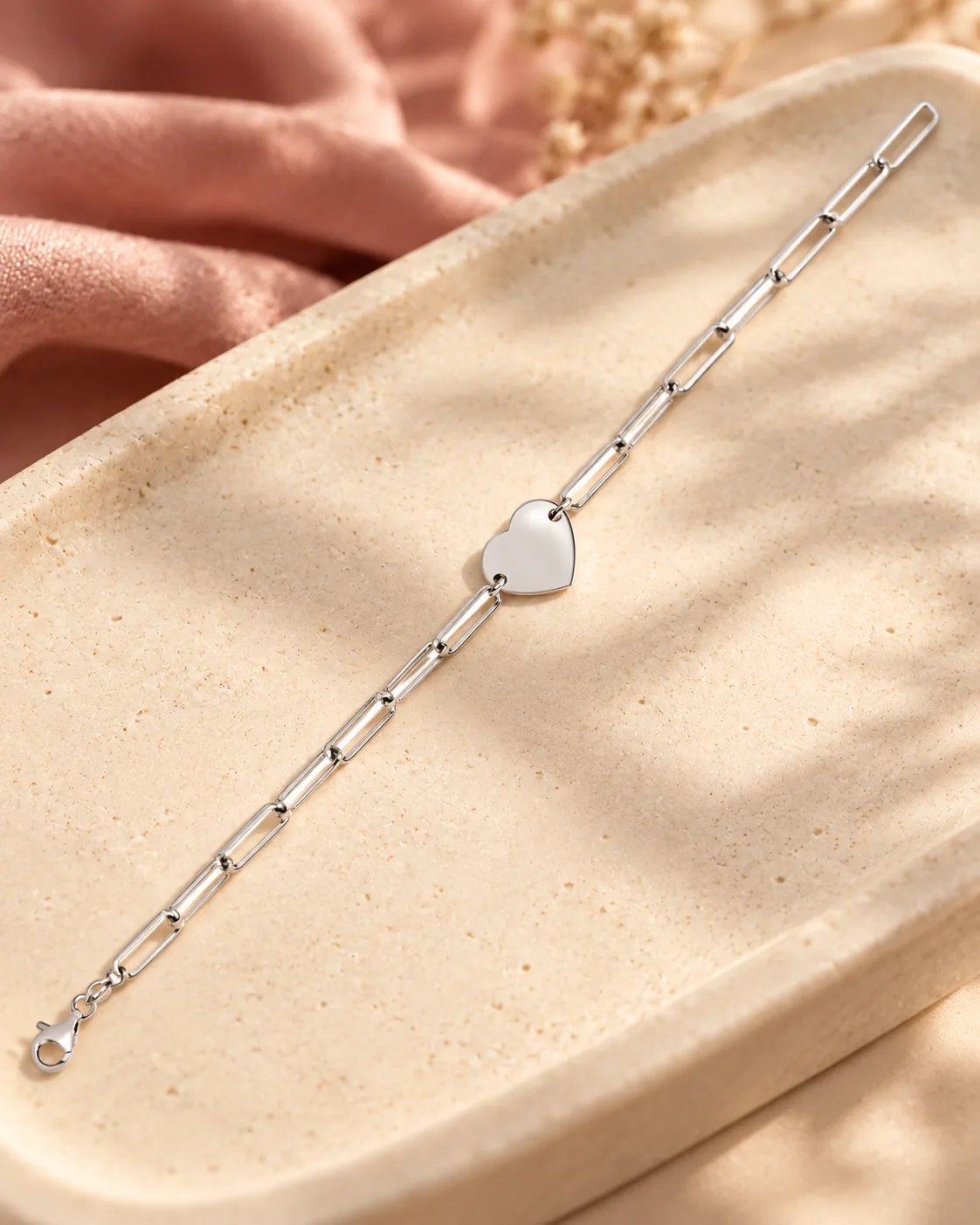
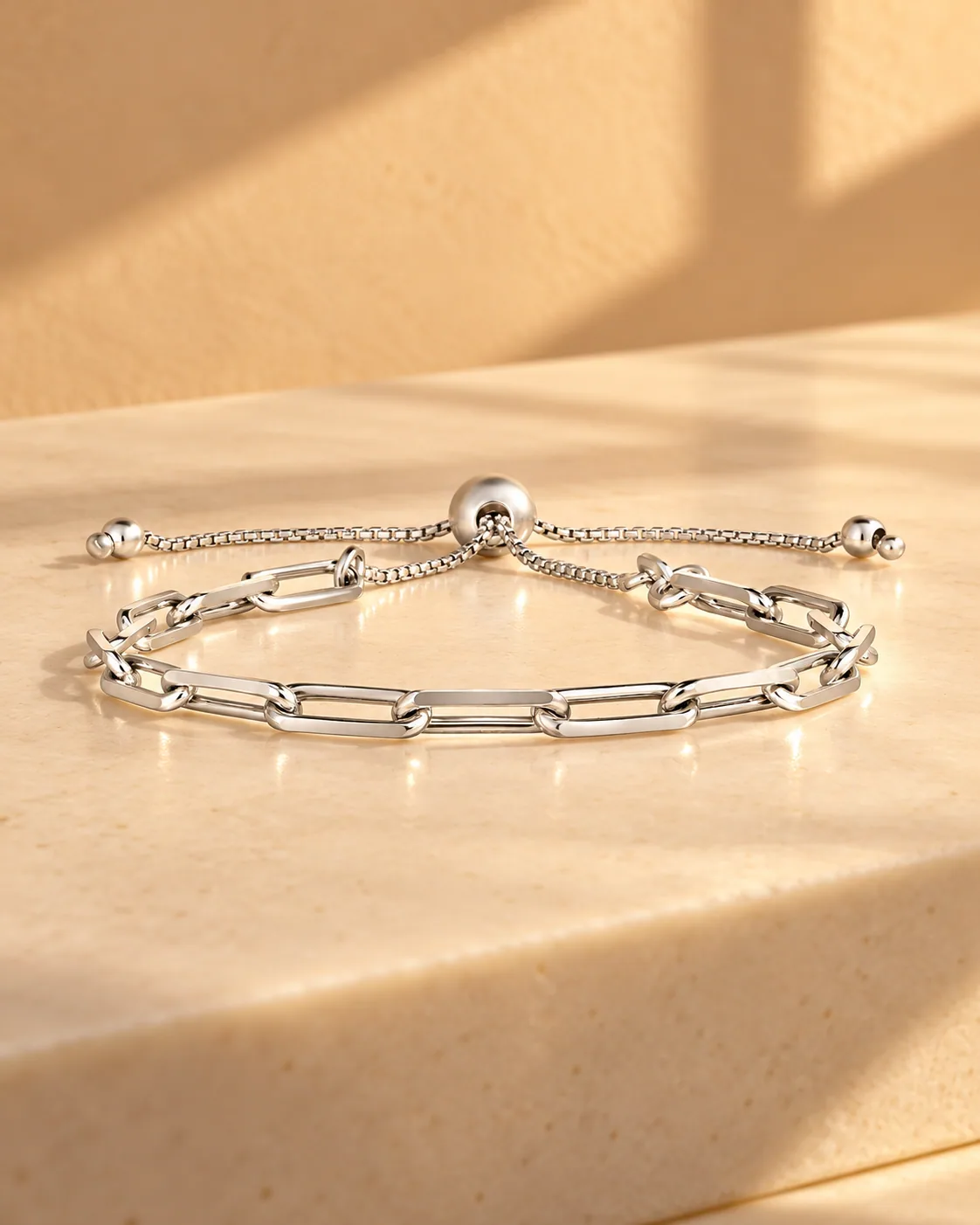
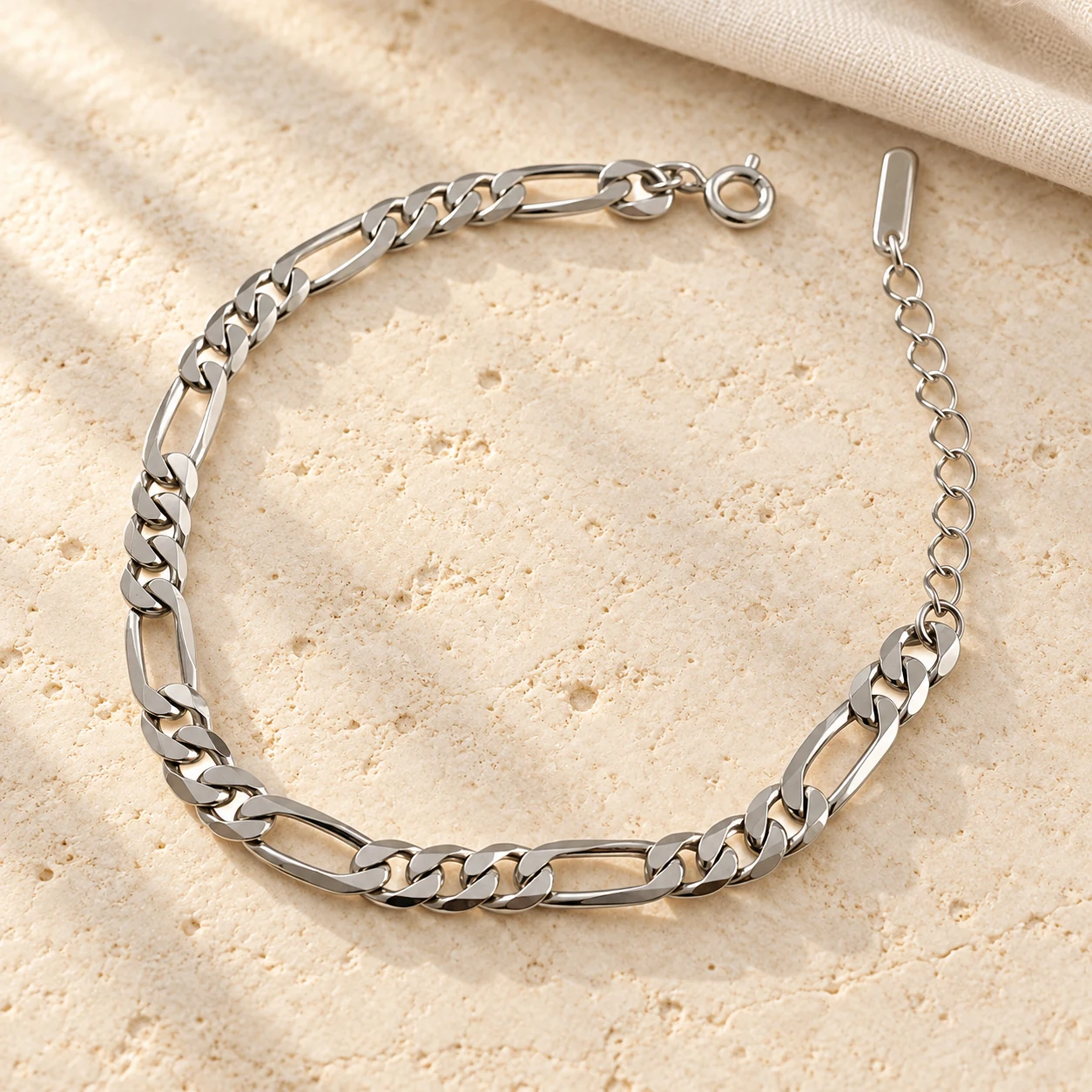
An openwork chain design gives this silver bracelet a clear, repeating structure. Let the links set the rhythm beside a plain cuff rather than competing bracelets.
Open links setting the rhythm at the wrist
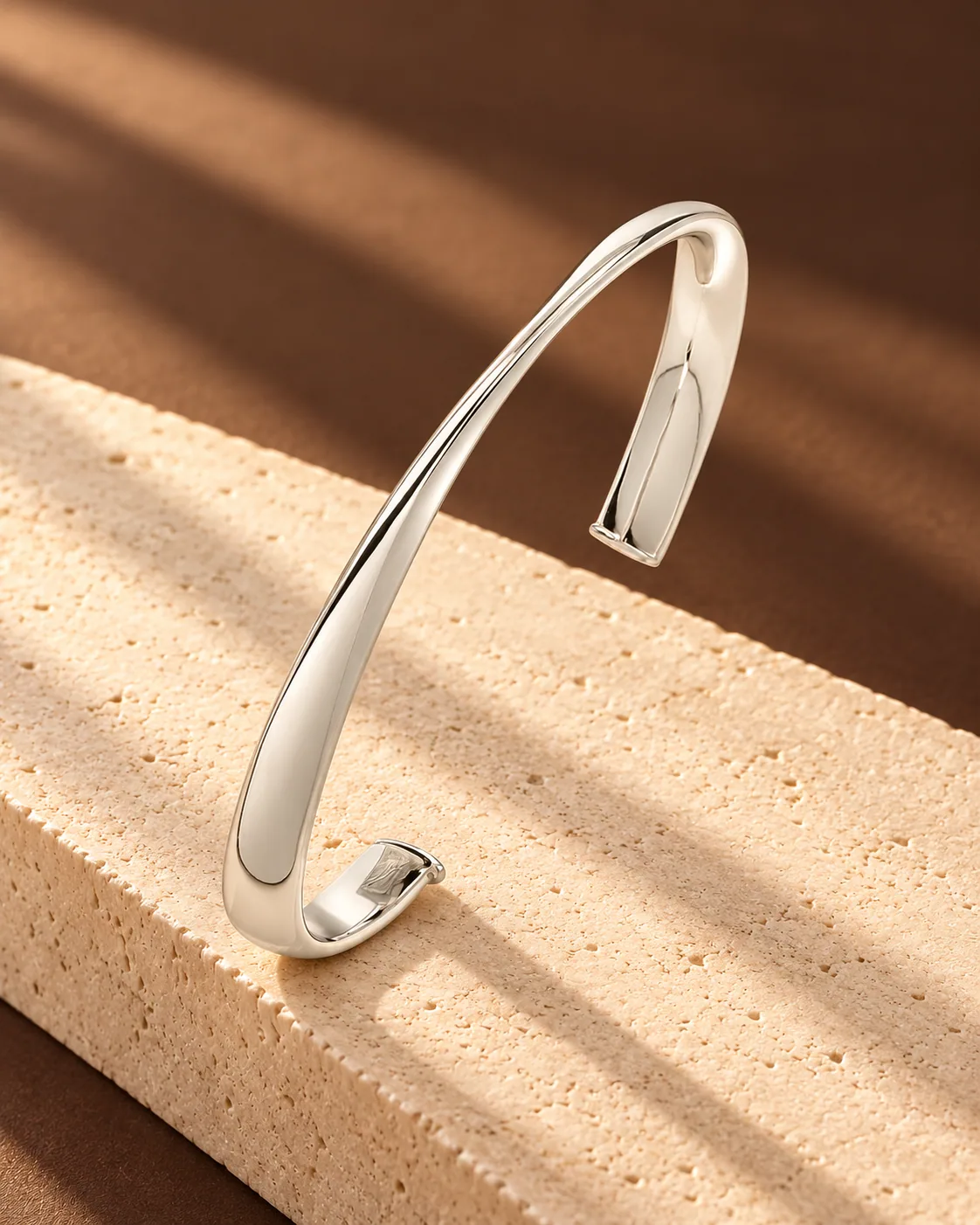
The repeated openwork links give the bracelet structure without relying on a single large pendant. A plain cuff can make their rhythm visible along the wrist, while a simple ring can continue the arrangement on the hand. Leave the chain a clear area rather than filling every open part visually with another bracelet behind it. The spaces between the links are part of how the design reads in an outfit.
Compare the bracelet with your sleeve during ordinary wrist movement. A fabric edge may pass close to the openwork even when the chain sits neatly in a still view. If you add a watch or bangle, keep their contact points in mind so the links are not continually rubbing against a hard edge. The word openwork describes the visible pattern, not a guarantee about the internal construction of every component.
Show less
Silver selection and the documented chain
For the selected Silver option, the supplier declares 925 sterling silver, a chain width of 5 mm and a chain length of 150 mm plus 30 mm adjustable extension. A total weight range of 4.96–5.36 g is retained for the family, without a unique selected-piece assignment. These are supplier declarations rather than independently verified material tests or measurements. The range should not become a single guaranteed weight for the delivered bracelet.
The family electroplating field lists 18K yellow gold and rhodium, but the exact finish of Silver is unresolved. The option name establishes neither rhodium plating nor an unplated surface. The retained record supplies no explicit main or accent stone entry, so missing information cannot confirm stone absence. The supplier's solid silver wording does not independently verify nonhollow construction, and no plating thickness, nickel-free claim or allergy-safety guarantee is supplied.
Check length and link width separately
The 150 mm main length and 30 mm extension help compare potential positions around your wrist, but the source does not specify every adjustment point or the closure dimensions. Do not assume continuous adjustment simply from the word adjustable. If a particular clasp or exact resting position matters, ask for those details. Compare the bracelet with one that already fits while allowing for comfortable movement rather than matching the chain length alone.
The 5 mm width describes the chain, not the thickness of each link or its internal opening. Those details may matter if you want to understand how it sits beside a watch or whether a sleeve can pass smoothly over it. Check with the wrist relaxed and bent, leaving room for normal movement. The family mass range and open pattern cannot guarantee personal comfort or resistance to pulling and deformation.
Keep the open chain from catching
When fastening, handle the actual clasp and chain ends rather than stretching the links to bring them together. Check for threads passing through the openwork before pulling a sleeve away. Keep Silver in care enquiries so an instruction for a different family coating is not automatically applied. If another bracelet repeatedly catches this one, separate their positions instead of relying on similar appearance to make the combination safe from tangles.
Remove the bracelet before swimming, household cleaning, exercise and tasks involving forceful gripping or snagging. Let lotions and perfume dry before wear, then wipe gently with a soft dry cloth. Store separately from fine chains that could pass through the links. Avoid abrasive polish, silver dips and ultrasonic treatment without confirmation for the complete piece. If a link or fastening changes after a catch, request assessment rather than pulling or bending it back yourself.