Anklet
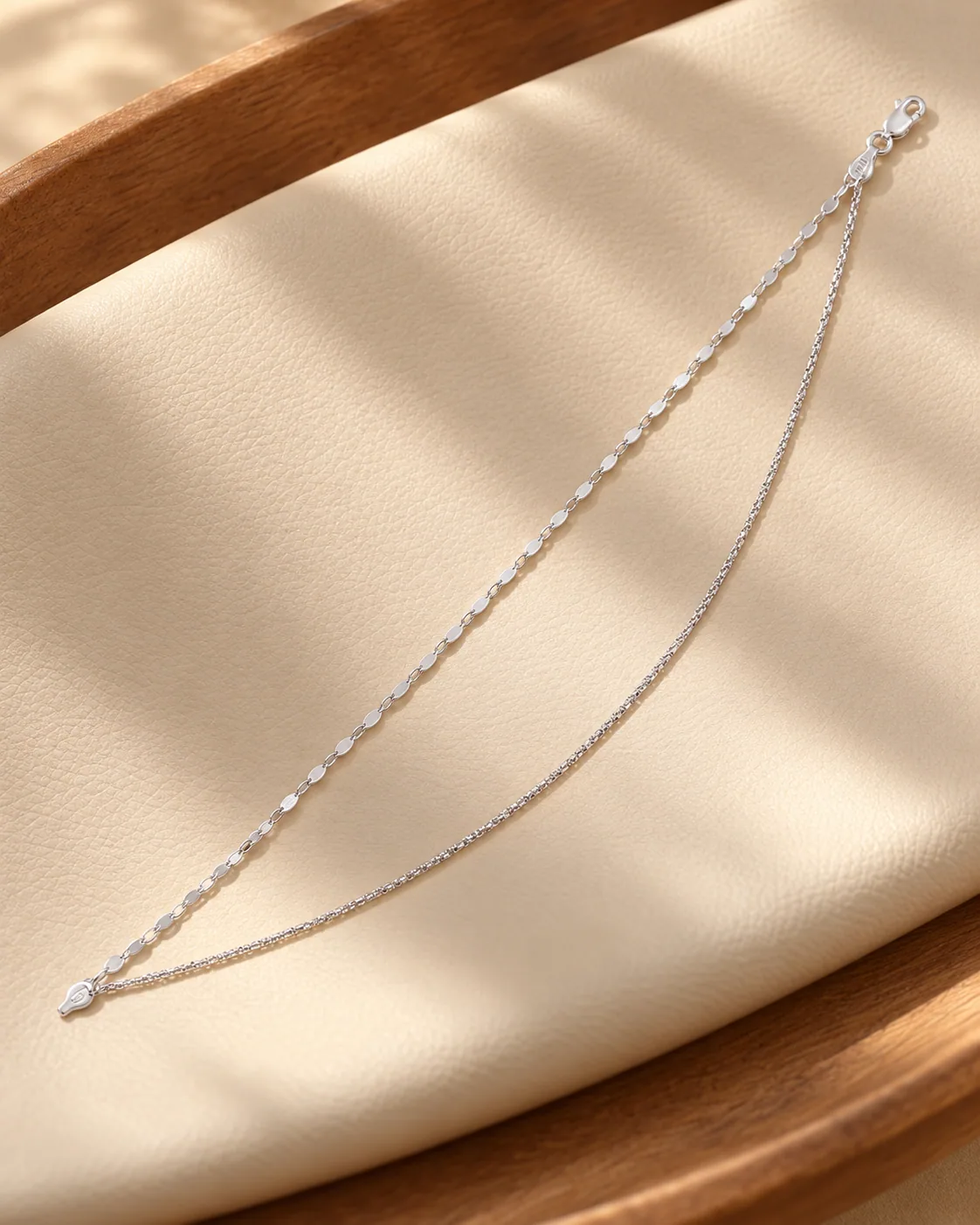
Double-texture layered anklet
Check delivery availability
Delivery availability is not yet confirmed.
Shipping costs and taxes require a confirmed quote.
Details, styling and care
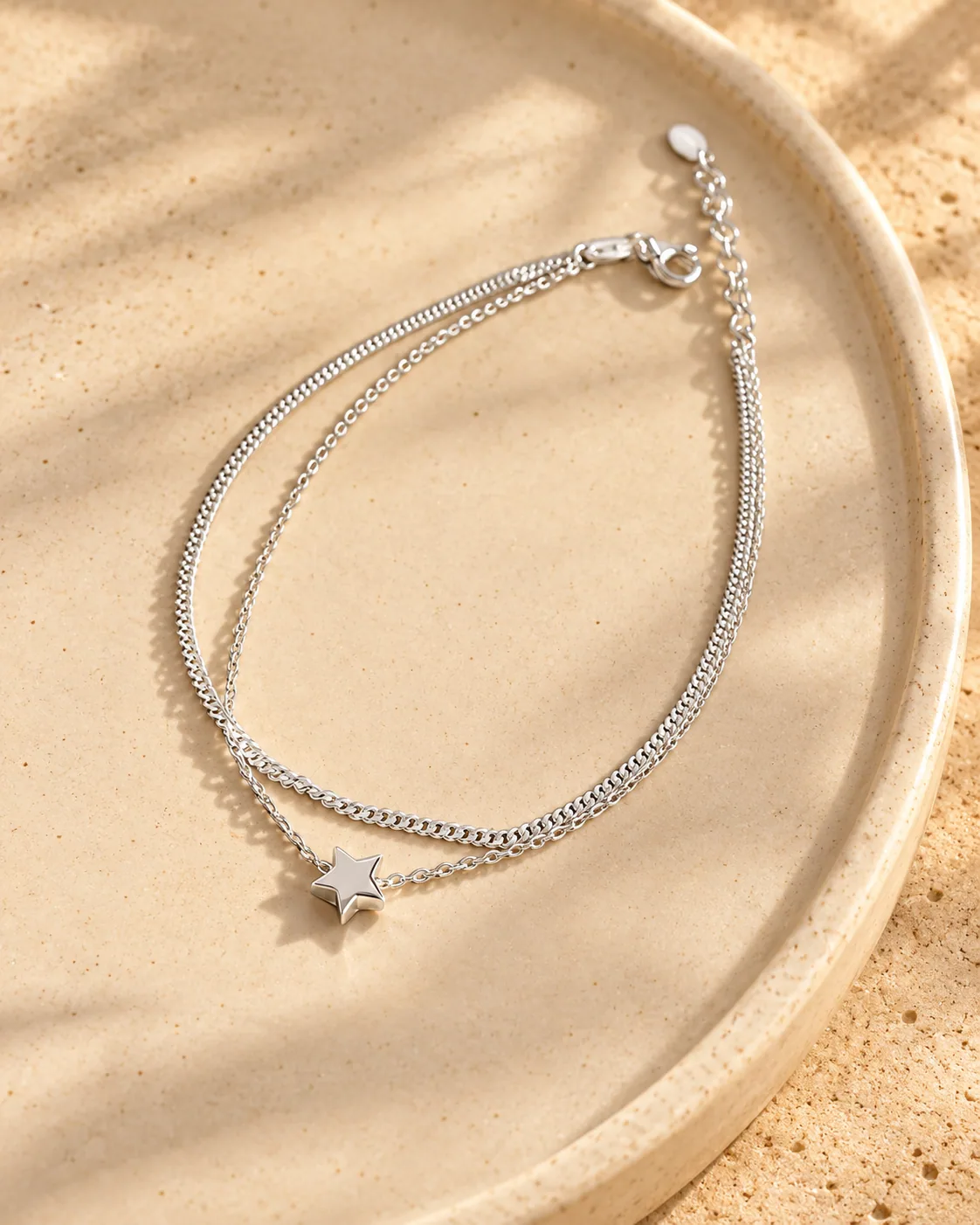
Two fine strands pair a smooth reflective chain with a sparkling texture in rhodium-finished sterling silver. Wear it alone to keep the contrast between the strands visible.
Different chain surfaces share a double-row arrangement
The preserved introduction describes a smooth reflective strand beside a strand with sparkling texture. Their contrast supplies the detail instead of a separate hanging charm. Wearing the anklet alone can leave the difference between the rows visible. A plain shoe or an unobstructed hem provides a quiet setting, while another anklet may cover the space between the strands or make their separate textures harder to distinguish.
Compare the arrangement while standing and walking once the actual fit is known. The rows may overlap from one position and separate from another. Mirror and sparkle are supplier design terms rather than proof of glass mirrors or gemstone settings. Sparkling texture must not become a claim of diamond, cubic zirconia or another stone. Double row also does not establish detachable strands or independently adjustable lengths for each row.
Show less
The silver and rhodium wording remains title-level evidence
The exact supplier title identifies a sterling silver rhodium-plated double-row mirror-and-sparkle chain anklet. The retained evidence is title-only rather than a verified product-level material specification. Silver fineness, actual coating and the selected variant still require confirmation. The inherited material wording remains attributed to the available description rather than becoming an independent assay of the two strands, connections and fastening components.
No coating thickness, complete alloy analysis, verified weight or construction diagram is available. Stone information is unknown rather than confirmed absent. Explaining that sparkle is a design term does not independently certify the entire assembly as stone-free. Different reflective surfaces also cannot establish the exact manufacturing methods or internal structure. Another double-row anklet cannot supply the missing facts for this model, even where its apparent textures look similar.
Confirm both row lengths and the actual fastening
The retained information does not provide overall length, individual strand lengths, adjustment range, widths or fastening dimensions. Ask for the complete measurements before deciding how the rows will sit around the ankle. A close photograph can show their textures without reliably showing their relative lengths or clearance from a shoe strap. Fine strands is visual wording rather than a numeric size guide or evidence of elastic construction.
Fastening type and operating instructions are also unavailable. Follow the actual closure method once confirmed rather than pulling one row to tighten the other. Do not assume each strand has its own adjustment or that a chain opening is an intended fitting point. Compare confirmed measurements with an anklet you already wear comfortably, and check both rows against shoes and socks during ordinary walking as well as while seated.
Keep the paired strands free from tangling
A hem ending clear of the ankle can reveal the difference in surface texture. If another anklet is added, compare the combination during movement so its clasp does not pass between the rows or repeatedly contact one strand. Put the piece on after clothing likely to catch it and remove it before exercise or tasks involving pulling. Release trapped fibres gently without separating connections or dragging a row through the fabric.
Care should follow confirmed instructions for the silver, coating and complete double-row construction. Do not assume abrasive polishing, chemical dips, soaking or ultrasound are suitable for every surface. Store the anklet separately with the strands untangled and without another chain passing between them. If a row, connection or fastening changes, seek assessment before further wear rather than forcing it straight. Exact dimensions, surface methods and operating guidance remain to be confirmed.